Investigation ordered into Sunday’s shutdown of Greek airspace

An urgent preliminary investigation has been launched following Sunday’s shutdown of Greek airspace after a collapse of radio frequencies disrupted air traffic communications.
The incident stranded thousands of travelers and brought airport operations across Greece to a virtual standstill for several hours.
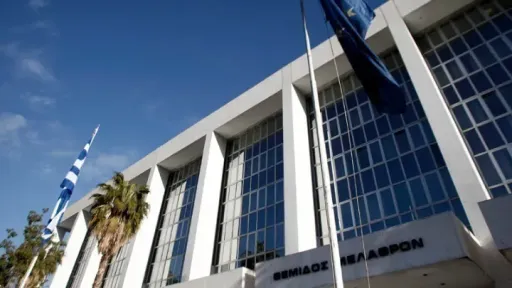
The head of the Athens Misdemeanor Prosecutor’s Office, Aristidis Koreas, ordered the inquiry, which will be conducted by the police’s electronic crime department.
The investigation will examine whether the offence of dangerous interference with aircraft traffic was committed and how disruptions occurred across almost all frequencies of the Athens Flight Information Region (FIR).
Officials described the incident as unprecedented in scale, delaying dozens of flights during one of the busiest weekends of the holiday season.
Greece’s civil aviation authority said an indeterminate “noise” impacted radio channels, but the cause was not clear. “The ‘noise’ observed in the frequencies was in the form of continuous, involuntary emission,” it said in a statement.
Initial indications, however, suggest the “noise” may have come from telecommunications infrastructure.
The disruption affected flights across the country for several hours, with authorities only able to service flyovers.
“For some reason all frequencies were suddenly lost … We could not communicate with aircraft in the sky,” Panagiotis Psarros, chair of the Association of Greek Air Traffic Controllers, told state broadcaster ERT.
He later told Reuters that the outage highlighted the vulnerability of an aging system, which he said should have been replaced many years ago.
“We work with the most antiquated systems … in Europe,” he said.
Christos Dimas, Greece’s infrastructure and transport minister, said the incident did not compromise flight safety.
‘Unprecedented’ outage
The air traffic controllers association said the breakdown affected all frequencies used on the ground, and some frequencies used by Athens Approach, an air traffic control unit responsible for managing aircraft flying in and out of Athens’ Eleftherios Venizelos airport.
Among its responsibilities are radar monitoring for safe separation of aircraft in the sky as well as issuing instructions on speed, and altitude levels.
The association said controllers were using all means at their disposal to ensure the safety of flights, calling the scale of Sunday’s incident “unprecedented and unacceptable.”
Psarros said the problem seemed to be a collapse of central radio frequency systems at the Athens and Macedonia area control systems, the largest air control facility in the country. It monitors the Athens FIR, a vast expanse of airspace under the control of Greek authorities.
Kathimerini