Greece upgrades emergency number 112 with Next Generation system
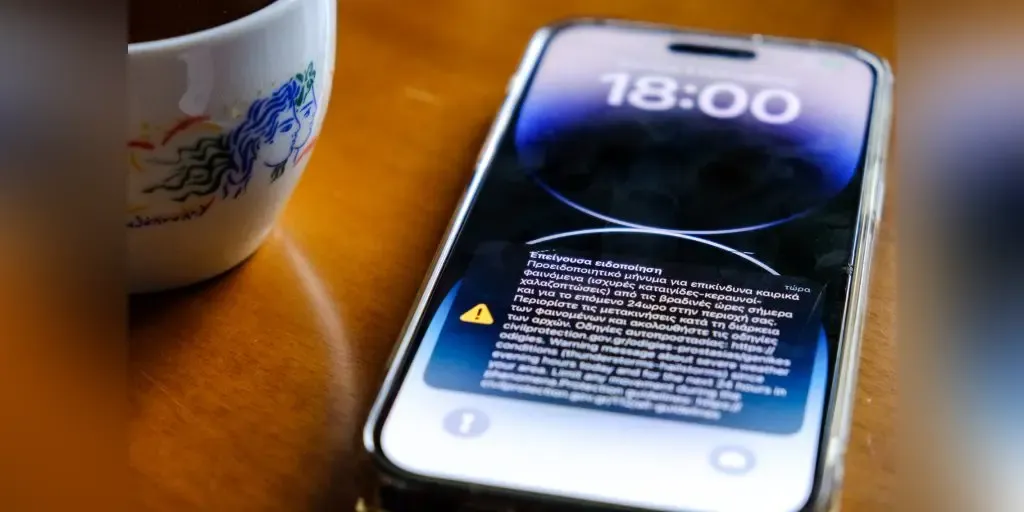
Greece is upgrading its emergency communications system with the introduction of “Next Generation 112” (NG 112), bringing new technologies designed to make emergency communications faster, more accurate, resilient and accessible.
The €17.5 million project, implemented by Information Society on behalf of the Ministry of Climate Crisis and Civil Protection and funded through the National Strategic Reference Framework under the “AIGIS” programme, expands the capabilities of Greece’s existing 112 emergency service.
The upgraded system will introduce video communication, real-time text messaging, silent calls, next-generation eCall data, enhanced location services, new information-management applications and a shared operational picture for emergency-response agencies.
NEW WAYS TO CONTACT EMERGENCY SERVICES
The next-generation 112 system is designed to allow citizens to communicate with emergency services through multiple channels.
Among the new capabilities are video calls and Real-Time Text (RTT), allowing text to be exchanged instantly during an emergency. A silent-call function will also enable people in danger who cannot speak safely to contact emergency services.
The system will also provide more precise and faster location information, which can be transmitted directly to the relevant emergency-response agencies.
According to Nikos Papaefstathiou, secretary-general for Civil Protection, this will allow the Fire Service, Hellenic Police, National Emergency Aid Centre (EKAV) and Hellenic Coast Guard to receive location information more quickly and improve their response times.
FOCUS ON ACCESSIBILITY AND INTEROPERABILITY
Speaking at an event at the Ministry of Climate Crisis and Civil Protection, Papaefstathiou said the upgrade does not change the emergency number or its fundamental role, but expands the ways citizens can access assistance.
He stressed that access to emergency services should not depend on whether a person can hear, speak or communicate through conventional means.
The upgraded platform is also intended to improve interoperability between 112 and emergency-response organisations by enabling the rapid exchange of information and giving agencies a more complete picture of an incident.
The project will incorporate next-generation eCall data, allowing information generated by compatible vehicles to support emergency response.
MOBILE EMERGENCY APP ALSO PLANNED
A dedicated emergency application for mobile devices is expected to be introduced in the next phase.
The application will allow users to contact emergency services through voice, video and text, while also transmitting notifications and location data. The aim is to provide emergency operators with more comprehensive information about an incident and help citizens gain faster access to assistance.
The authorities describe the upgraded 112 as a system that will use available technologies to bring citizens closer to emergency assistance while providing responders with better operational tools.
Officials also highlighted the role of the 112 operators who receive emergency calls, assess situations and activate the relevant rescue mechanisms.
Vasilis Kazoukas, an officer with the European Emergency Number Unit (UNIT5-112), said the upgrade is not only about creating a more modern and resilient communications system, but also about strengthening cooperation among agencies involved in emergency management through faster information flows, improved coordination and a shared understanding of incidents.
The NG 112 project is expected to expand Greece’s ability to respond to emergencies while making access to assistance more inclusive for citizens with different communication needs.