Greece draws red line with Türkiye over maritime disputes

Greek Prime Minister Kyriakos Mitsotakis said Tuesday that Türkiye’s latest actions in the Aegean will not alter Greece’s plans, stressing that Athens is prepared to defend its sovereignty and will discuss maritime issues with Ankara only within a narrowly defined framework.
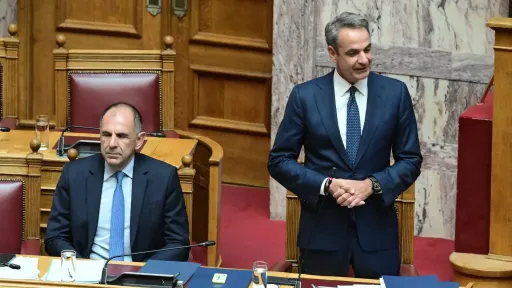
Speaking at a Cabinet meeting, Mitsotakis said recent reactions from Türkiye would have no impact on Greek policy.
“Areas of Greek sovereignty are indisputable, and we are ready to defend them at any moment,” he said.
The Greek prime minister added that Athens wants good relations with Türkiye but would not expand bilateral discussions beyond the delimitation of the continental shelf and exclusive economic zone in the Aegean and Eastern Mediterranean.
Maritime parks raise tensions
The latest dispute follows Türkiye’s designation of marine national parks off Fethiye and Kaş on the Mediterranean coast, as well as an area in the northern Aegean, through a presidential decree published Aug. 16.
Türkiye subsequently criticized Greece’s special spatial framework for renewable energy, which covers areas of the Aegean Sea.
The Turkish Defense Ministry said the Greek regulation had no legal consequences for Türkiye, particularly where it involved geographic formations whose sovereignty, in Ankara’s view, had not been transferred to Greece under international treaties.
At the same time, Ankara said it supported resolving disputes between the two Aegean countries through international law, equity and good-neighborly relations.
Athens weighs tougher response
Greek officials are reportedly preparing a range of measures in response to what Athens considers an escalation by Ankara.
According to Kathimerini, the Greek government is closely monitoring what restrictions Türkiye may impose on fishing, navigation and research within its newly designated maritime parks.
Athens is also watching Türkiye’s response to plans to resume surveys linked to the electricity interconnection project between Greece and Cyprus.
The developments have reportedly prompted Greece to freeze some high-level bilateral contacts. A possible meeting between Mitsotakis and Turkish President Recep Tayyip Erdogan on the sidelines of the United Nations General Assembly in New York next month is now considered unlikely, as is a meeting between the two countries’ foreign ministers.
Greece considers pressure through EU
Athens is also expected to take a tougher stance toward Türkiye within the European Union.
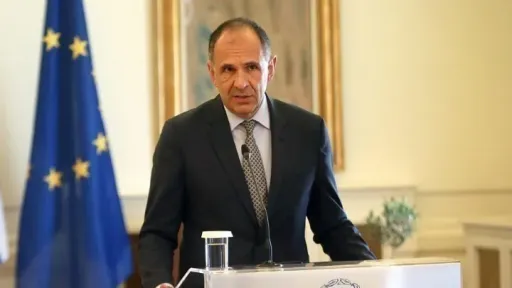
Greek Foreign Minister George Gerapetritis is expected to brief EU counterparts on the Turkish-designated maritime parks at the next Foreign Affairs Council meeting.
Greece could oppose progress on issues important to Ankara, including modernization of the EU-Türkiye customs union, visa liberalization and Türkiye’s ambitions to strengthen its role as an energy hub linking Europe with the South Caucasus and Central Asia.
Greek officials have also identified the possible extension of territorial waters south of Crete to 12 nautical miles as one option under consideration.
The developments mark a renewed deterioration in Greek-Turkish relations after a period of relative calm, with both sides continuing to emphasize international law while maintaining sharply different positions over maritime boundaries and rights in the Aegean and Eastern Mediterranean.
Source:AA