Canary Islands overwhelmed as more than 1,000 migrants arrive overnight

More than 1,000 migrants were brought ashore in Spain’s Canary Islands overnight, including one person who died, as the island of El Hierro struggles to cope with a sharp increase in arrivals. Meanwhile, the European Commission has proposed a new migration solidarity mechanism for 2027, identifying Greece, Italy, Spain and the Greek Cypriot administration as countries eligible for support.
Spanish rescue services brought at least 1,021 migrants to the islands of El Hierro, Gran Canaria and Lanzarote between Thursday evening and Friday morning, according to the Spanish news agency EFE, citing the maritime rescue service Salvamento Marítimo.
The majority arrived on El Hierro, a small island with approximately 11,500 residents, where the growing number of arrivals has placed increasing pressure on healthcare services and local infrastructure.
The provisional figure does not include several boats whose passenger numbers have yet to be confirmed. Rescue teams were also preparing to assist two additional vessels near El Hierro.
El Hierro struggles to cope with arrivals
Canary Islands President Fernando Clavijo described the situation as “absolutely unsustainable” and warned that conditions could deteriorate further.
He called for an urgent meeting with Spanish Prime Minister Pedro Sánchez, requesting additional resources, better coordination with the central government and greater European involvement.
According to EFE figures, more than 3,200 migrants arrived in the Canary Islands during the first five days of November, approximately 2,300 of them on El Hierro.
Among those arriving on the island were 307 minors and 11 babies. Most of the migrants had departed from Senegal.
Residents protest over pressure on local services
The growing number of arrivals has also triggered protests among residents of El Hierro.
Dozens of people gathered in La Restinga, the island's main port town where rescued migrants are brought ashore, to express frustration over the pressure on local services and what they described as a lack of government support.
“We are here because everyone looks the other way,” one protester told local broadcaster RTVC.
Another demonstrator rejected accusations of racism, arguing that the authorities were responsible for failing to address the situation despite migrants arriving in precarious conditions.
Residents also complained that the presence of rescue operations and migrant arrivals was preventing local fishermen from accessing the port and carrying out their work.
Clavijo warned that the island's healthcare services were under increasing strain and called on Madrid and European institutions to provide additional assistance.
Arrivals increase sharply compared with last year
According to Spain's Interior Ministry, 6,194 migrants arrived by sea in the Canary Islands during October, nearly five times the number recorded in the same month last year.
However, the cumulative figures for the first ten months of the year show a different trend.
Between January 1 and October 31, a total of 13,327 migrants arrived in the archipelago, slightly fewer than during the same period in 2025 and considerably below the 34,087 recorded in 2024 and 30,425 in 2023.
EU proposes new solidarity mechanism for 2027

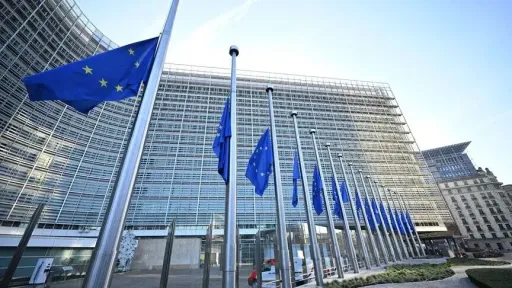
Meanwhile, the European Commission has proposed establishing a 2027 EU Migration Solidarity Pool to help member states facing disproportionate migration pressures.
Presenting the proposal in Brussels on Friday, European Commissioner for Internal Affairs and Migration Magnus Brunner identified Greece, the Greek Cypriot administration, Italy and Spain as countries eligible for assistance.
The proposal forms part of the EU's second Annual Migration Management Cycle.
The Commission's assessment identified the four countries as facing particular pressure due to disproportionate migrant arrivals over the past year, including arrivals following maritime search and rescue operations in Italy and the wider migration situation, particularly the incident in Ceuta, Spain.
Member states to share responsibility
Under the EU Migration and Asylum Pact, member states will be able to contribute to the solidarity mechanism through the relocation of asylum seekers, financial assistance, responsibility offsets or alternative support measures.
The European Council will now determine the size of the solidarity pool and the contributions required from individual member states.
Once approved, the contributions will become public and legally binding.
The Commission also identified 15 additional member states as being at risk of migratory pressure. These countries will receive priority access to the Permanent EU Migration Support Toolbox.
They are Belgium, Czechia, Germany, Estonia, Ireland, France, Croatia, Latvia, Lithuania, Luxembourg, the Netherlands, Poland, Romania, Slovenia and Finland.
Meanwhile, Bulgaria, Czechia, Estonia, Croatia, Austria and Poland were assessed as facing significant migration-related challenges due to the cumulative effects of migration over the past five years. These countries may request full or partial deductions from their contributions to the solidarity pool.
EU reports decline in irregular migration
Despite the pressure experienced by several countries, the European Commission reported an overall decline in irregular migration into the EU.
According to the Commission, illegal border crossings have fallen by more than half over the past two years, with a further decline of more than one-third during the first six months of this year.
Asylum applications decreased by 19 per cent in 2025, while unauthorised movements fell by 22 per cent. The EU-wide return rate also increased to more than 30 per cent.
The proposed solidarity mechanism is intended to distribute migration-related responsibilities more evenly among member states as the bloc prepares to implement its new migration management framework.
Source:AA