EU unveils education reforms as student protests spread across Europe

The European Commission on Thursday unveiled a new package of education initiatives aimed at improving basic skills, addressing teacher shortages and expanding the responsible use of artificial intelligence (AI) in schools, as student protests and strikes continue across Europe.
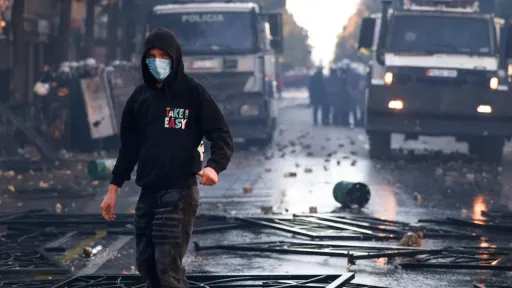
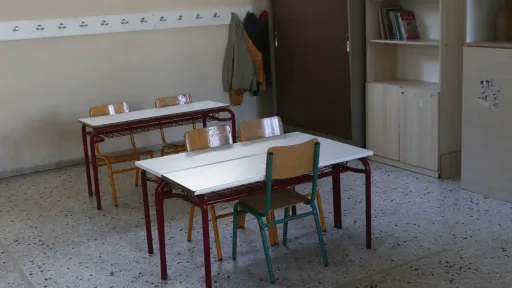
The proposals come amid growing concerns over underfunded education systems, rising living costs and deteriorating working conditions for teachers, with demonstrations reported in France, Germany, Belgium, Italy and Portugal.
One of the main initiatives is a recommendation aimed at reversing the decline in basic skills through targeted reforms, increased investment, greater autonomy for schools and teachers, and stronger evidence-based teaching methods.
The Commission also plans to establish European School Alliances, bringing together schools and education authorities across EU member states to improve student performance.
AI literacy and teacher support among priorities
The new package places particular emphasis on preparing students and teachers for the growing role of artificial intelligence in education.
The Commission plans to introduce age-appropriate AI literacy learning outcomes and assessment guidelines, alongside a pilot AI Literacy Certificate for students from the 2027/28 academic year.
It also intends to propose a European Healthy Screens Pledge, offering guidance to schools, parents and students on online safety, screen time and maintaining a balance between digital and offline activities.
To tackle teacher shortages, the proposed EU Teachers Agenda calls on member states to improve working conditions, career opportunities, initial training and professional development.
The initiative also seeks to strengthen teachers' role in the integration of artificial intelligence into education.
Student protests intensify across Europe
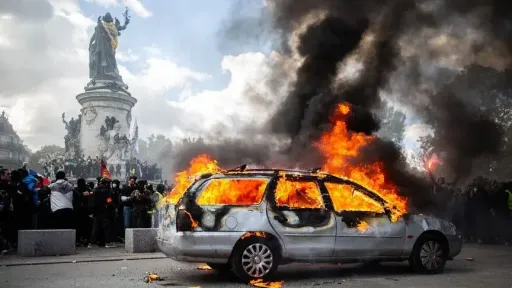
The Commission's announcement comes as demonstrations over education conditions and public spending continue in several European countries.
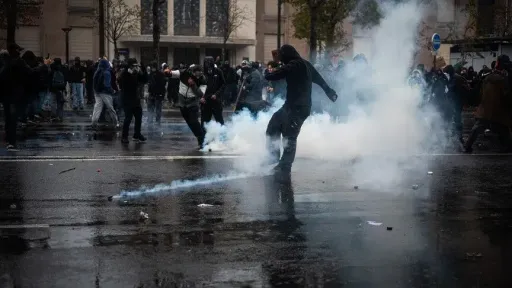
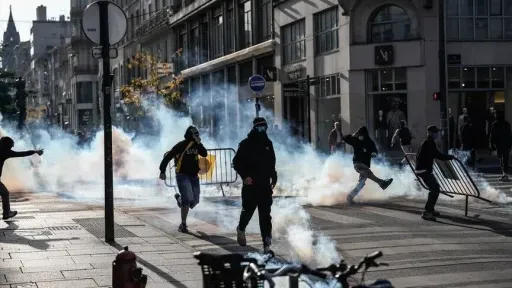
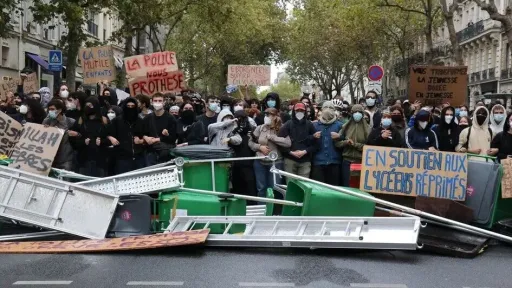
In France, students once again took to the streets on Thursday as part of a nationwide mobilisation. The Education Ministry reported that 81 high schools had been blocked by 10 am local time.
The protests have also expanded to universities, with around one in three higher education institutions reporting disruptions.
According to the Higher Education Ministry, 60 of 184 institutions were affected, compared with 51 earlier in the week.
The Education Ministry reported that 15.81% of schoolteachers were participating in the strike, including 19.14% in primary schools and 13.53% in secondary schools.
However, the SNES-FSU, the country's largest secondary-school teachers' union, estimated participation among middle and high school staff at 52%.
Unions organised the nationwide mobilisation over wages and rising living costs, with workers, civil servants, pensioners and students expected to join demonstrations.
Authorities prepared for up to 780,000 protesters across France, deploying 70,000 police officers and gendarmes to manage the demonstrations.
German public backs youth demonstrations
Public support for youth protests is also growing in Germany, where a new ARD survey found that 82% of respondents believe mainstream political parties neglect young people.
Nine in 10 respondents considered demonstrations a legitimate way to express political views, although approximately two-thirds opposed road blockades.
The findings followed demonstrations organised by the Gen Z regelt initiative, which brought tens of thousands of young people onto the streets in more than 30 German cities over the weekend.
Protesters are demanding greater public investment in education, affordable housing, social justice and climate protection. They have also opposed proposals to reintroduce compulsory military service.
Another nationwide protest day has been scheduled for November 20.
Young voters increasingly turn away from mainstream parties
The German survey also highlighted growing political dissatisfaction among younger voters.
Among people aged 18 to 34, the Left Party received the highest level of confidence on youth-related issues, at 29%, followed by the far-right Alternative for Germany (AfD) at 21%.
The Greens stood at 12%, while Chancellor Friedrich Merz's conservative CDU/CSU alliance received 5% and the Social Democratic Party (SPD) 3%.
The findings suggest that dissatisfaction with the political response to youth concerns is coinciding with a shift in support away from Germany's traditional governing parties.
Across Europe, the combination of education funding pressures, teacher shortages, rising living costs and uncertainty over young people's future is placing increasing demands on governments and education authorities.
The European Commission's latest package seeks to address some of these structural challenges, while ongoing demonstrations underline the growing urgency of the debate over the future of public education.
Source:AA