Spain deploys military to Ceuta after deadly migrant surge

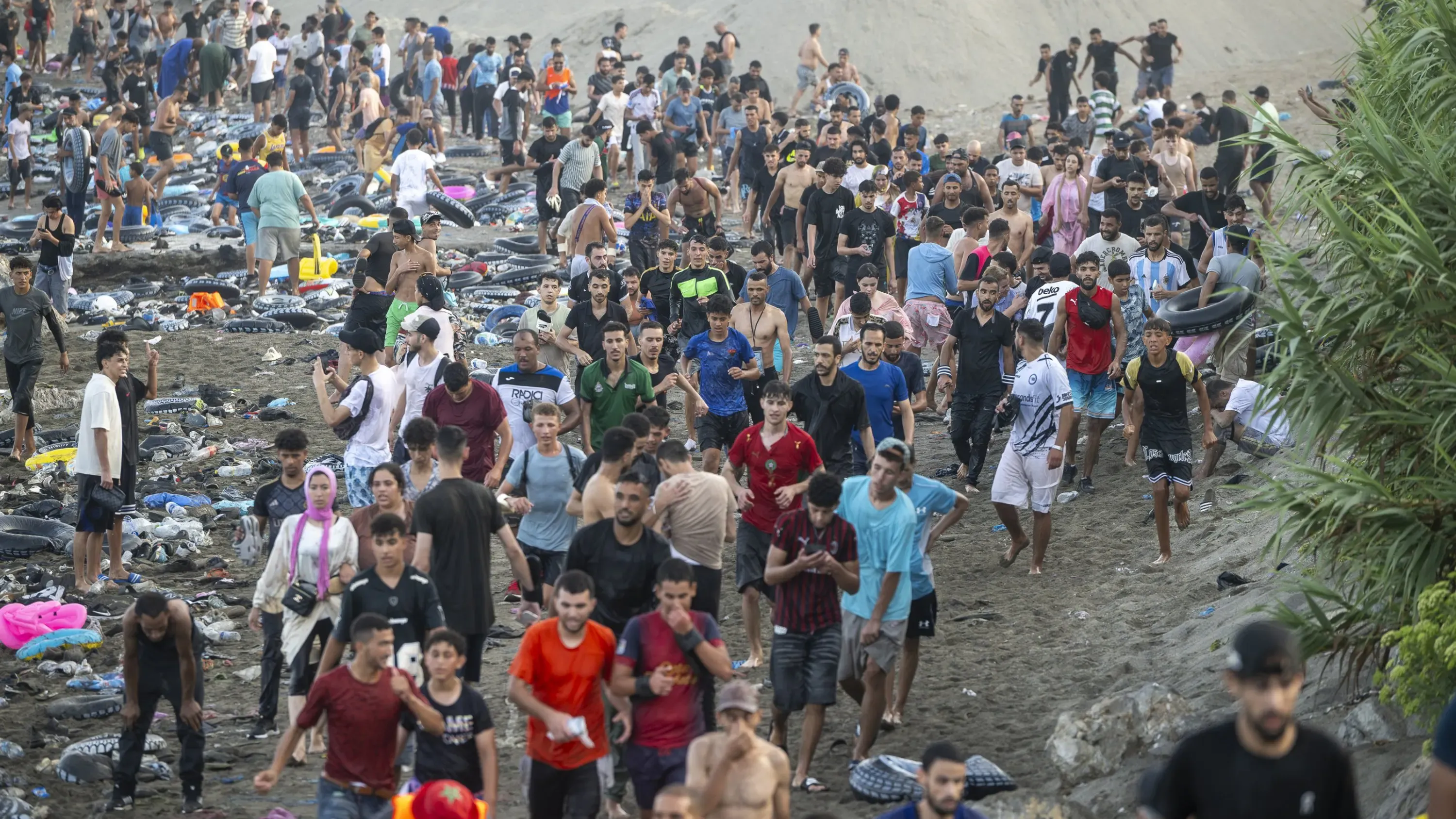
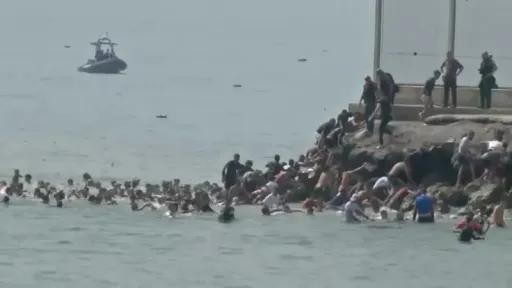
Spain will deploy its military to help secure the border of its North African enclave of Ceuta after thousands of migrants crossed from Morocco, leaving at least nine people dead during the latest surge.
The deployment follows an appeal from authorities in Ceuta for additional support after large crowds breached the border on Thursday, overwhelming local security forces.
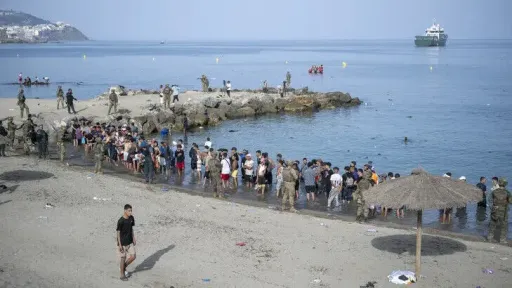
The Spanish government said the Armed Forces would assist the Civil Guard in restoring order and maintaining security across the enclave. Prime Minister Pedro Sánchez and Interior Minister Fernando Grande-Marlaska are scheduled to visit Ceuta to assess the situation.
Border authorities describe situation as chaotic
Officials on the ground said the scale of the crossings had overwhelmed border controls.
Rachid Sbihi, head of the association representing Civil Guard officers stationed at the Ceuta border, described the situation as "absolute chaos," saying thousands of migrants had entered the territory and that the frontier had effectively collapsed.
Achraf Maimouni of the Moroccan Association for Human Rights said the Tarajal border crossing had been opened under unusual circumstances, allowing large numbers of people to enter Ceuta.
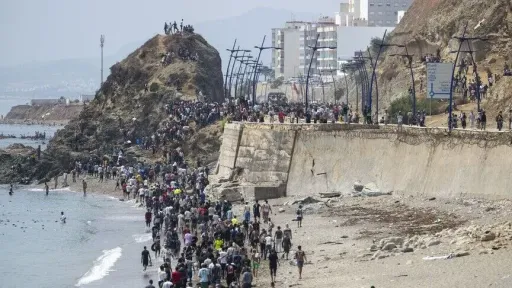
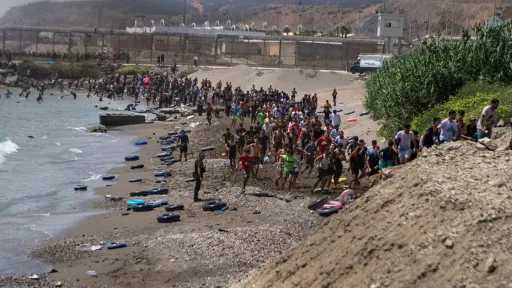
Video footage showed mainly young men, along with women and children, walking around the breakwaters at Tarajal Beach and into Spanish territory.
Spain and Morocco coordinate response
Spain's government delegation in Ceuta confirmed that at least nine people died during the crossings but did not provide details on the circumstances. Local authorities said dozens of people have died this year attempting to reach the enclave.
Spain's Interior Ministry said Morocco was cooperating closely with Spanish authorities by preventing additional crossings and working toward the return of migrants who entered Ceuta irregularly.
The ministry said both governments had agreed to coordinate efforts to restore order and facilitate returns as quickly as possible.
Moroccan authorities have not publicly commented on the latest crossings.
Reception centres overwhelmed
Ceuta's regional government warned that migrant reception facilities had exceeded capacity, with hundreds of people forced to sleep on the streets after more than 1,500 migrants entered the enclave during the past week. Thousands more crossed overnight and on Thursday.
Regional leader Juan Jesús Vivas called on Madrid to declare a national emergency on security grounds and requested additional police officers and military support to protect the border and ensure public safety.
Spain's Interior Ministry said existing legislation does not classify migration flows as a national security emergency but stressed that government agencies were coordinating a rapid response.
Political and regional implications
The latest surge has also prompted reactions elsewhere in Europe. Italian Prime Minister Giorgia Meloni warned that Italy could suspend its participation in the Schengen Agreement with Spain to strengthen border security, despite the two countries not sharing a land border.
The crossings follow a recent Spanish Supreme Court ruling preventing the immediate return of migrants arriving by sea without due process. However, the decision does not apply to migrants entering by land, including those crossing Ceuta's border fence.
Some activists in Morocco questioned whether the ruling had influenced the latest crossings, arguing that most migrants were unlikely to have been aware of the legal decision.
Renewed pressure on Europe's southern border
Ceuta remains one of the European Union's main external borders and a frequent destination for migrants seeking to enter Europe from North Africa.
Many attempt the crossing by swimming from the Moroccan towns of Fnideq or Belyounech, while others try to scale or breach the border fence.
The latest incident recalls the May 2021 migration crisis, when more than 8,000 migrants entered Ceuta within two days, triggering a diplomatic dispute between Spain and Morocco.
Spanish authorities are continuing efforts to restore order as migration pressure along the country's southern frontier intensifies.
Source:AA