6th Balkan think tanks meeting opens in Sofia with focus on regional cooperation

The 6th Balkan Think Tanks Meeting opened in Sofia, Bulgaria, on October 29, bringing together discussions on regional security, geopolitical developments and cooperation across the Balkans.
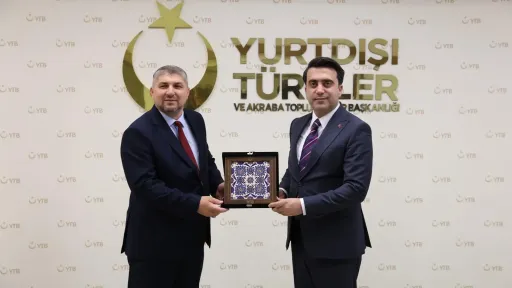
Organised by the Foundation for Political, Economic and Social Research (SETA), with support from Türkiye's Presidency for Turks Abroad and Related Communities (YTB), this year's meeting is being held under the theme “Resilience and Cooperation in a Turbulent World”.
The agenda focuses on the impact of global geopolitical developments on the Balkans, key regional political challenges, Western Balkan countries' integration into the European Union (EU) and the region's position within Europe's evolving security architecture.
TÜRKISH AMBASSADOR HIGHLIGHTS INCLUSIVENESS AND REGIONAL OWNERSHIP
Speaking at a dinner held as part of the meeting, Türkiye's Ambassador to Sofia, Mehmet Sait Uyanık, stressed that inclusiveness and regional ownership are essential for achieving lasting peace, stability and prosperity in the Balkans.
Uyanık said Türkiye pursued an active, multidimensional and principled foreign policy, advocating a fairer international system supported by more effective multilateral institutions.
He also highlighted the geographical proximity, shared history, cultural ties and close people-to-people relations connecting Türkiye with Balkan countries.
According to the ambassador, the Russia-Ukraine war, security risks in the Black Sea and Europe's changing security architecture have further underlined the strategic importance of the Balkans to European security.
Uyanık emphasised that Türkiye's regional approach was based on inclusiveness and regional ownership, arguing that lasting peace could only be achieved without excluding any community or identity.
He described the Balkans' multicultural character as an asset that should be protected and said countries in the region should take the leading role in developing solutions to their own challenges.
EU INTEGRATION AND ECONOMIC CONNECTIVITY ON THE AGENDA
The ambassador reaffirmed Türkiye's support for Balkan countries' integration into European and Euro-Atlantic institutions, highlighting the importance of improving Türkiye-EU relations and strengthening regional economic cooperation.
Referring to Bulgaria's membership of the EU and the Schengen Area, as well as its adoption of the euro in 2026, Uyanık described the country as an increasingly important partner and transit hub connecting Türkiye with European markets.
He also underlined the strategic position of Türkiye and Bulgaria along major routes linking Europe and Asia, highlighting opportunities offered by the Middle Corridor and supporting road, railway and energy infrastructure networks.
Strengthening regional connectivity, he said, could improve supply chain resilience, enhance competitiveness and create new opportunities for citizens.
“Borders should be points of connection, not bottlenecks,” Uyanık stressed, highlighting the importance of improving railway links between the two countries.
HALKALI-KAPIKULE RAILWAY PROJECT HIGHLIGHTED
Uyanık also referred to progress on the Halkalı-Kapıkule Railway Line, noting that the Çerkezköy-Kapıkule section was inaugurated on October 9.
Once the remaining sections are completed, the journey between Istanbul and Kapıkule is expected to take approximately 1.5 hours.
The ambassador said facilitating border crossings and strengthening economic and social connections would help build a more secure common future. He reaffirmed Türkiye's commitment to continuing cooperation with Bulgaria and other Balkan countries.
The 6th Balkan Think Tanks Meeting, organised by SETA with YTB support, is scheduled to conclude on October 30 following a series of sessions.
Anadolu Agency (AA)