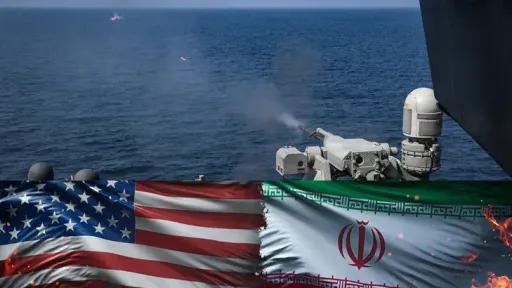
Mideast war deepens as Hormuz attack and Houthi advance raise shipping fears

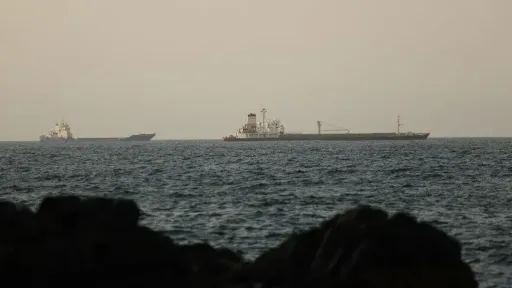
Tensions around the Strait of Hormuz intensified Sunday after an Iranian cargo vessel was struck near Qeshm Island, killing one person and injuring four, according to Iranian state media.
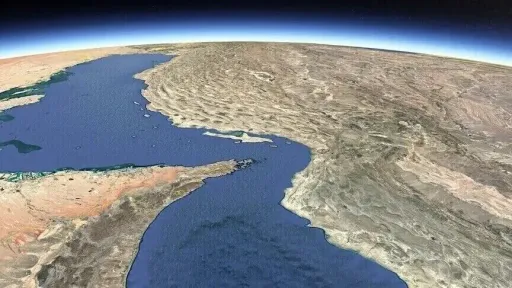
The incident came a day before Iran was expected to brief regional countries on efforts with Oman to manage shipping through the strategic waterway, through which a major share of global energy supplies normally passes.
Iranian state news agency IRNA quoted the governor of Qeshm as blaming a “terrorist enemy.” There was no immediate claim of responsibility.
The United Kingdom Maritime Trade Operations monitor separately reported that a vessel was hit by a projectile while transiting the strait, triggering a fire and an evacuation operation.
The latest attack adds to growing risks for commercial shipping since the war began on Feb. 28. Traffic through the Strait of Hormuz has remained sharply reduced as attacks and military operations continue.
Iran has said it wants arrangements with Oman to regulate shipping through the strait, including possible transit fees and the use of Iranian and Omani waters. But Tehran has also made clear that an agreement would not necessarily mean the waterway would reopen.
President Masoud Pezeshkian said Saturday that the strait would be opened only if the United States ended its blockade of Iran.
Regional meeting faces uncertainty
Iran is due to host a meeting of regional foreign ministers on Monday to discuss shipping arrangements, although Bahrain has said it will not attend because it has no diplomatic relations with Tehran.
The meeting comes as Gulf states face mounting pressure from the wider conflict and seek ways to protect trade and energy routes without becoming directly involved in the war.
The situation has already pushed global prices for oil, natural gas and related commodities higher, while uncertainty over alternative shipping routes has increased.
Houthi forces expand along Red Sea
At the same time, Iran-backed Houthi forces in Yemen have rapidly expanded their presence along the Red Sea coast, creating a second major threat to international shipping.
The Houthis claimed overnight missile and drone attacks against targets in Saudi Arabia. Saudi authorities said a projectile landed in Al-Tawwal near the Yemeni border, injuring two people and damaging a mosque and other buildings.
The Houthi advance has also brought the group closer to the Bab el-Mandeb Strait, a critical maritime passage linking the Red Sea with the Gulf of Aden and an important alternative route to Hormuz.
Yemeni government forces have suffered major setbacks along the western coast, including the loss of the port city of Mokha and surrounding areas.
Sultan al-Arada, a member of Yemen’s presidential council, said government forces were regrouping and would return to the fight.
A government military official previously blamed poor coordination among the army and allied militias for the rapid Houthi gains. The National Resistance, a government-aligned force, said more than 500 government fighters had been killed and around 1,500 wounded on the western coast since Aug. 9.
The force also claimed more than 1,000 Houthi fighters had been killed, though the figures could not be independently verified.
Humanitarian pressure grows
The renewed fighting has effectively ended a ceasefire that had largely kept Yemen’s front lines quiet since 2022, raising fears of a return to a broader civil war.
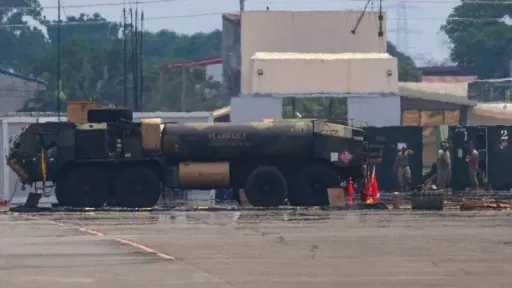
The Houthi advance has also brought the group to within roughly 32 kilometers of a major U.S. military base in Djibouti, across the Bab el-Mandeb.
Djibouti is already receiving people fleeing the fighting. More than 2,000 Yemenis have reached the country, according to the International Organization for Migration.
Djibouti’s navy, coast guard and other agencies have been carrying out rescue operations and providing emergency assistance as the influx continues.
With pressure mounting simultaneously around Hormuz and Bab el-Mandeb, two of the world’s most important maritime chokepoints are now caught in the widening conflict, raising the risk of further disruption to global shipping and energy markets.
Source:DailySabah