Ebola outbreak surpasses 10,000 cases in DRC
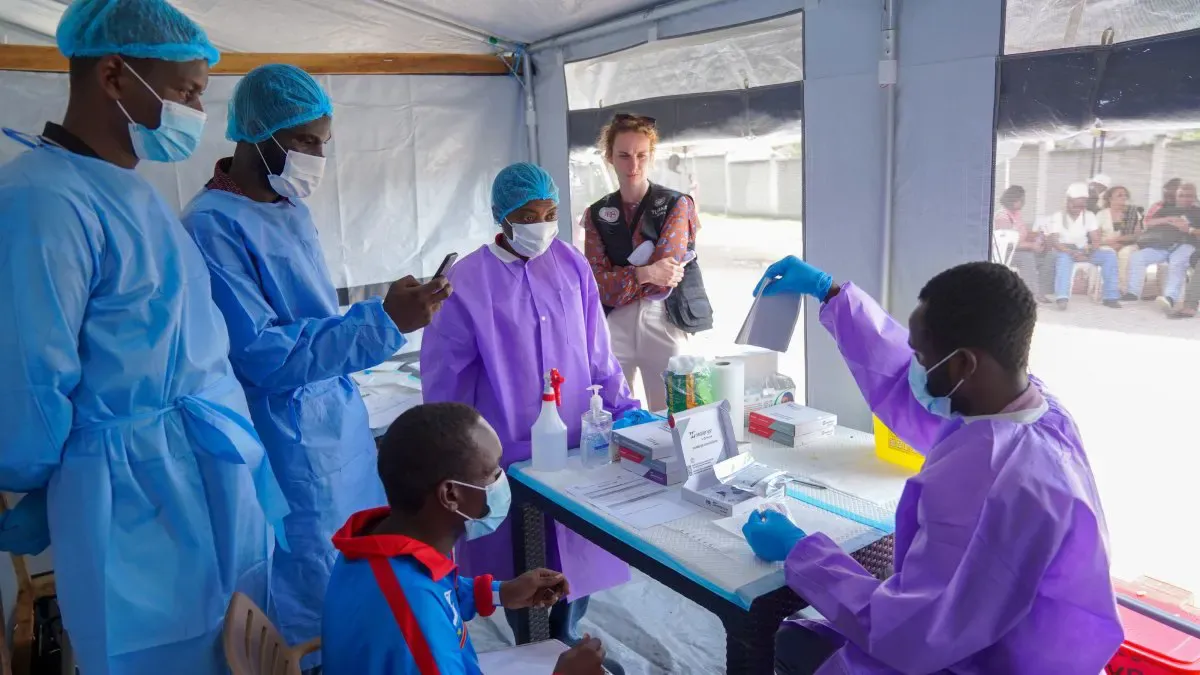
The Democratic Republic of Congo (DRC) has reported more than 10,000 Ebola infections and nearly 4,900 deaths in the country’s largest and deadliest outbreak, as health authorities face growing challenges in containing the virus across several African countries.
Congolese health authorities said Tuesday that 10,060 people had contracted the virus and 4,887 had died since the outbreak was detected in May. A total of 2,684 people have recovered, according to the country’s National Institute of Public Health.
The reported figures put the outbreak’s fatality rate at nearly 50%.
Cases have also been confirmed in Kenya and Nigeria, while Uganda, which previously reported 20 cases and two deaths, was declared Ebola-free by the World Health Organization (WHO) in late August.
No approved vaccine for the current strain
The outbreak is caused by the Bundibugyo strain of Ebola, for which no approved vaccine or specific treatment is currently available.
Researchers are testing whether the Ervebo vaccine, which has demonstrated effectiveness against the more common Zaire strain, could also protect against Bundibugyo.
The virus was first identified in the northeastern Congolese province of Ituri after spreading undetected for weeks, marking the country’s 17th Ebola outbreak.
It has since spread across parts of northern and eastern DRC, with Ituri and North Kivu accounting for most reported cases. Violence by armed groups, limited access to affected communities and mistrust of state institutions have complicated containment efforts.
Parts of North Kivu are controlled by the Rwanda-backed M23 rebel group.
Kenya and Nigeria report infections
Kenya recorded its first confirmed case on Oct. 6 and has since reported nine cases and two deaths. The infections have been linked to a traveler who arrived from the DRC via Uganda.
Nigeria confirmed one case on Oct. 20 involving a 42-year-old Swiss woman who had traveled to Uganda with her husband. She was subsequently evacuated to a hospital in Geneva, Switzerland.
Authorities are investigating how she contracted the virus, as she had no known travel history to the DRC.
The Africa Centres for Disease Control and Prevention (Africa CDC) is investigating the source of the infection.
Its director-general, Jean Kaseya, told Agence France-Presse that genomic sequencing indicated similarities between the Kenyan and Nigerian cases and some infections reported in Beni, in eastern DRC.
He said the outbreak had expanded from three health zones in one province when it was first declared to eight provinces and more than 66 health zones.
The WHO said the woman developed symptoms on Oct. 7, sought medical care in Abuja on Oct. 11 and tested positive for the Bundibugyo virus on Oct. 20.
Nigerian health authorities had identified 53 contacts of the woman as part of efforts to prevent further transmission. Some experts have raised concerns that the virus may have spread after the couple arrived in Nigeria on Oct. 3.
Ugandan officials have rejected suggestions that the woman contracted the disease in their country.
Attacks on health workers hamper response
Efforts to contain the outbreak have also been undermined by mistrust in some communities.
A nurse was killed and another health worker seriously wounded in an attack in the northeastern Congolese province of Tshopo on Saturday, according to the WHO.
Marcel Likolo, chief medical officer of the Bafwasende health district, told AFP that young people accused the workers of attempting to infect residents with tablets before attacking them.
The Ebola treatment center where the incident occurred has since closed, Likolo said.
Health authorities have warned that insecurity and community resistance could further complicate efforts to control the outbreak.
Since Ebola was first identified in 1976, the disease has killed more than 15,000 people across Africa. The current outbreak presents a significant challenge for regional health authorities as they seek to limit cross-border transmission and expand access to medical care.
Source:AA