Herzog faces key decision as Israeli election leaves blocs short of majority

Israeli President Isaac Herzog is preparing to consult parliamentary factions and select a candidate to form the next government after preliminary election results left both major political blocs short of a majority in the 120-member Knesset.
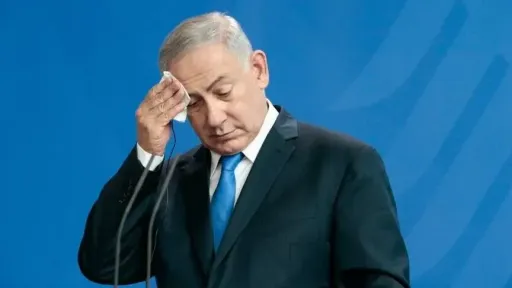
With nearly all votes counted on Wednesday, Prime Minister Benjamin Netanyahu’s bloc secured 53 seats, while the opposition bloc led by Gadi Eisenkot won 48. Arab parties captured 19 seats, potentially giving them significant influence over the government formation process.
Neither bloc reached the 61 seats required for a parliamentary majority.
Official results are expected by Nov. 4, after which Herzog must consult parliamentary factions and assign a member of parliament the task of forming a government within seven days of the results’ publication.
Arab parties could influence mandate
Herzog is expected to hold separate consultations next week with representatives of the 11 parties that won seats in the election. During these meetings, party representatives typically recommend their preferred candidate to form the government.
Based on the preliminary results, the Joint Arab List and the United Arab List could recommend Eisenkot, potentially helping him secure the backing of more than 61 lawmakers.
Netanyahu could argue that he should receive the mandate because his Likud party is the largest individual party in the Knesset. However, Israeli law does not require the president to select the leader of the party with the most seats.
According to the Israel Democracy Institute, the president has considerable discretion in selecting a candidate, with the main consideration being who appears best positioned to form a government capable of winning the Knesset’s confidence.
Unity government remains an option
Herzog has previously pledged to work to prevent another election and raised the possibility of a unity government involving Netanyahu and Eisenkot.
Israeli television channels have reported that the president could invite the two leaders to meet and discuss forming a joint government. He could also publicly call for a unity arrangement.
The election outcome comes amid years of political divisions and difficulties in building stable governing coalitions. Israel has held six parliamentary elections since 2019, reflecting persistent disagreements over political alliances and government formation.
Law allows three attempts to form government
Under Israel’s legal framework, the candidate selected by the president initially receives 28 days to form a government. The president may extend the deadline by up to 14 days.
If the first candidate fails, the president can assign another lawmaker the task, with a 28-day deadline and no extension.
Should the second attempt also fail, a group of 61 Knesset members can request that a third candidate receive the mandate. That candidate has 14 days to form a government.
If all attempts fail, the country proceeds toward another election under the applicable legal procedures.
Minority government also possible
Israeli law does not explicitly require a new government to secure the support of an absolute majority of Knesset members. A government can pass a confidence vote if more lawmakers vote in favor than against, allowing for the possibility of a minority government.
However, most governments formed after elections have secured the backing of at least 61 lawmakers, according to the Israel Democracy Institute.
Once coalition negotiations succeed, the prime minister-designate presents the proposed Cabinet and government policy platform at a special Knesset session, followed by a confidence vote.
Until a new government takes office, the outgoing Netanyahu-led government continues to perform its duties.
Herzog’s decision on whom to nominate will therefore mark the first formal step in determining the shape of Israel’s next government, as coalition negotiations begin amid a closely divided parliament.
Source:AA