Israel votes in election that could reshape Netanyahu’s future
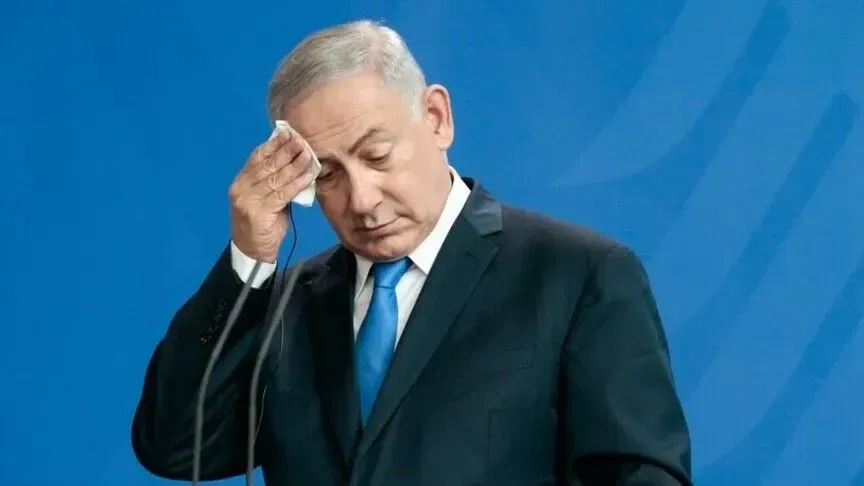
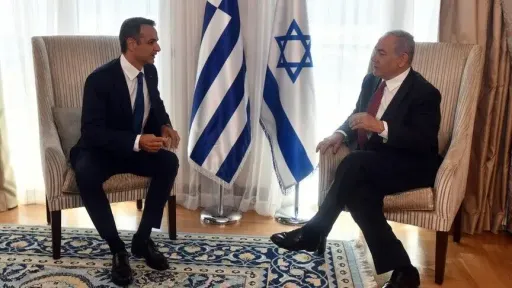
Voting began Tuesday in Israel’s parliamentary elections, with Prime Minister Benjamin Netanyahu facing a challenge from opposition parties in a closely contested race that could determine the country’s next government.
A total of 7,331,981 eligible voters are registered to cast ballots at 12,018 polling stations nationwide. Thirty-seven parties and electoral lists are competing for seats in the 120-member Knesset, with at least 61 seats required to form a governing coalition.
Polling stations opened at 7 am local time and are scheduled to close at 10 pm, according to Israel’s Central Elections Committee. Around 100,000 election workers have been deployed, while police are preparing a major security operation amid concerns about possible unrest following the vote.
The main contenders include Netanyahu’s Likud party, Yashar, led by former army chief Gadi Eisenkot, and the Together alliance headed by former Prime Minister Naftali Bennett. Other parties include the Democrats, Yisrael Beiteinu, Jewish Power and Arab political groups, including the Joint List and the United Arab List.
Opinion polls cited in the reports suggest that neither Netanyahu’s bloc nor the opposition is assured of the 61 seats needed for a parliamentary majority, raising the possibility of difficult coalition negotiations after the results are announced.
Opposition leaders call for high turnout

Opposition figures urged Israelis to vote in large numbers, presenting the election as an opportunity to replace Netanyahu, who has led the government since December 2022.
Avigdor Lieberman, leader of Yisrael Beiteinu and a former defense minister, called on voters to end Netanyahu’s political era and the influence of ultra-Orthodox parties.
Eisenkot said his Yashar party needed to emerge as the largest political force to bring about a change of government. Gilad Kariv of the Democrats also urged participation, warning that misinformation could undermine confidence in the electoral process.
Netanyahu, 76, is seeking to retain power while standing trial on corruption charges, including bribery, fraud and breach of trust, which he denies. The International Criminal Court issued an arrest warrant for him in November 2024 over alleged war crimes and crimes against humanity in Gaza.
The election is Israel’s first general vote since the outbreak of the war in Gaza in October 2023, which has had far-reaching consequences for the region. The country has also been involved in military confrontations with Lebanon, Iran and Yemen, while violence and tensions continue in the occupied West Bank.
Likud accused of preparing to challenge possible losses
Concerns over the conduct of the election intensified after the Haaretz newspaper reported that Likud had invested millions of shekels in teams assigned to film Arab voters outside polling stations.
According to the report, the teams were recruited to monitor voting in Arab communities and transmit footage and observations to party headquarters. Senior Likud officials had also discussed the possibility of alleging electoral fraud if the party suffered substantial losses, the newspaper said.
The report did not establish that Netanyahu personally attended meetings where the alleged strategy was discussed. Likud representatives are also expected to report suspected irregularities to a dedicated monitoring center.
The allegations have drawn attention to the role of Arab voters, whose participation could affect the distribution of seats and subsequent coalition negotiations.
Separately, Israel’s Supreme Court rejected a petition seeking to prohibit polling station officials and party representatives from carrying firearms inside voting facilities.
The petition, filed by the Arab rights group Adalah and the Joint List, followed plans by Likud and Finance Minister Bezalel Smotrich’s Religious Zionism party to deploy around 2,000 observers to polling stations in Arab towns and mixed communities.
Adalah warned that armed observers could intimidate voters and increase the risk of confrontations. The state argued that police assessments did not establish a concrete threat requiring a firearms ban, and the court declined to intervene in the authorities’ decision.
There was no immediate comment from the court on Adalah’s account of the ruling.
Ben-Gvir visits Al-Aqsa Mosque compound

The campaign was also marked by controversy over National Security Minister Itamar Ben-Gvir’s visit to the Al-Aqsa Mosque compound in occupied East Jerusalem on Monday, the eve of the election.
Israeli Channel 7 reported that Ben-Gvir entered the site under heavy police protection and prayed at the nearby Western Wall.
The compound is among the most sensitive religious sites in Jerusalem, holding major significance for Muslims and Jews. Palestinian parties accused Ben-Gvir of using actions targeting Palestinians and their holy sites as part of his election campaign.
The visit came amid wider concerns over political tensions and the treatment of Arab citizens during the voting process.
Police prepare for possible post-election unrest

Israeli police are preparing to deploy around 22,000 officers for election day and the period following the announcement of results, according to local media reports.
The reported deployment would represent an increase of approximately 5,000 officers compared with the 2022 elections. Preparations include contingency plans for disturbances following exit polls, preliminary results and subsequent coalition negotiations.
Officials have warned that the period after voting could prove as sensitive as election day itself, particularly if the outcome is disputed.
Vote counting is due to begin after polling stations close Tuesday night, with Israeli television networks expected to publish exit polls. Initial results are anticipated overnight, while official results are scheduled for publication by November 4.
President Isaac Herzog is expected to begin consultations with elected parties about a week after the election before assigning a lawmaker to form the next government.
The election comes after Israel’s previous parliament dissolved on July 17. Although the Knesset normally serves a four-year term, early elections can be triggered by parliamentary dissolution or a failure to form a government.
With the main blocs facing uncertainty over whether they can secure a majority, the final distribution of seats and the subsequent negotiations will determine the composition of Israel’s next government.
Source:AA