Three years of devastation leave Gaza facing a generational crisis

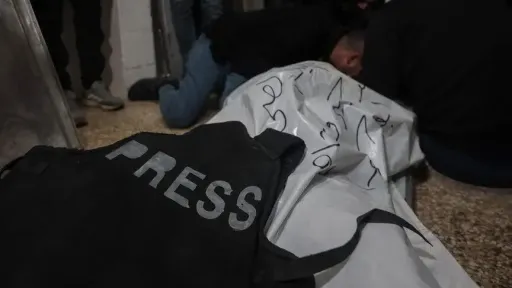
Three years into Israel’s war on Gaza, the Palestinian territory is facing a humanitarian and social crisis of historic scale, with more than 74,000 Palestinians reported killed, over 175,000 injured and nearly 1.9 million displaced.
The death toll reported by Gaza’s Health Ministry had reached 74,237 by Oct. 4. That figure represents about 3.4% of Gaza’s estimated prewar population of 2.2 million, or roughly one in every 30 residents.
The toll includes thousands of children, women and elderly people. UN figures show that, among 71,444 fatalities identified by age and gender through the end of 2025, nearly 30% were children.
Thousands more Palestinians are believed to remain missing beneath destroyed buildings.
The scale of family loss has been equally profound. A Palestinian Center for Policy and Survey Research poll conducted in 2024 found that 61% of respondents in accessible areas of Gaza said a family member had been killed, while 78% said a relative had been killed or injured.
Displacement becomes a way of life

The destruction of homes has left millions without a safe place to return to.
UN estimates indicate that nearly 1.9 million Palestinians, or about 90% of Gaza’s population, have been displaced during the war, many of them repeatedly.
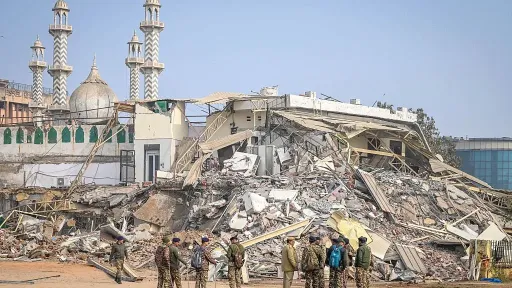
A joint assessment by the World Bank, UN and European Union found that 371,888 housing units had been damaged or destroyed by October 2025, representing about 77% of Gaza’s housing stock.
Palestinian statistics later put damage to buildings at about 82% of the territory’s total building stock, with more than 134,000 buildings completely destroyed.
By mid-2026, around 94% of Gaza’s population required shelter assistance and basic household items. Up to 65% of households were living in tents or makeshift structures, many of which had deteriorated after prolonged use.
Flooding risks and exposure to extreme weather have added further dangers for displaced families.
Livelihoods wiped out
The war has also destroyed much of Gaza’s economic foundation.
UN Trade and Development estimates that 92% of economic establishments have been damaged or destroyed since October 2023, while hundreds of thousands of jobs have disappeared.
Unemployment reached 78%, with more than 90% of the working-age population out of work.
Economic output per person fell to $212 in 2025, just 17% of its 2022 level, while prices remained sharply elevated.
Agricultural and industrial production fell by about 94% compared with 2022, while construction activity declined by 99%.
With less than 1.5% of Gaza’s cropland remaining both accessible and undamaged, families have become increasingly dependent on humanitarian assistance.
The collapse of agriculture, employment and food production has left Gaza heavily dependent on aid.
UN Trade and Development has warned that most Palestinians in Gaza face acute food insecurity and malnutrition, with children and pregnant and nursing women particularly vulnerable.
The agency warned that prolonged malnutrition among children under five could cause irreversible consequences, including stunted growth, cognitive impairment and developmental problems.
The humanitarian crisis has continued despite the ceasefire that took effect in October 2025.
Gaza’s Health Ministry has reported more than 1,400 additional Palestinian deaths since the ceasefire, along with thousands of injuries and the recovery of hundreds of bodies.
Education devastated

Gaza’s education system has suffered enormous losses, with the consequences expected to extend across an entire generation.
UNICEF says nearly 98% of school buildings have been damaged since October 2023. More than 93% require major rehabilitation or complete reconstruction, while about 81% have been directly hit.
More than 20,000 students have reportedly been killed since the beginning of the war, according to Gaza authorities.
Hundreds of education workers have also been killed, including teachers, university professors and other academic staff.
UNICEF estimates that about 700,000 children aged four to 17 missed formal, in-person education for almost three consecutive academic years. Around 420,000 received no in-person learning at all during that period.
Although learning resumed in some form for hundreds of thousands of children, around 200,000 still lacked access to structured education.
The destruction has extended to higher education. A UNESCO-backed assessment found that 95% of the university campuses examined had been destroyed or damaged, leaving laboratories and academic facilities unable to operate.
The education sector faces billions of dollars in direct losses, while shortages of teachers, classrooms and supplies continue to obstruct recovery.
UNICEF has also warned that almost all of Gaza’s 1.2 million children need mental health and psychosocial support.
Health system remains crippled
The destruction of medical infrastructure has compounded the humanitarian emergency.
More than half of Gaza’s hospitals and primary health clinics remained non-functional in recent assessments, while shortages of medicine, electricity and essential supplies have severely restricted medical care.
The war has also left thousands of children with serious injuries, including amputations, according to Palestinian human rights groups.
Premature newborns have faced particular risks as hospitals struggle with power shortages, damaged facilities and inadequate medical supplies.
‘The genocide is not over’
UN special rapporteur Francesca Albanese has warned that the humanitarian catastrophe cannot simply be described as a crisis that ended with the ceasefire.
“The genocide is not over,” Albanese told Anadolu, arguing that continued destruction and military control in parts of Gaza mean Palestinians cannot yet be considered simply survivors of a past catastrophe.
She described conditions on the ground as “beyond what words can say” and said the continuing destruction raised questions about the policies of governments supporting Israel.
Albanese also pointed to worsening conditions in the occupied West Bank, including killings, arrests, detention and restrictions on Palestinian communities.
She welcomed moves by several European countries to restrict trade and financial activity linked to Israeli settlements but questioned whether the measures go far enough.
A generation faces the aftermath
The human toll of the war extends far beyond the reported numbers of dead and wounded.
Children have lost parents, homes, schools and years of education. Families have been repeatedly displaced, livelihoods destroyed and communities fragmented.
The latest UN Trade and Development assessment estimates Gaza’s recovery and reconstruction needs at $71.5 billion, a figure that could rise as the full extent of the destruction becomes clearer.
For hundreds of thousands of children, however, the consequences cannot be measured only in financial terms. Years without stable education, adequate nutrition, healthcare and secure housing risk creating long-term effects that could shape Gaza for decades.
Three years of war have therefore left Gaza facing not only the task of rebuilding destroyed infrastructure, but also the far more difficult challenge of rebuilding lives, families, institutions and the prospects of an entire generation.
Source:AA