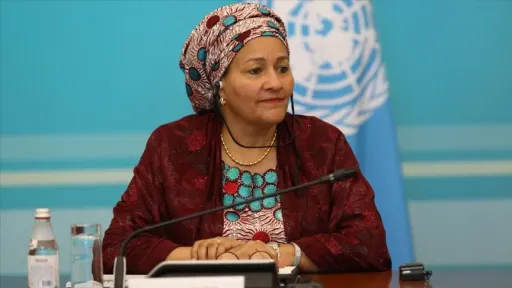
UN: Women's rights declined in one-quarter of countries in 2024

According to a UN report published ahead of International Women's Day, women's rights regressed in 25% of countries worldwide in 2024. Factors such as weakened democratic institutions, new technologies, and climate change contributed to this decline.
The UN noted that the weakening of democratic institutions was accompanied by a decrease in gender equality. It warned that "anti-rights actors actively undermine long-standing agreements on key women's rights issues." The report also states that nearly one in four countries experienced setbacks in gender equality, hindering the implementation of the Beijing Platform for Action, which was adopted at the UN’s Fourth World Conference on Women in 1995.
Although progress has been made—such as the doubling of women's parliamentary representation since 1995—three-quarters of lawmakers worldwide are still men. Social protection for women increased globally by one-third between 2010 and 2023, yet two billion women and girls still lack such protections.
Workplace gender disparities remain stagnant, with only 63% of women aged 25-54 participating in paid employment, compared to 92% of men.
The report highlights that COVID-19, conflicts, climate change, and new technologies pose emerging threats to women’s rights. Conflict-related sexual violence has risen by 50% over the past decade, with 95% of victims being children or young women. In 2023, 612 million women lived within 50 kilometers of an armed conflict, marking a 54% increase since 2010. Furthermore, in 12 European and Central Asian countries, 53% of women reported experiencing some form of gender-based violence online.
Globally, violence against women remains at alarming levels, with one in three women—approximately 736 million—having experienced physical or sexual violence in their lifetime.
The UN report outlines a roadmap for the future, calling for equal access to new technologies, investment in poverty reduction, combating gender-based violence, improving women’s participation in public life, and implementing measures for climate justice.
Source: Paratiritis News