Temporary muftis appointed to Gümülcine and İskeçe for six months

Despite strong objections from the Muslim Turkish Minority of Western Thrace, the Greek government has continued its policy of appointing, rather than electing, muftis in the region.
A ministerial decision signed by Minister of Education and Religious Affairs Sofia Zaharaki was published in the Official Government Gazette (Υ.Ο.Δ.Δ. 1412/2025) on October 29, 2025.
According to the decision, Yaşar Şerif Damatoğlu has been appointed as temporary mufti of Gümülcine, replacing acting mufti Cihat Halil, while Şuheyp İmam has been appointed as temporary mufti of İskeçe, replacing Necdet Hemşeri. Both appointments will remain in effect for up to six months, or until elections are held in accordance with Law 4964/2022.
Minority Rejects the Appointments
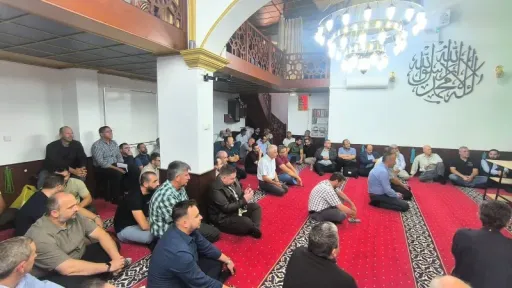
The Muslim Turkish Minority of Western Thrace has long rejected the state-appointed muftis, calling the system a violation of international law and the Treaty of Lausanne. Minority representatives insist that muftis must be elected freely by the community.
The community has repeatedly stated that it does not recognize the muftis appointed by the Greek authorities. Instead, the Turkish minority regards İbrahim Şerif, the elected mufti of Gümülcine, and Mustafa Trampa, the elected mufti of İskeçe, as their legitimate religious leaders.
A Long-Standing Dispute
For decades, Greece has appointed muftis in Western Thrace rather than allowing elections. The legal framework underpinning this system, Law 4964/2022, is viewed by minority institutions as a direct interference in religious freedom.
Minority organizations have repeatedly called on the Greek government to restore the right to elect muftis and to respect the rights guaranteed under the Treaty of Lausanne.
Growing Criticism Over Double Standards
This policy, which undermines the religious autonomy of the Turkish minority, has sparked widespread criticism for double standards. Observers note that while Athens frequently protests even minor administrative changes concerning the Greek Orthodox minority in Türkiye, it simultaneously refuses to recognize the elected muftis of Western Thrace and appoints state officials in their place — a practice described by legal experts as akin to a trusteeship (kayyum) system.
Experts argue that Greece’s stance contradicts the clear provisions of the Treaty of Lausanne and represents a direct intervention in the religious and communal will of the Muslim Turkish Minority of Western Thrace.