Sedat Hasan: "Closing a school is equivalent to closing a village"

Speaking on the issue, Hasan stated, "Minority schools have a different status, and Greece does not have the right to close them. However, every year, 7-8 of our schools are closed, and this situation is being ignored." He emphasized that the rights enshrined in the Treaty of Lausanne are being violated, highlighting that while there were 309 minority schools when the treaty was signed, the number has now dropped to just 86.
Closed Schools, Closed Villages
Hasan equated the closure of a school with the abandonment of a village. "People prefer to leave their villages for their children's education," Hasan explained, noting that the minority community is being forced to migrate. He also underscored that minority rights are being gradually stripped away, with Greece refusing to recognize elected muftis, and the media referring to them as "fake muftis."
Restrictions on School Boards
School boards responsible for managing Turkish minority schools are also facing restrictions. Hasan pointed out that "the rights gained through the Treaty of Lausanne are being limited. This year, school boards were banned from entering schools," signaling the minority's concerns over the threat to the autonomy of their schools.
Educational Autonomy at Risk
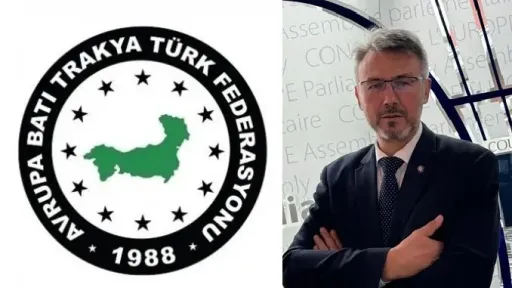
Halit Habip Oğlu, President of the Federation of Western Thrace Turks in Europe (ABTTF), stressed that while positive steps are being taken towards the Greek minority in Turkey, the opposite is happening in Western Thrace. "Our educational autonomy is being eroded by unilateral laws and practices," Habip Oğlu said, adding that the quality of education is being deliberately lowered, and Turkish students are being directed to state schools. He also mentioned that Greece has ignored the minority's longstanding demand for bilingual Turkish kindergartens and noted the inadequacy of school facilities in Xanthi. "If Greece had followed Türkiye's positive example and engaged in dialogue with us, we wouldn’t be facing these problems today," he concluded, calling for a solution through good-faith dialogue.