Hüseyin Zeybek urges support for livestock farmers affected by sheep and goat pox
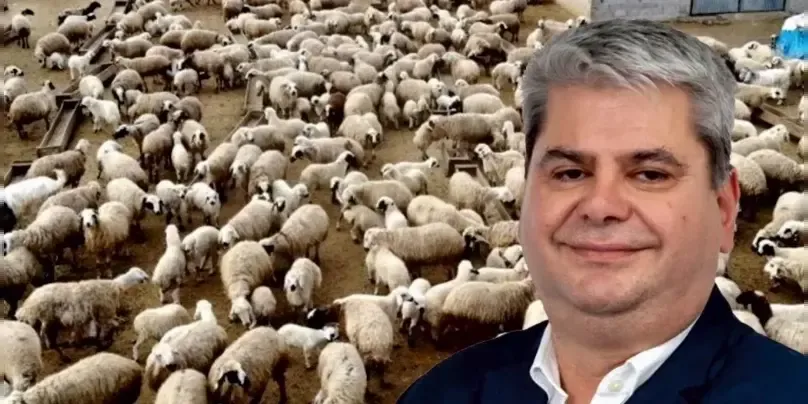
The MP for İskeçe (Xanthi) has called on the Greek government to protect livestock farmers whose animals were culled during the sheep and goat pox outbreak, warning that they could become ineligible for agricultural investment support because of production losses beyond their control.
Hüseyin Zeybek, a member of parliament representing İskeçe (Xanthi), has submitted a parliamentary question to Greece’s Ministry of Rural Development and Food, urging the government to introduce special provisions for livestock farmers affected by the sheep and goat pox outbreak.
Zeybek warned that farmers who were forced to cull their animals could lose access to the Agricultural Holdings Development and Modernisation Programme because the resulting decline in production capacity may prevent them from meeting the scheme’s eligibility requirements.
295 LIVESTOCK HOLDINGS AFFECTED IN İSKEÇE
According to official ministry data dated May 26, 2026, cited in Zeybek’s parliamentary question, 245 outbreak cases had been recorded in İskeçe, affecting 295 livestock holdings.
The MP said the outbreak had threatened the economic viability of numerous farms and raised serious concerns about the future of livestock production in the region.
€12,000 ELIGIBILITY THRESHOLD RAISES CONCERNS
The investment programme, implemented under the European Union’s Common Agricultural Policy Strategic Plan, requires eligible holdings in mainland Greece, Crete and Evia to demonstrate a minimum standard output value of €12,000, calculated using data from their 2025 Single Aid Application (EAE).
Zeybek argued that farmers whose sheep and goats had been compulsorily culled could struggle to meet the threshold because of losses in their productive capacity.
He warned that relying on previous-year data without adequately accounting for losses caused by mandatory culling could exclude farmers who need investment assistance to restore their operations.
ZEYBEK CALLS FOR SPECIAL PROVISIONS
Highlighting the importance of livestock farming to İskeçe’s economy, Zeybek said access to investment support was crucial for affected holdings seeking to resume production.
He argued that farmers should not lose both their livestock and their eligibility for investment assistance because of compulsory culling measures imposed through no fault of their own.
Zeybek called for a special exemption, an exception to the eligibility rules or an alternative assessment method for producers affected by the outbreak.
THREE QUESTIONS SUBMITTED TO THE MINISTRY
In his parliamentary question, Zeybek asked the ministry to clarify three issues:
- How many livestock holdings in İskeçe affected by compulsory culling meet the minimum standard output threshold of €12,000 based on 2025 data?
- Will special exemptions or alternative assessment procedures be introduced for farmers whose production capacity has fallen below the required threshold because of compulsory culling?
- Does the government plan to amend the application criteria or introduce special provisions to prevent farmers who have lost livestock from being excluded from investment support?
- Zeybek urged the government to take steps to help affected livestock holdings recover and ensure that producers are not excluded from support programmes because of losses caused by the outbreak.