Greek livestock farmers demand compensation over organ disposal policy amid disease measures

Livestock associations in northeastern Greece are calling on the government to introduce compensation measures following financial losses caused by mandatory disposal of lamb and goat organs due to disease control protocols.
The appeal was formally addressed to Greece’s Minister of Rural Development and Food, Margaritis Schinas, by livestock organizations from the region of Eastern Macedonia and Thrace (EMTH).
Farmers Face Financial Losses from EU Protocol Implementation
In their letter, the associations emphasized that current compensation schemes fail to offset the economic damage resulting from the implementation of European Union health protocols, enforced nationally by the Ministry of Rural Development and Food.
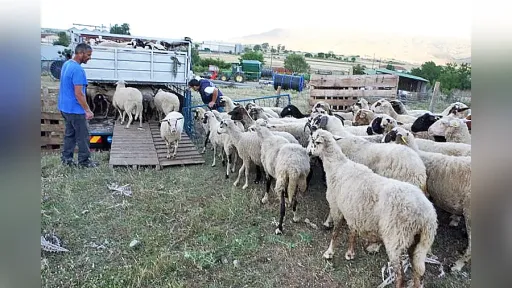
Under these measures—introduced in response to a sheep pox outbreak—farmers are required to slaughter lambs and goats within regional boundaries and process them at designated local slaughterhouses. Additionally, internal organs (offal), including liver and other edible parts, are systematically removed and destroyed.
According to farmers, these rules have led to a minimum 10% reduction in carcass weight per animal, effectively eliminating their profit margins.
Market Distortion and Oligopoly Concerns
Producers argue that limited slaughterhouse capacity in the region has created an “informal oligopoly,” where a small number of traders dominate the market. This has led to reduced competition and artificially low purchase prices for livestock.
Farmers also report significant regional price disparities, with livestock prices declining further in eastern parts of the region compared to the rest of the country.
“Decision Without Logical Justification”
The associations criticized the mandatory disposal of organs as lacking scientific and economic justification. They noted that all animals approved for slaughter undergo PCR testing, and only those testing negative for sheep pox are processed—indicating that the meat and organs should be safe for consumption.
Despite this, the policy requires the destruction of offal, further reducing the commercial value of each animal.
Broader Impact on Livestock Producers
The issue extends beyond farmers selling processed meat. Those selling live animals have also been affected, as buyers factor in the reduced final meat yield due to organ disposal, resulting in lower purchase prices.
Call for Full Compensation
“Anyone who causes financial damage is obliged to compensate it,” the associations stated, urging the government to act.
They called for immediate intervention to ensure that all parts of the animal excluded from official carcass weight calculations due to government decisions are fully compensated.
The letter was signed by multiple livestock associations and cooperatives across the region, including groups from Nevrokopi, Prosotsani, Kavala, İskeçe, Yassıköy, Dedeağaç, and Thrace.