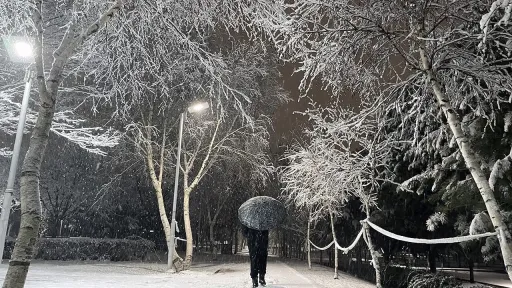
Dramatic decline in snowfall across Thrace, data shows

Snowfall in Thrace has declined sharply over the past decades, according to a long-term analysis conducted by the “Kairika Nea Thrakis” (Thrace Weather News) team. Based on meteorological data spanning the last 46 years, the study confirms what many residents have already sensed: the heavy, long-lasting snowfalls of the 1980s and 1990s are no longer the norm.
Older generations in Thrace recall winters when snow blanketed the ground for weeks, particularly in Northern Meriç and the mountainous areas of Rhodope. However, data collected from the 1980s to the present day indicate a dramatic transformation in winter weather patterns, especially regarding snow cover duration and frequency.
Fewer Snow Days Since 2010
During the 1980s and 1990s, many areas in Thrace recorded 10 to 15 or more snow days per year. Since 2010, however, snowfall frequency has dropped significantly, with only isolated exceptions such as the extreme weather events “Ariadne” (2017) and “Medea” (2021).
Meriç Remains the Coldest — But Changing
The Meriç regional unit remains the coldest area in Thrace, yet even there, the number of days with continuous frost has noticeably decreased.
In Rhodope, the most pronounced decline is observed in the lowland areas around Gümülcine, while in İskeçe, snowfall is increasingly confined to mountainous zones. The city itself now rarely experiences substantial snow accumulation.
Why Is Snowfall Declining?
According to the analysis, several factors contribute to the decline:
Thermal instability: Cold air intrusions are shorter in duration, causing snow to quickly turn into rain.
Reduced snow cover duration: Even when snow falls, warmer ground temperatures often prevent it from settling in lowland areas.
Snow shifting to higher altitudes: Snowfall increasingly occurs at higher elevations, leaving plains such as Gümülcine and İskeçe with minimal accumulation.
Clear Shift in Thrace’s Winter Climate
The findings confirm a broader trend: Thrace is experiencing a clear shift in its winter climate profile. While extreme winter storms like “Medea” or “Elpida” may still occur sporadically, the frequency and persistence of snow cover have declined dramatically, especially since the early 2000s.
Today, Kumçiftliği and Northern Meriç retain snow-related characteristics better than other parts of Thrace, while the snowfall season has shrunk almost entirely to January and early February.
What were once considered “historic” snowfalls in the 1980s and 1990s have now become rare exceptions rather than the rule, highlighting the growing impact of long-term climatic change on Northern Greece.