Kostidis: Istanbul Greeks are experiencing their best period in recent years

Manolis Kostidis, an Istanbul-born journalist and member of the city's Greek minority, has said that the Greek community in Istanbul has experienced positive developments in recent years, including the return of some properties and the reopening of Greek schools.
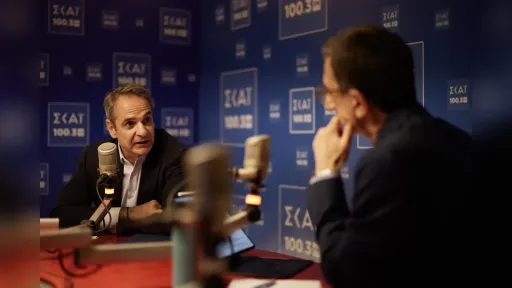
Speaking on the Greek television network SKAI's Studio 3 program, Kostidis discussed the demographic decline of Istanbul's Greek community, its cultural ties and its current situation in Türkiye.
Although the community is significantly smaller than it was in previous decades, Kostidis said solidarity among its members remains strong.
“We are fewer now. We are together and more closely connected to one another,” he said.
Kostidis praises developments during Erdoğan era
Kostidis also highlighted what he described as positive changes affecting the Greek minority during the presidency of Recep Tayyip Erdoğan.
Reflecting on developments over the past 10 to 20 years, he said: “It may sound paradoxical to say this on Greek television, but as the Greek community, we are experiencing the best years of recent decades during the Erdoğan era.”
Kostidis pointed to the return of properties belonging to members or institutions of the Greek minority and the reopening of Greek schools as examples of what he described as a different approach toward the community.
“There is a different approach. I can say there is support. Many properties have been returned and schools have reopened,” he said.
Despite these developments, Kostidis identified population decline as the community's biggest challenge, warning that Istanbul's Greeks are now facing the risk of disappearing as a distinct community.
According to figures cited by Kostidis, approximately 8,000 to 10,000 Greeks lived in Istanbul during the 1980s and 1990s, while the community's population has now fallen to around 2,000.
He attributed a significant part of the decline to the departure of Greek families from Istanbul, particularly following tensions surrounding the Cyprus issue.
Recalling his childhood in the 1980s, Kostidis said his mother would sometimes tell his father, “Niko, 30 families will leave this week,” as the family returned from church, illustrating the scale of emigration at the time.
“Greece is an ideal for us”
Kostidis also spoke about the enduring relationship between Istanbul's Greek community and Greece, describing the country as more than simply a homeland.
“For us, Greece is an ideal,” he said.
He recalled how some members of his family had never even visited Greece but nevertheless maintained a strong emotional attachment to the country. According to Kostidis, relatives would regularly listen to broadcasts from Greece on an old radio despite never having traveled there.
Born in Istanbul, educated in Greece
Born into a Greek family in Istanbul, Kostidis began his education in the city and attended the Zappeion and Zografion Greek high schools before moving to Greece for higher education.
He later returned to Istanbul because of his professional career, while his family also chose to remain in the city.
Kostidis said his family's decision was influenced not only by their attachment to Istanbul but also by his father's business, as well as their established social and professional networks.
He added that many Istanbul Greeks living in Greece continue to maintain an interest in the city and their connection to it, emphasizing Istanbul's special place in the community's collective identity.
“It was like a dream”
Kostidis said his first visit to Greece took place in 1988, when he was a middle-school student.
He traveled to Greece with a theater group to attend the Athens Festival and described the experience as extraordinary.
“It felt magical to me. It was like a dream. I was living a dream,” he recalled.
While highlighting recent developments concerning the Greek minority, Kostidis also stressed that demographic decline remains a serious challenge for the community's long-term survival.
Photo: Manolis Kostidis / X