Karamanlis accuses West of double standards over Türkiye and Cyprus

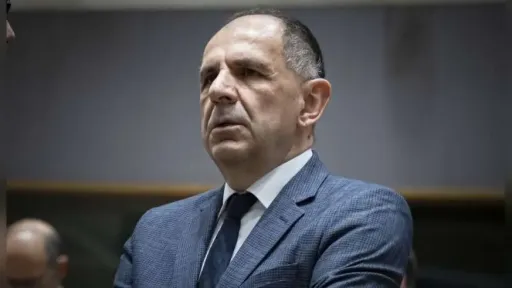
Former Greek Prime Minister Kostas Karamanlis has criticized Türkiye’s policies toward Greece and argued that Western countries apply “double standards” in their approach to Ankara, particularly when compared with their response to Russia’s war in Ukraine.
Speaking at Tsinghua University in China as part of its Executive Master in Business Administration program, Karamanlis described the current international environment as one of the most unstable periods since the end of World War II. He argued that the international system is becoming increasingly unpredictable and multipolar, requiring Greece to adopt a more multidimensional foreign policy.
Karamanlis’ remarks on Türkiye were a prominent part of his speech.
He accused Türkiye of pursuing what he described as “revisionist demands” toward Greece, issuing repeated threats of war and, at times, resorting to the use of force to pursue its objectives.
Karamanlis also described the northern part of Cyprus as being under what he characterized as an “illegal occupation” by Türkiye. He argued that, despite these issues, Ankara continues to be regarded by many Western countries as a “valuable partner and ally.”
Karamanlis says West applies “double standards”
Karamanlis drew a comparison between the international response to Russia’s war in Ukraine and the Cyprus issue, arguing that Western countries apply different standards to the two cases.
While describing Russia’s invasion of Ukraine as “unjust and illegal,” he said the political and economic support provided to Ukraine had not been extended in a comparable manner to Cyprus.
According to Karamanlis, this discrepancy undermines the credibility of Western foreign policy rhetoric based on international law and shared values. He presented the Western approach toward Türkiye as one of the clearest examples of what he considers this inconsistency.
Call for a more multidimensional Greek foreign policy
Karamanlis argued that Greece should not allow its foreign policy to remain confined by traditional geopolitical divisions as the global balance of power changes.
While emphasizing that Greece’s alliance ties with the West remain important, he said the emergence of a more multipolar international system requires Athens to assess its relations with a broader range of countries from a wider strategic perspective.
In this context, Karamanlis also highlighted Greece’s strategic cooperation with China, arguing that bilateral relations have generated mutual benefits over the past two decades.
He concluded by calling for less polarization and greater understanding and cooperation in response to the changing international environment.