Erdogan urges pressure on Israel over Gaza reconstruction

Turkish President Recep Tayyip Erdogan has called for the immediate reconstruction of Gaza and urged UN member states to increase pressure on Israel, while renewing his appeal for wider recognition of a Palestinian state.
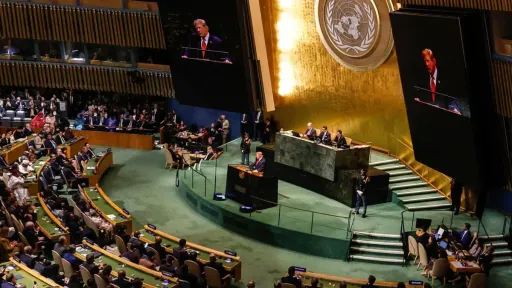
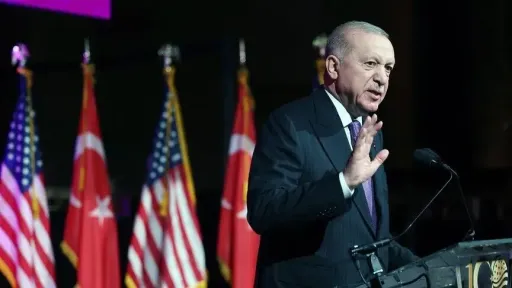
Addressing the 81st session of the UN General Assembly in New York, Erdogan said Gaza's reconstruction should begin without delay and called on the international community to press Israel to support the process.
“We need to begin the reconstruction of Gaza without wasting any time,” Erdogan said, urging countries to exert greater pressure on Israel.
He said Türkiye remained committed to the agreement reached in Sharm el-Sheikh and would continue efforts to ensure its implementation.
Erdogan backs Palestinian state
Erdogan criticized the absence of Palestinian President Mahmoud Abbas from the General Assembly for a second consecutive year, saying Türkiye would continue to represent the voice of a free and sovereign Palestine.
He called on countries that have not recognized a Palestinian state to reconsider their positions and reiterated Türkiye's support for a state based on the 1967 borders, with East Jerusalem as its capital.
“Attempts to strangle the state of Palestine will end in failure,” Erdogan said.
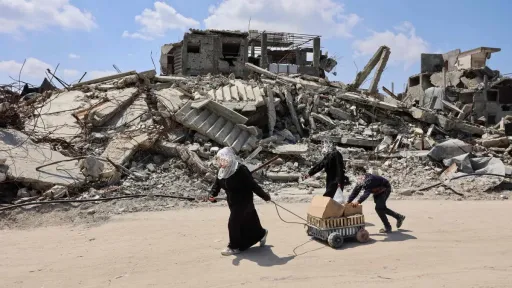
Erdogan described the humanitarian situation in Gaza as one of the world's most serious crises, saying tens of thousands of Palestinians had been killed during the conflict, many of them women and children.
He said hospitals in the enclave were facing severe fuel shortages and that many generators were no longer operating. He also referred to children who had lost limbs and families still searching for relatives beneath the rubble.
Erdogan said more than 1,500 Palestinians had been killed after the October 2025 ceasefire and accused Israel of continuing its occupation despite what he described as Palestinian acceptance of moving to the second phase of a peace plan.
He also condemned settler violence in the occupied West Bank and restrictions affecting access to holy sites in Jerusalem.
Erdogan calls for UN reform
The Turkish president said the conflicts in Gaza, Lebanon, Sudan and elsewhere had exposed weaknesses in the international system and argued that the United Nations needed structural reform.
He renewed his call for reform of the UN Security Council, saying a system in which decisions affecting more than 190 countries depend on five permanent members was not fair.
Erdogan also called for international law to be applied consistently to powerful and weaker states and urged greater reliance on diplomacy, regional initiatives and cooperation.
Türkiye outlines regional diplomacy
Erdogan presented Türkiye as an active diplomatic actor across the Middle East, Europe, Africa and Asia.
On Syria, he said the country had entered a new phase following years of conflict and that Türkiye would continue supporting the Syrian people. He also highlighted cooperation with Iraq on transportation and energy projects.
Regarding the Russia-Ukraine war, Erdogan said Türkiye wanted an end to the conflict while preserving Ukraine's sovereignty and territorial integrity. He said Ankara was continuing diplomatic contacts over Black Sea navigation, food security and efforts to prevent further regional escalation.
Erdogan also condemned attacks on commercial vessels in the Black Sea, saying such attacks were unacceptable regardless of who carried them out.
Eastern Mediterranean and Cyprus
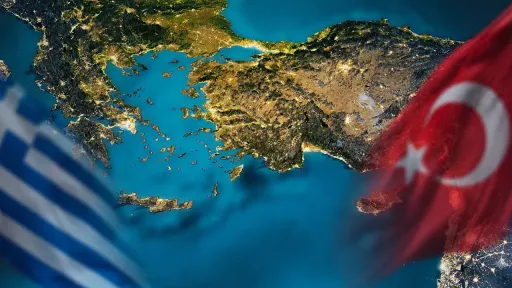
Erdogan called for disputes in the Aegean and Eastern Mediterranean to be addressed through good-neighborly relations and international law. He again proposed an Eastern Mediterranean Conference as a means of finding common ground.
He also repeated Türkiye's call for international recognition of the Turkish Republic of Northern Cyprus and for an end to what he described as the isolation of Turkish Cypriots.
Türkiye and European security
Erdogan said Türkiye remained an important contributor to European security and argued that Europe could not strengthen its security architecture while excluding Ankara.
Referring to the NATO summit hosted by Türkiye in July, he said the meeting demonstrated Ankara's commitment to collective security and called for closer strategic relations between Türkiye and the European Union.
Balkans and South Caucasus
Erdogan said Türkiye would continue supporting cooperation and stability in the Balkans through the Balkan Peace Platform.
In the South Caucasus, he welcomed efforts toward lasting peace between Azerbaijan and Armenia and said Türkiye was continuing its own normalization process with Armenia.
He also highlighted the growing role of the Organization of Turkic States and upcoming regional meetings aimed at expanding cooperation.
Climate change and food security
Erdogan said Türkiye would use its hosting of the COP31 climate summit in Antalya in November to promote climate financing, technology transfer and implementation of existing commitments.
He also warned about the global scale of food waste, saying billions of tons of food are discarded each year while hundreds of millions of people struggle to find enough food.
Türkiye, he said, was ready to contribute to international efforts on reducing waste and strengthening food security.
Erdogan also announced Türkiye's nomination of Mehmet Mehdi Eker for director-general of the UN Food and Agriculture Organization and asked member states to support his candidacy.
Calls for AI regulation
Erdogan called for the creation of a common international legal framework governing artificial intelligence.
He urged the international community to accelerate work on a UN convention on AI, arguing that technological development should remain human-centered and should not deepen global inequality.
He also warned against what he described as digital hegemony, technological polarization and the spread of disinformation through social media.
Erdogan says Türkiye will continue speaking out
In his closing remarks, Erdogan said Türkiye would continue to speak on behalf of people facing conflict and injustice, even when its positions were unpopular with some governments.
He argued that the international community faced a choice between allowing conflict, fear and isolation to deepen or pursuing greater justice, solidarity and cooperation.
“Türkiye has chosen the second path,” Erdogan said, pledging to continue along it.
Source:AA