Mitsotakis, Erdogan to meet by early July

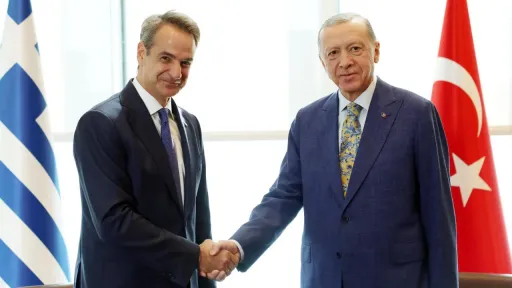
Prime Minister Kyriakos Mitsotakis and Turkish President Recep Tayyip Erdogan are expected to hold a bilateral meeting in Ankara by early July as part of the next Greece-Turkey High-Level Cooperation Council (HLCC), diplomatic sources said.
The date for the HLCC, to be hosted in the Turkish capital, is likely to follow the June 24-25 NATO summit in The Hague, where a brief interaction between the two leaders is not ruled out.
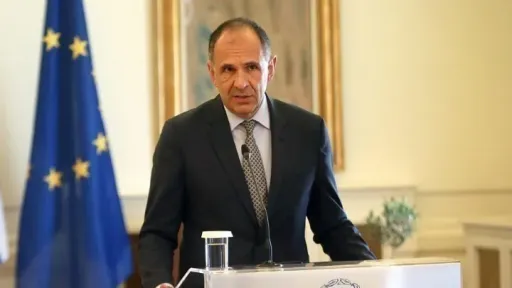
Greek Foreign Minister George Gerapetritis and his Turkish counterpart Hakan Fidan discussed the timeline for upcoming bilateral meetings on the sidelines of an informal NATO gathering in Antalya.
Officials confirmed that announcements will soon follow regarding a new round of political dialogue, the positive agenda, and the HLCC.
The groundwork will be laid by talks between deputy foreign ministers Alexandra Papadopoulou and Mehmet Kemal Bozay, who will address complex bilateral issues and set the agenda.
Military confidence building meetings are also continuing, including a recent one between Greek Chief of Defense Dimitrios Choupis and Turkish counterpart Metin Gurak.
Meanwhile, Greece plans to finalize a draft law establishing two marine parks within 20 days – one in the Aegean Sea and one in the Ionian – despite anticipated objections from Ankara. The initiative is scheduled for presentation before the June 9-13 Our Ocean conference in Nice, France.
Athens does not expect Turkish objections to delay the marine park announcements. Turkish concerns are acknowledged, but Greek officials emphasize the national and environmental priorities of the initiative.
Efforts also continue on the stalled Great Sea Interconnector, an electric link between Greece and Cyprus. While no significant progress has been reported, the Greek government appears determined to proceed despite potential Turkish opposition.
Although no substantial breakthrough is expected on long-standing disputes, Greek officials consider sustained dialogue preferable to past periods of heightened tension.
Turkish officials, for their part, appear focused on broader international priorities, such as Ukraine, Syria and the Middle East, relegating Greek-Turkish differences to lower diplomatic urgency.
Greece sees the current diplomatic “freeze” as preferable to escalation, while Ankara positions itself for a larger international role, treating Greek-Turkish issues as secondary.
Vassilis Nedos-Kathimerini