EU Prosecutor Kövesi demands reform in Greece

European Chief Prosecutor Laura Kövesi issued a firm call for reforms to Greece’s legal framework during a press conference in Athens, warning that constitutional obstacles and weak enforcement are hindering corruption investigations and putting lives at risk.
In her remarks, Kövesi singled out Article 86 of the Greek Constitution — which governs ministerial accountability — as a major barrier to prosecuting high-level corruption. “The only solution is to change it,” she said, citing delays in investigations into the 2023 Tempi train disaster and alleged fraud in EU agricultural subsidies.
“Corruption Can Kill”
Emphasizing that corruption is not merely a financial crime, Kövesi pointed to the fatal Tempi train crash as a stark example of how mismanagement and cover-ups can have deadly consequences.
“Corruption can kill. Tempi is one of those examples,” she stated.
While acknowledging that corruption is a widespread issue across the EU, she stressed the importance of confronting it openly. “The question is how we address it, not how we hide it under the carpet,” she said.
Independence of the EPPO
Kövesi strongly defended the independence of the European Public Prosecutor’s Office (EPPO), rejecting claims of political bias.
“Independence is a red line — no one will cross it,” she warned.
“All cases in Greece are assigned randomly and overseen from our headquarters in Luxembourg. Anyone who says EPPO is not independent is spreading fake news.”
EU-Wide Fraud Investigations
The Chief Prosecutor outlined the scope of EPPO’s current work across Europe, including investigations into VAT fraud, customs violations, and the use of fake invoices. She highlighted “Operation Calypso” — involving 14 EU countries and over 5,000 customs declarations — as an example of cross-border coordination.
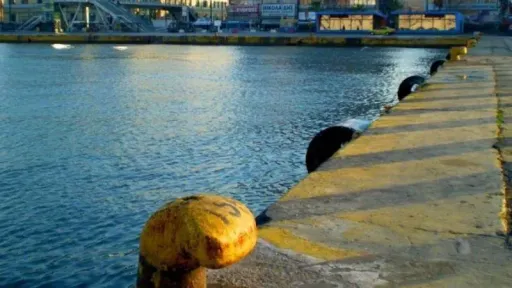
Kövesi also raised alarms about organized crime networks using European ports for drug trafficking. “Cocaine does not fall from the sky. It enters through ports,” she said. “We need urgent, coordinated action — not only in Piraeus, but across Europe.”
Touching on the investigation into irregularities in agricultural funding in Greece, Kövesi said the issue reflects a broader EU problem. She cited a letter from a Greek farmer alleging that honest applicants were denied subsidies due to bribery and favoritism.
“Let’s talk about how honest farmers had no access,” she urged, referencing Greece’s OPEKEPE agency.
Constructive Talks with Greek Government
During her visit, Kövesi met with several key Greek officials, including Finance Minister Kyriakos Pierrakakis, Justice Minister Giorgos Floridis, and Citizen Protection Minister Michalis Chrysochoidis.
Describing her meetings as “constructive,” she said she was “impressed” with Pierrakakis's understanding of the EPPO’s role and called her talks with Chrysochoidis “excellent.”
However, Kövesi underlined that effective cooperation with national authorities must be based on institutional responsibility, not personal goodwill. “It is our job. We are here to stay,” she said.
Strengthening EPPO’s Presence in Greece
Kövesi confirmed that the EPPO plans to reinforce its operations in Athens, though she acknowledged the need for additional resources. She reiterated the office’s long-term commitment to Greece:
“We are here to stay,” she said.
In a final note, she cautioned against media sensationalism in judicial cases, particularly the public exposure of witnesses. “If you want to find the truth, don’t put witnesses on TV,” she said.