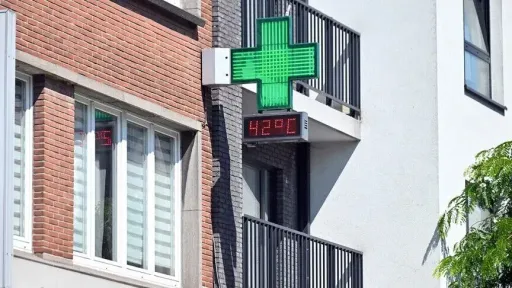
Europe’s heat crisis exposes infrastructure built for a vanished climate

Europe is facing a growing infrastructure crisis as increasingly frequent and intense heat waves expose the continent's inability to cope with a climate far hotter than the one its cities, transport networks and energy systems were designed for.
Temperatures exceeding 40 degrees Celsius have become increasingly common across countries including France, Spain, Germany, the United Kingdom and parts of Central Europe, with scientists attributing the rise in extreme heat to human-driven climate change.
While demand for air conditioning is surging, experts warn that expanding cooling capacity alone will not address the structural vulnerabilities now emerging across Europe's infrastructure.
Much of the continent's housing, railways, hospitals and power systems was built for historically temperate conditions rather than prolonged periods of extreme heat, creating a widening gap between existing infrastructure and current climate realities.
The consequences are becoming increasingly apparent. High temperatures have caused railway tracks to buckle because of thermal expansion, hospitals are facing rising numbers of heat-related emergencies, schools are reducing or suspending classes as indoor temperatures become unsafe, and some nuclear and thermal power plants have been forced to reduce electricity generation when cooling water temperatures exceed operational limits.
Cooling demand rises sharply
The growing reliance on air conditioning reflects Europe's limited preparedness for sustained heat rather than successful adaptation.
Only about 20% of European households currently have air conditioning, compared with roughly 90% in the United States and Japan. Building regulations across much of Europe have traditionally prioritised retaining heat during cold winters instead of preventing overheating during increasingly severe summers.
According to European Commission data, the number of room air-conditioning units in the European Union increased from fewer than seven million in 1990 to around 57 million by 2020. Projections suggest that figure could exceed 100 million units by 2030, with around 70 million households—approximately 35% of all households in the bloc—expected to own at least one unit.
The rapid increase is placing additional pressure on electricity networks during periods of peak demand.
According to the ODYSSEE-MURE energy efficiency database, electricity consumption for household air conditioning rose from an average of 21 kilowatt-hours per household in 2000 to 87 kilowatt-hours in 2023. Eurostat data also show that while overall household energy consumption in the European Union declined slightly in 2024, electricity use for space cooling increased by 15.3% compared with the previous year, making it one of the fastest-growing categories of household energy demand. Over the same period, energy consumption for space heating fell by 1.2%.
Beyond temporary fixes
Experts argue that the expansion of air conditioning addresses only one consequence of a broader climate adaptation challenge.
As heat waves become more frequent and intense, Europe's ageing infrastructure is increasingly vulnerable to overheating, raising concerns about the resilience of transport systems, public services and energy networks.
They say long-term adaptation will require redesigning buildings, upgrading electricity grids and modernising critical infrastructure to withstand a climate that is significantly warmer than the one for which Europe was originally built.