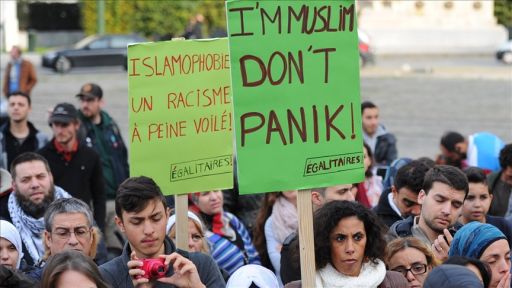
Discrimination against Muslim youth in the Netherlands harms identity and mental health

A new study conducted by Kennisplatform Inclusief Samenleven (KIS) in cooperation with Movisie has found that discrimination experienced by Muslim youth in the Netherlands significantly affects their mental health, identity development, and sense of belonging.
The qualitative research focused on Muslim young people aged 18–25, examining their daily experiences of discrimination in education, the labor market, and public life.
A Gap in Empirical Research
Dr. Jeroen Vlug, who led the study, noted that although there are general studies on anti-Muslim discrimination in the Netherlands, there has been limited empirical research centered specifically on the lived experiences of Muslim youth.
“There are many public debates about Muslim youth,” Vlug said, “but relatively few discussions that directly involve them. This study aims to fill that gap.”
He also highlighted findings from the European Union Agency for Fundamental Rights (FRA), which show that while some European countries have seen improvements, discrimination against Muslims in the Netherlands has increased in recent years.
Additional studies by Utrecht University and Regioplan indicate that anti-Muslim discrimination is particularly prevalent in the labor market, educational settings, and public spaces.
The “Reputation Burden” and Constant Accountability
One key finding of the study is what researchers describe as a “reputation burden.” According to Dr. Vlug, Muslim youth are frequently positioned as informal spokespersons for Islam, especially during public debates concerning terrorism or international conflicts.
“They are often expected to explain what Islam says about events they have no personal connection to,” he said. “This imposed representational burden can be extremely exhausting and creates significant psychological pressure.”
The study found that public narratives framing Islam as a source of tension or social concern intensify feelings of marginalization. For many young people, however, religion is not a burden but an essential and positive component of their intersecting identities.
Multiple Identity Rejection and Belonging Challenges
Researchers also identified what they termed “multiple identity rejection.” Many Muslim youth navigate different sociocultural contexts — cultural traditions at home and differing expectations at school or work.
While many manage this dual socialization successfully, problems arise when their full identity is not accepted in broader society. This rejection can weaken their sense of belonging in Dutch society.
Policy Criticism: Focus on Equality, Not “Resilience”
Dr. Vlug criticized policy approaches that emphasize resilience training for young people as the primary response to discrimination.
“We are dealing with forms of institutional racism that are recognized even at government level,” he stated, referring to issues such as ethnic profiling by police. “Discrimination is not the fault of Muslim youth; it is something imposed on them by society.”
Rather than demanding “special treatment,” the study emphasizes that Muslim youth seek equal rights and equal opportunities under Dutch constitutional principles.
Call for Inclusive Institutional Culture
The researchers recommend that schools and institutions foster inclusive environments where Muslim youth can embrace their multiple identities without contradiction.
True inclusion, they argue, goes beyond accommodating religious practices such as prayer spaces or fasting during Ramadan. It requires structural recognition that being both Muslim and Dutch is not contradictory but a legitimate and integrated expression of modern citizenship.
The findings underscore broader debates in the Netherlands about equality, social cohesion, and the lived realities of minority communities.