Israel expands West Bank land declaration as pressure grows

Israeli authorities have redrawn the boundaries of a 42-year-old “state land” declaration in the occupied West Bank, adding nearly 194 dunams (48 acres) of Palestinian land near the villages of Jalud and Al-Mughayyir, according to a Palestinian government commission.
The Colonization and Wall Resistance Commission said Israel’s Blue Line Team approved the addition of 193.93 dunams to a declaration first issued in 1984.
The revision removed 15.07 dunams from the previous boundaries and left 1,433.85 dunams unchanged, resulting in a net increase of about 179 dunams (44 acres).
The commission said the move does not automatically expand the area under settlement control, but makes the newly included land available for potential planning or allocation procedures at a later stage.
Move comes amid continued settlement expansion
Jalud lies southeast of Nablus, while Al-Mughayyir is northeast of Ramallah. The Palestinian commission said the areas have faced continued settlement and outpost expansion, as well as restrictions on Palestinian agricultural and grazing land.
It described the latest boundary change as part of a broader Israeli system for controlling Palestinian land through “state land” and “government property” declarations, confiscation and expropriation orders, and changes to settlement jurisdiction.
In August, the commission said Israeli authorities had declared about 1,152 dunams belonging to Sinjil, Al-Lubban ash-Sharqiya and Qaryut as “government property,” saying the move was intended to facilitate expansion of the Karmei Oz settlement and strengthen links between settlements and outposts between northern Ramallah and southern Nablus.
Israeli settlements in the occupied West Bank are considered illegal under international law.
Western countries announce new restrictions
The latest land measure coincided with growing international pressure over Israel’s settlement policies and its conduct in the occupied Palestinian territories and Gaza.
The UK, France, Canada, Denmark, Finland, Iceland, Ireland, Norway, Poland, Portugal, Spain and Sweden announced steps Tuesday to restrict trade and business dealings linked to Israeli settlements.
The countries said conditions in the West Bank were “rapidly deteriorating,” citing increased violence and settlement expansion.
Israeli analyst Ori Goldberg said the measures could mark the beginning of sustained external pressure on Israel.
“The trade ban and the sanctions are very important,” Goldberg said, arguing that economic pressure could eventually push Israel toward a policy change.
He cautioned, however, that the measures would not produce an immediate shift in Western policy, saying such changes would take time.
Analysts see wider political significance
Chris Doyle, director of the Council for Arab-British Understanding, described the restrictions as significant because of the number of countries involved and the participation of major European powers.
“This is a very significant ban because it is so many countries doing it,” Doyle said, adding that the measures represented a move from verbal criticism toward concrete action.
Doyle said the restrictions extend beyond settlement trade and include measures affecting financial services and advertising. He also highlighted arms-related restrictions and the potential long-term implications for Israel’s international standing.
He questioned whether the measures would immediately alter the policies of Israel’s current government but said they could send a broader message to future Israeli governments and voters.
Türkiye backs settlement trade restrictions
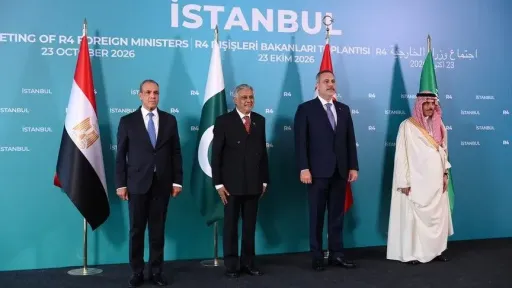
Türkiye welcomed the measures, calling on other countries to adopt similar restrictions.
The Turkish Foreign Ministry said Israel’s efforts to undermine a two-state solution were “intensifying by the day” and described settlement expansion as a systematic policy of occupation.
The ministry said international action against Israel’s occupation activities was essential to achieving a peaceful settlement and a lasting regional peace.
Türkiye said it would continue supporting the establishment of an independent and sovereign Palestinian state based on the 1967 borders, with East Jerusalem as its capital.
Pressure grows as settlement policy expands
The latest developments reflect a widening divide between Israel’s settlement policies in the occupied West Bank and growing international efforts to impose economic and political consequences.
While analysts said the new restrictions may not immediately change Israeli policy, they could increase pressure on Israel over settlement expansion and its broader approach to the occupied Palestinian territories.
Source:AA