Cambridge Dictionary names ‘human’ word of the year for 2026

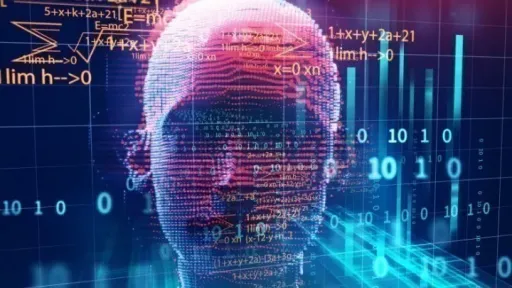
Cambridge Dictionary has selected “human” as its word of the year for 2026, reflecting growing debate over human identity as artificial intelligence becomes increasingly integrated into everyday life.
The dictionary defines “human” as having “the qualities, faults, and feelings that people have, as opposed to gods, animals, or machines.”
The choice highlights how advances in artificial intelligence are challenging traditional distinctions between people and machines, raising questions about consciousness, identity and the nature of human experience.
AI intensifies debate over what it means to be human
Colin McIntosh, an editor at Cambridge Dictionary, said artificial intelligence was changing the way people discuss what it means to be human.
He noted that speakers increasingly use the term to distinguish their own abilities and work from those produced by advanced computer systems.
The debate has become more prominent as AI technology develops, with some researchers and public figures questioning whether machines could eventually achieve consciousness.
Evolutionary biologist Richard Dawkins is among those who have expressed the view that advanced AI systems could possess human-like qualities. However, sceptics argue that the development of the human brain is fundamentally different from the way artificial intelligence systems are created.
Rachel Adams, a University of Cambridge expert in AI governance and human rights, said the technology was reviving longstanding philosophical questions.
“Who are we, what does it mean to be human?” she asked, adding that although the answers have never been fixed, the act of questioning human identity is something people share.
Internet culture brings thousands of new words
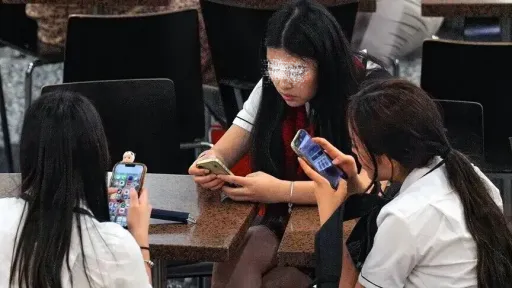
Alongside its word of the year, Cambridge Dictionary has expanded its vocabulary with more than 6,000 new entries reflecting the influence of social media, internet culture and younger generations.
Among the additions are terms such as “skibidi”, “delulu”, “broligarcy” and “lewk”, which demonstrate how online communities are increasingly shaping everyday English.
“Delulu”, derived from “delusional”, describes someone who holds unrealistic or fantasy-based beliefs.
“Broligarcy”, combining the words “bro” and “oligarchy”, refers to wealthy and influential men, particularly in the technology sector, who exercise political and economic power.
“Lewk”, a variation of “look”, describes a distinctive or particularly stylish appearance.
Other additions include “looksmaxxing”, referring to efforts to maximise physical attractiveness, and “aura farming”, which describes deliberately cultivating an appealing, impressive or interesting public image.
Some of these expressions have also become associated with online communities such as the manosphere.
Social media language enters mainstream politics
The growing influence of internet slang is no longer limited to social media platforms.
Australian Prime Minister Anthony Albanese has also used the expression “They are delulu with no solulu” in parliament, demonstrating how language originating in online communities is finding its way into mainstream political debate.
Cambridge Dictionary's publishing manager, Wendalyn Nichols, said editors monitor approximately 2.74 billion annual searches on the dictionary's website to identify frequently used words that have not yet been formally defined.
She explained that popularity alone does not guarantee inclusion. Editors assess whether expressions are widely used, whether their meaning is established and whether they have the potential to remain relevant beyond a particular online community.
“Skibidi and delulu are perfect examples,” Nichols said.
She added that some expressions spread rapidly from relatively small communities into wider society, as happened with “delulu”, which originated among K-pop fans before gaining broader recognition.
New words reflect the evolution of English
The influence of social media on language is part of a much longer process of linguistic evolution.
One historical example is “OK”, which emerged in 19th-century Boston as a humorous abbreviation of “all correct” and later gained wider popularity through US political campaigns. It eventually became one of the most widely recognised expressions of agreement worldwide.
Nichols said there was no guarantee that newly added words would remain in everyday use, even after receiving an official dictionary entry.
She also noted that digital dictionaries have an advantage over traditional printed editions because they can accommodate new vocabulary without removing older entries to create space.
Some words enter dictionaries particularly quickly. COVID-19, for example, was added to Cambridge Dictionary just 37 days after its emergence.
Linguists say internet slang is part of natural language change
Linguists argue that the growing presence of internet expressions does not represent a threat to the English language.
Dr Christian Ilbury, a linguist at the University of Edinburgh, said the creation of new words was a normal part of how languages develop.
He described “delulu” as a useful shorthand created through an established word-forming process, adding that social media simply accelerates the spread and visibility of new expressions.
Even words that may initially appear meaningless to outsiders, such as “skibidi”, can serve an important purpose within the communities that use them.
If an expression communicates meaning among a particular group, Ilbury argued, it has a legitimate role in language.
The latest additions underline how digital communication is transforming English, while Cambridge Dictionary's choice of “human” highlights a parallel debate: as machines become increasingly capable of producing language and performing complex tasks, society is being forced to reconsider what makes people distinctly human.
Source:turkiyetoday