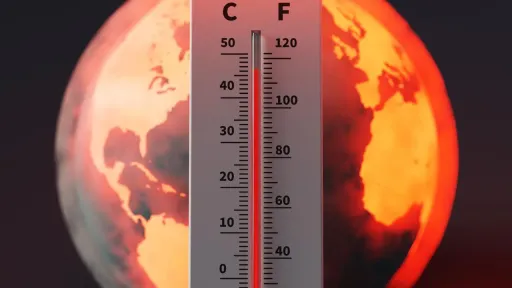
August ties hottest month ever recorded

August tied the record for the hottest month ever recorded globally, as human-caused climate change combined with a powerful El Nino to drive temperatures to unprecedented levels, the European climate service Copernicus said Thursday.
The global average temperature reached 16.96 degrees Celsius last month, technically 0.01 degrees above the previous record set in July 2023. Because the difference falls within the margin of uncertainty, Copernicus classified the two months as a statistical tie.
August was 1.65 degrees Celsius above pre-industrial levels, exceeding the 1.5-degree threshold that governments adopted as a key long-term target under the 2015 Paris climate agreement.
The eight hottest months ever recorded have all occurred since July 2023, according to Copernicus data.
Northern hemisphere summer breaks records
The extreme heat also made 2026 the hottest Northern Hemisphere summer on record, according to Copernicus, while the United States experienced its hottest summer since national records began.
The National Oceanic and Atmospheric Administration said the June-August period in the contiguous United States averaged 23.54 degrees Celsius, surpassing the previous record set during the devastating Dust Bowl summer of 1936.
US temperatures also reached record levels in August, with the monthly average hitting 24.21 degrees Celsius. The average daytime high reached 31.42 degrees Celsius, also a record.
Scientists said the repeated breaking of long-standing temperature records is consistent with the accelerating effects of human-caused climate change.
Oceans reach extreme temperatures
Global ocean temperatures also remained exceptionally high.
Copernicus said August tied March 2024 for the warmest month ever recorded for the world's oceans. August 22 was also the hottest day ever measured for global sea surface temperatures.
Scientists warned that continued warming is likely to increase the frequency and severity of heat waves, storms, floods and wildfires.
Fossil fuels remain main driver
Scientists stressed that although the current El Nino is contributing to the exceptional heat, it is not the primary cause.
El Nino typically raises global temperatures by only about 0.1 to 0.2 degrees Celsius, while the overwhelming long-term warming is driven by greenhouse gases released through the burning of coal, oil and natural gas, Copernicus said.
Climate scientist Friederike Otto of Imperial College London said the underlying driver remained the continued burning of fossil fuels, adding that climate change makes every El Nino event hotter.
The current El Nino is forecast to strengthen further and could become one of the strongest on record.
Climate scientist Zeke Hausfather said 2026 could overtake 2024 as the warmest year on record, while 2027 could surpass both years if the unusually strong El Nino develops as forecast.
Scientists warn of rising risks
Copernicus climate lead Samantha Burgess said the climate system was operating outside conditions scientists would have expected only a decade ago.
She warned that extreme heat was increasingly affecting everyday life through school closures, pressure on hospitals and damage to roads and rail infrastructure.
UN climate chief Simon Stiell said continued fossil fuel use would drive further temperature records and increase the human and economic costs of extreme heat.
“Until humanity stops burning colossal amount of coal, oil and gas,” Stiell said, the pollution would continue to fuel the global climate crisis.
Source:DailySabah