Turkish Union of İskeçe visits Turkish Parliament on 100th anniversary: "We seek our rights, nothing more"
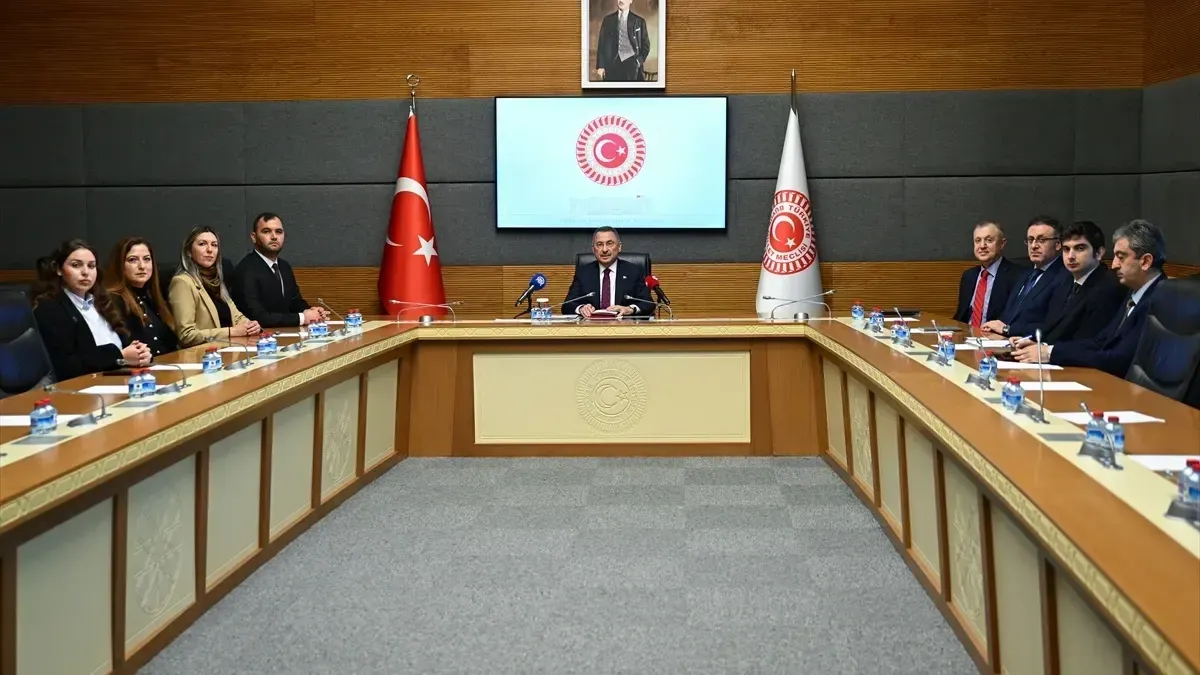
A delegation led by Turkish Union of İskeçe President Kerem Abdurahimoğlu met with the chairs of two parliamentary committees in Ankara. Foreign Affairs Committee Chair Fuat Oktay reaffirmed that the rights of Western Thrace Turks remain among Türkiye's foreign policy priorities.
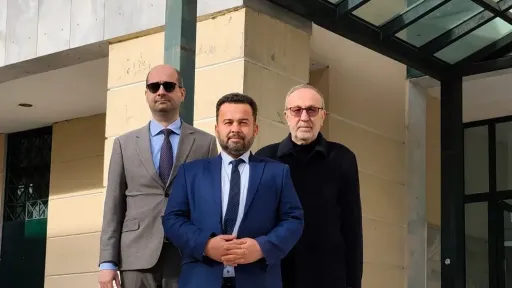
A delegation from the Turkish Union of İskeçe (ITB), led by its President Kerem Abdurahimoğlu, visited the Grand National Assembly of Türkiye (TBMM) as part of the association's 100th anniversary commemorations.
The delegation was received by Fuat Oktay, Chair of the TBMM Foreign Affairs Committee, and Derya Yanık, Chair of the Parliamentary Human Rights Inquiry Committee.
Abdurahimoğlu first met with Yanık in a closed-door meeting. He subsequently visited Oktay together with the delegation.
OKTAY: RIGHTS OF WESTERN THRACE TURKS ARE A PRIORITY
Speaking during the meeting, Oktay said he was pleased to welcome representatives of the Turkish minority in Western Thrace to the Turkish Parliament. He described the Turkish Union of Xanthi as one of the oldest and first-established Turkish associations in Western Thrace.
Oktay stressed the importance of enabling Western Thrace Turks to preserve their culture, language and national values while continuing to live on the lands inherited from their ancestors.
He argued that the Turkish minority in Greece faces violations of fundamental rights and freedoms, including restrictions on freedom of expression, association, education, religion and conscience. He also criticised Greece for failing to implement judgments of the European Court of Human Rights (ECtHR) concerning the minority.
Oktay further argued that Greece was not fulfilling its obligations under international agreements and criticised the European Union for what he described as an inadequate response to the situation.
OKTAY CITES DECLINING POPULATION AND LAND OWNERSHIP FIGURES
Oktay claimed that Western Thrace Turks had experienced significant losses in terms of both population share and land ownership over the decades.
According to figures he cited, the Turkish minority accounted for approximately 65 per cent of the region's population in the 1920s, while its share has now fallen to around 30 per cent.
He also stated that the minority's share of land ownership had declined from approximately 84 per cent in 1923 to around 25 per cent.
Oktay also raised concerns about the situation of Turks living in other parts of Greece, particularly Rhodes, Kos, Thessaloniki and Athens. He criticised the non-registration of associations representing Turkish identity on Rhodes and Kos.
He added that Turks living in the Dodecanese Islands face difficulties in openly expressing their identity and lack sufficient representation in the administration of their foundations.
Oktay underlined that the peace and prosperity of Western Thrace Turks and their ability to preserve their identity remain among Türkiye's foreign policy priorities.
He also said the Turkish Parliament would continue raising the concerns of the Western Thrace Turkish Minority on international platforms through parliamentary diplomacy. Türkiye, he added, would maintain its efforts to protect the minority's rights and preserve its Turkish-Islamic cultural heritage.
ABDURAHİMOĞLU: SUPPORT FOR OUR JUST CAUSE IS HIGHLY VALUABLE
Responding to Oktay, Turkish Union of Xanthi President Kerem Abdurahimoğlu said Türkiye's support for the legitimate struggle of Western Thrace Turks carried great significance for the minority. He expressed his gratitude for this support.
Abdurahimoğlu noted that Western Thrace Turks had worked hard and contributed to the societies in which they lived since 1923. He recalled that the Turkish Union of Xanthi, established in 1927, had continued its activities for decades.
He said the association's official status had been revoked in 1983 as part of efforts to deny its Turkish identity, adding that its legal recognition had still not been restored despite the passage of many years. He also criticised Greece for failing to implement the relevant ECtHR judgments.
Abdurahimoğlu emphasised that the minority's demands were based on fundamental human rights, universal rights and minority rights, and that its members simply wanted to live as equal citizens.
He stressed that their struggle had always been pursued through democratic means and within the framework of the law.
"WE WANT TO BE A BRIDGE OF PEACE BETWEEN TÜRKİYE AND GREECE"
Abdurahimoğlu said Turks living in Greece were seeking equal citizenship rights, including freedoms in education, association, religion and conscience. He added that Türkiye's support was particularly important in efforts conducted on international platforms.
"We want to be a bridge of peace between Greece and Türkiye," Abdurahimoğlu said.
He emphasised that Western Thrace Turks had never posed a threat to Greece, but had instead contributed to the region's prosperity and development. He added that the minority had always respected the laws of the country.
Abdurahimoğlu also argued that denying the identity, language and religion of the Turkish minority would not erase its presence in the region.
"Denying the identity, religion and language of a community living in a particular region does not make that community disappear from that region. We are there, and we continue to live there. We continue to live there with our families," he said.
Abdurahimoğlu reiterated that Western Thrace Turks would continue demanding the right to enjoy their fundamental rights and freedoms as equal citizens, once again thanking Türkiye for its support.