Three municipalities in northern Dedeağaç lose nearly 20% of their population in a decade

Population decline is deepening across Eastern Macedonia and Thrace, with the municipalities of Orestiada, Didymoteicho and Soufli losing almost one-fifth of their residents between 2011 and 2021, according to figures presented at public events on demographic challenges.
The population decline affecting Greece has become particularly pronounced in the border regions of Eastern Macedonia and Thrace, where shrinking communities, school closures and the departure of younger residents are raising concerns about the region's future.
The three municipalities of northern Evros — Orestiada, Didymoteicho and Soufli — have collectively lost nearly 20% of their population over the past decade, according to Didymoteicho Mayor Romylos Chatzigiannoglou.
"An abandoned village in Evros is a loss for the entire country," the mayor warned, highlighting the wider national significance of the demographic crisis in Greece's border areas.
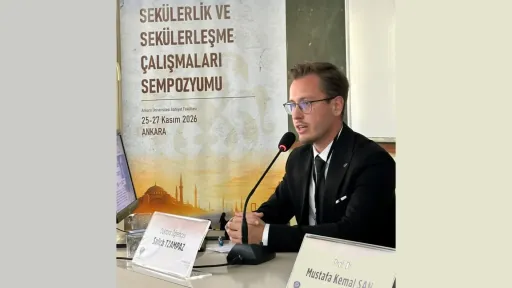
The issue was discussed at public information events titled "Infertility, Declining Birth Rates and the Demographic Challenge", held in İskeçe (Xanthi) and Didymoteicho. The events brought together scientists, local government representatives and residents.
They were jointly organised by the Greek Intermunicipal Network of Healthy Cities, the municipalities of İskeçe and Didymoteicho, and the Hellenic Society of Reproductive Medicine.
Regional population falls by 7.6%
Historian and author Georgios Govesis presented historical and demographic data at the events, highlighting the scale of population decline across Eastern Macedonia and Thrace.
According to the figures presented, the region's population fell from 608,182 in 2011 to 562,201 in 2021, a decrease of approximately 46,000 people, or 7.6%.
The decline varied across the region:
İskeçe Regional Unit: From 111,222 residents in 2011 to 107,548 in 2021, a decrease of 3.3%.
Rhodope Regional Unit: From 112,039 to 101,767, a decrease of 9.1%.
Meriç (Evros) Regional Unit: From 147,947 to 134,766, a decrease of 8.9%.
The situation is particularly concerning in Didymoteicho, where the population dropped from 19,493 in 2011 to 16,060 in 2021, representing a decline of 17.6%.
The data also indicate a substantial increase in the elderly population. The number of residents aged over 70 and 80 reportedly rose by approximately 35% among men and 40% among women.
School closures reflect shrinking communities
Dimetoka Mayor Romylos Chatzigiannoglou described the consequences of population decline for local communities, noting that almost every village in the municipality once had its own primary school.
Today, most of these schools have closed, while even some secondary education facilities have ceased operating.
According to the mayor, the problem extends beyond Didymoteicho to the wider northern Evros region, where Orestiada, Didymoteicho and Soufli have collectively experienced a population decline of almost 20% over the decade.
"Young couples are missing, not the desire to start families"
Speaking to the Athens-Macedonian News Agency (AMNA), Chatzigiannoglou argued that the demographic crisis cannot be addressed solely through policies aimed at increasing birth rates.
"There is no lack of willingness to start families; what is missing is young couples," he said.
He explained that the continued departure of younger generations has significantly reduced the number of people of reproductive age living in the area.
The challenge, therefore, is not simply whether young people want to have children, but whether they can remain in their hometowns, secure stable employment, find housing and build a future there.
The mayor identified stable jobs, decent wages, infrastructure, healthcare services and social support facilities as essential conditions for reversing population decline.
He also stressed that maintaining populated communities in the border region is not merely a matter of local development but one of national strategic importance.
"An abandoned village in Evros is a loss for the entire country," he reiterated.
Government calls for cooperation on demographic challenges
The discussions also highlighted the need for coordinated action to support families, strengthen social cohesion and address the country's demographic challenges.
In a video message delivered to the events, Greece's Deputy Minister of Social Cohesion and Family, Elena Rapti, emphasised the importance of cooperation among relevant institutions.
The discussions concluded with a broader warning that demographic decline is not a distant threat but an ongoing challenge affecting communities across the region.