Türkiye moves closer to EU visa deal, warns against exclusion from Made in EU rules

Türkiye is nearing completion of draft legislation addressing the remaining requirements for visa liberalization with the European Union, while urging Brussels to recognize its role in European industrial supply chains and include the country in its planned "Made in EU" framework.
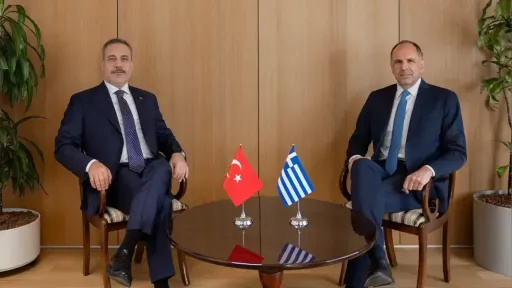
Foreign Minister Hakan Fidan said Ankara had reached the final drafting stage on the six outstanding criteria for visa liberalization, adding that the proposals would be submitted to parliament after the budget discussions.
"The ultimate solution on this issue is essentially to implement the visa liberalization agreement," Fidan told parliament's Planning and Budget Committee during discussions on his ministry's 2027 budget.
He said Türkiye had achieved an 85.4% Schengen visa approval rate between 2023 and 2025, meaning approximately 15 out of every 100 applications were rejected.
Fidan also pointed to growing political pressure over migration across Europe, saying competition between political parties and the rise of far-right movements were affecting visa policies.
Truck driver restrictions create supply chain concerns

Fidan said Ankara was working with European counterparts to resolve difficulties facing Turkish truck drivers following Bulgaria's accession to the Schengen area.
Under the Schengen 90/180-day rule, drivers holding relevant visas can stay in the area for a maximum of 90 days within any 180-day period. Those exceeding the limit face automatic restrictions.
He said the sudden implementation of the system had created serious disruptions for Turkish transport operators, prompting him to contact the Bulgarian prime minister and foreign minister.
Following those discussions, Bulgaria introduced temporary extensions, which were subsequently prolonged until the end of the month, according to Fidan.
Two possible solutions are being discussed: issuing long-stay D-type visas to truck drivers or introducing arrangements for drivers without previous violations.
Fidan stressed that the issue concerned the EU as much as Türkiye, warning that disruptions could damage European supply chains and trade connections.
"We may lose markets there, but they lose supply chains," he said, describing connectivity as one of the most important issues in Türkiye-EU relations.
Ankara demands inclusion in Made in EU framework

Meanwhile, Trade Minister Omer Bolat urged the European Union to recognize Türkiye's rights under the Customs Union and include the country in its proposed "Made in EU" industrial framework.
Speaking at the second Turkish-German Automotive Summit in Berlin, Bolat said Ankara was not seeking preferential treatment but expected Brussels to respect the industrial integration established over nearly three decades.
The Customs Union, which has been in operation since 1996, removes tariffs and quantitative restrictions on industrial goods traded between Türkiye and the EU.
Bolat warned that the European Commission's proposed Industrial Accelerator Act and its associated "Made in EU" criteria could exclude Turkish manufacturers from important European support mechanisms and disrupt established automotive supply chains.
He identified several concerns, including requirements for vehicle assembly within EU borders, Türkiye's exclusion from corporate fleet support mechanisms and restrictions linked to carbon dioxide emissions criteria.
"A vehicle produced in Türkiye is, from start to finish, a product of a European value chain," Bolat said, highlighting the contribution of European investment, engineering and components to Turkish manufacturing.
He argued that the proposed rules, in their current form, could amount to measures incompatible with the Customs Union.
Automotive industry faces potential losses
Bolat highlighted the scale of industrial integration between Türkiye and Europe, particularly in the automotive sector.
He said Türkiye produced approximately 1.458 million vehicles last year, against an annual production capacity of 2 million, with European manufacturers accounting for 71% of total output.
Around 55% of components used in Turkish vehicle production are imported from EU countries, supporting an estimated 250,000 jobs across the bloc, he added.
Bilateral trade between Türkiye and the EU reached €204 billion last year, with approximately 25% involving the automotive sector, according to Bolat.
He described Türkiye as the EU's fifth-largest trading partner and the European automotive industry's third-largest market.
Germany remains Türkiye's largest trading partner, with bilateral trade reaching approximately $52 billion. Automotive products account for around a quarter of that trade.
German direct investment in Türkiye has reached €18 billion, while Turkish investment in Germany stands at approximately €2.5 billion, Bolat said.
He also cited the presence of major European manufacturers, including Mercedes-Benz, Ford, Renault, Stellantis, MAN and Toyota, in Türkiye's automotive production network.
Ankara warns of jobs and export losses
Bolat warned that excluding Türkiye from the "Made in EU" framework could have serious consequences for both economies.
According to industry simulations cited by the minister, Turkish automotive exports to the EU could decline by 53% within four years and 68% by 2035 if the proposed restrictions remain in place.
By 2035, approximately 330,000 jobs and €20 billion in Turkish automotive exports could be at risk.
On the European side, the potential consequences include around 250,000 jobs, €21 billion in automotive exports and €6 billion in EU-linked supplier business.
Bolat called on Brussels to include Türkiye as a partner country in all relevant provisions of the Industrial Accelerator Act from the outset and without restrictions.
He also urged Germany, Türkiye's largest trading partner, to support Ankara's position during the negotiations.
Türkiye seeks broader cooperation with EU
Fidan identified modernization of the Customs Union, inclusion in the "Made in EU" initiative, progress on visa liberalization and participation in European security and defence mechanisms as Ankara's main priorities in relations with the bloc.
He said the EU's revised visa procedures had already helped Turkish citizens obtain multiple-entry Schengen visas more easily, while European diplomatic missions in Türkiye had established a working group to simplify applications.
Fidan also called for a more strategic approach to bilateral relations, arguing that political will could open a new chapter based on shared interests.
"We believe that if the European Union acts with a strategic vision and shows political will, a new era of cooperation based on common interests can begin in our relations," he said.
Regional security and diplomatic priorities
Beyond relations with the EU, Fidan addressed several regional and international issues, including security cooperation in the Middle East.
He defended Türkiye's participation in the Mecca security alliance, saying the arrangement was intended to prevent aggression among participating countries rather than target third parties.
He also highlighted cooperation with Saudi Arabia, Egypt and Pakistan through the Regional Quartet initiative, as well as contacts with the European E4 group comprising Britain, France, Germany and Italy.
On Syria, Fidan said Türkiye supported efforts by the Syrian government to extend state authority throughout the country and complete the integration of the Syrian Democratic Forces (SDF), while describing Israel's policies as a major obstacle to stability.
Regarding Iraq, he welcomed Baghdad's steps to address the presence of the PKK in Sinjar and said Türkiye's activities in Bashiqa would gradually end in parallel.
Fidan also reiterated Ankara's position on Cyprus, stressing that there were two separate peoples, two democracies and two states on the island.
He further highlighted Türkiye's diplomatic engagement with the United States, Canada, Africa and international organizations, including its nomination of OSCE Secretary-General Feridun Sinirlioglu for the position of UN secretary-general.
The minister said Türkiye's diplomatic network had expanded from 163 missions in 2002 to 267, placing the country among those with the widest diplomatic presence worldwide.
Source:AA