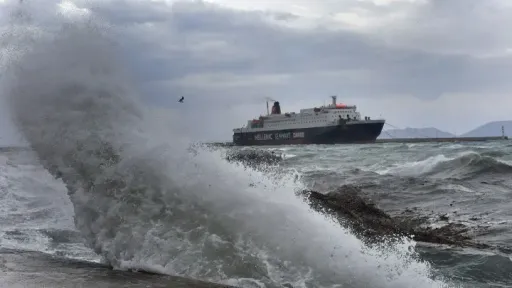
Heavy rain floods Thessaly as snow hits central Greece

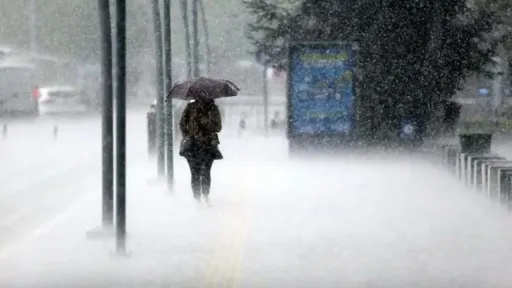
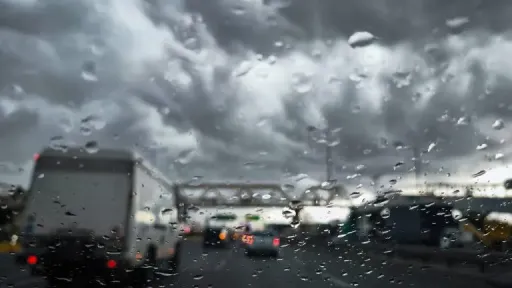
Heavy rainfall, flooding and snowfall affected several parts of Greece on Wednesday, with Magnesia and the Sporades recording more than 100 millimeters of rain, while snow forced authorities to require chains on mountain roads in central Greece.
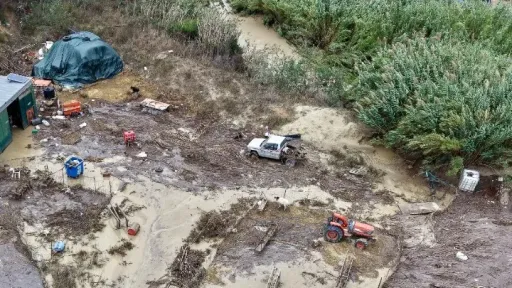
The severe weather caused flooding, road closures, landslides and damage to infrastructure in parts of Thessaly and the Sporades. In Platanias, in South Pelion, six settlements were left without water after three mountain boreholes were damaged by the storm.
According to the National Observatory of Athens’ Meteo network, the highest rainfall totals recorded by 17:40 on Wednesday were 112 millimeters in Portaria, 104 millimeters in Zagora, both in Magnesia, and 102 millimeters on the island of Skiathos.
Platanias faces water shortages after flooding
Platanias suffered extensive damage after torrential rain caused a nearby stream to overflow, carrying mud, debris and a large tree trunk through the village.
The heaviest rainfall occurred between 11:00 and 14:30 on Wednesday, damaging a ford crossing constructed after Storm Daniel devastated the area in 2023. The flooding temporarily separated the two sides of the village, leaving an estimated 30 to 40 people unable to cross the stream by road or on foot.
A man who injured his leg after falling into a drainage shaft at a hotel he owns had to be transported across the flooded stream by members of the 8th EMAK emergency rescue unit using a boat. He subsequently received first aid and was taken to a health centre.
Flooding also affected nearby villages, including Pinakates, as large volumes of water flowed down Mount Pelion. Makrinitsa also experienced rainfall, while no major problems were reported in Volos.
South Pelion Mayor Michalis Mitsikos told ERTNews that restoring the water supply had become the municipality’s immediate priority after the emergency response focused on protecting lives.
Three boreholes in the mountainous area of Platanias were damaged, leaving six settlements without running water. The municipality is arranging deliveries of bottled drinking water and water tankers for other needs.
Access between the two sides of Platanias has since been restored, although some locations toward the Aegean coast and homes served by rural roads remain inaccessible.
Mitsikos said the municipality would seek an official state of emergency declaration to facilitate cleanup operations and repairs to the water supply network and roads.
Skiathos roads hit by flooding and landslides

The island of Skiathos also experienced serious disruption, with the main road network closed for several hours because of accumulated water, landslides and debris.
Traffic was suspended along the Skiathos-Koukounaries road, between the Acropolis area and Koukounaries, until conditions improved.
The flooding affected both roads and properties across Magnesia and the Sporades, prompting emergency services to respond to the severe weather.
At 14:15 on Wednesday, authorities also sent an emergency 112 alert to residents in the vicinity of Platanias, warning of rising water levels and the danger of flooding. People were advised to move to higher floors for protection.
The National Meteorological Service had issued red-code warnings for Magnesia, Larisa, the Sporades and Evia, with severe weather expected to continue into Wednesday night. Orange warnings were also in effect for the eastern Aegean islands and parts of central Greece.
Snow forces drivers to use chains

While heavy rain battered eastern parts of the country, snowfall affected the highlands of central Greece on Wednesday.
Police instructed drivers to use snow chains on several roads in Evritania and Fthiotida, particularly on local routes around Karpenissi and the national road connecting Lamia with Karpenissi.
Snowploughs were deployed where necessary to clear roads and maintain access.
Local media reported snow depths of up to 20 centimetres in the mountains of southwestern Thessaly.
Weather improves before new deterioration
The severe weather system is gradually weakening on Thursday, with temperatures expected to rise slightly, according to ERTNews meteorologist Anastasia Tyraski.
The low-pressure system responsible for Wednesday’s conditions has moved into the southeastern Aegean and is heading eastward.
Clouds and scattered rain are expected to persist on Thursday, particularly over the eastern Aegean islands and the Dodecanese. Showers are also forecast for the Cyclades, Crete, Evia and Attica, with conditions gradually improving in many areas during the day.
Northern winds in the Aegean are expected to reach 6 to 7 on the Beaufort scale before weakening from midday. Temperatures will generally range from 18 to 20 degrees Celsius, reaching 21 degrees in some southern areas.
Unsettled conditions are forecast to continue on Friday and Saturday, with local showers mainly affecting eastern mainland Greece and other parts of the country.
A new low-pressure system is expected to develop over southern Italy and bring another deterioration in the weather on Sunday and Monday, with widespread rain and particular emphasis on western Greece.
The sequence of weather systems is expected to maintain an unsettled autumn pattern across the country in the coming days.
Source: ERTNews