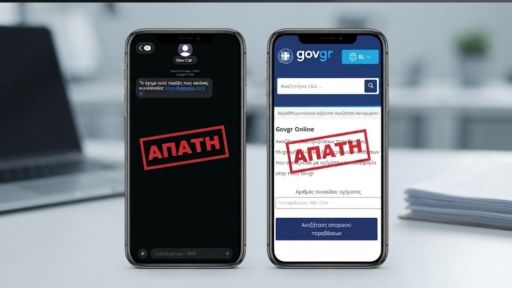
Greece records nearly two fraud cases an hour as scams rise 27.5%

Greece recorded 10,932 fraud cases during the first eight months of 2026, a 27.5% increase compared with the same period last year, according to figures from the Hellenic Police. The data amount to approximately 45 reported incidents a day, prompting authorities to step up efforts to combat increasingly widespread scams.
One of the most concerning trends involves fraudsters impersonating employees of the Hellenic Electricity Distribution Network Operator (DEDDIE), accountants and even police officers. Authorities are preparing to establish a National Fraud Response Centre, which is expected to become fully operational by December.
Impersonation scams raise alarm
Police recorded 3,900 fraud cases and attempted scams involving individuals posing as DEDDIE employees and other officials. Within this category, completed fraud cases — those in which perpetrators successfully deceived their victims — increased by 73%, according to the reported figures.
The schemes have raised concerns among law enforcement agencies and the public, as criminals exploit trust in utility workers, financial professionals and police officers to deceive victims.
Authorities are reviewing fraud incidents recorded in recent months against figures from 2025 to better identify patterns and track the frequency of offences.
Police solve more fraud cases
Despite the overall increase in reported fraud, Greek police have also reported progress in investigations.
The number of fraud cases solved during the first eight months of 2026 reached 2,538, representing a 27% increase compared with the same period last year.
The figures highlight both the growing scale of fraud and the challenges facing law enforcement as scammers adopt different methods to target individuals.
National Fraud Response Centre planned for December
Citizen Protection Minister Michalis Chrysochoidis has announced plans to establish a National Fraud Response Centre to improve coordination between authorities and strengthen efforts to prevent fraud.
The proposed centre will bring together the Hellenic Police, the Financial Police and the Cyber Crime Division, alongside other organisations capable of contributing to fraud prevention.
Coordination efforts have already begun, and the centre is currently operating on a pilot basis. It is expected to take its final form by December 2026, when authorities hope it will become fully operational.
The initiative aims to create a more coordinated response to fraud, improve information-sharing between relevant agencies and help curb the rising number of scams across Greece.