Emergency weather report: Greece to experience extreme heatwave

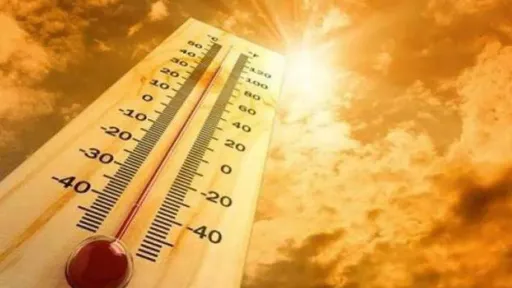
The southwest stream prevailing at the lower levels of the atmosphere along the coasts of Africa and the central Mediterranean will carry hot air masses and cause very high temperatures in Greece, expected to last at least until Friday, July 19.
According to an Emergency Weather Report issued by the Hellenic National Meteorological Service (EMY), the highest temperatures will be recorded in the interior of mainland Greece (mainly in the west and north) and the islands of the eastern Aegean. In the coastal areas of the mainland, the maximum temperature will be 2 to 4 degrees lower due to the sea breeze. Minimum temperatures will also remain high, especially on Monday, July 15.
On Saturday, the maximum temperature will reach 37 to 39 degrees Celsius in Macedonia, Thrace, and Epirus, and locally, 40 to 41 degrees Celsius in central Macedonia. In Central Greece, Thessaly, and the Peloponnese, the temperature will reach 38 to 40 degrees and locally 41 degrees Celsius. In the Ionian Sea, Eastern Aegean, Dodecanese and southern Crete, temperatures will range from 36 to 38 degrees Celsius.
On the rest of the islands, temperatures are expected to range from 33 to 35 degrees Celsius. In Attica, temperatures will be equally high, reaching 38 to 39 degrees Celsius.
On Sunday, high temperatures will prevail mainly in the west, north, eastern Aegean islands and the Dodecanese, with maximum temperatures reaching up to 42 degrees Celsius in many parts of the country.
On Monday, the maximum temperature will rise even further locally, reaching up to 43 degrees Celsius.
Temperatures will peak in the middle of next week. The temperature limits will be redefined on a daily basis over a three-day time horizon.
AMNA