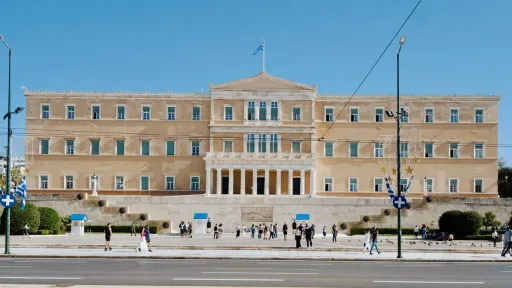
24 July 1974: The night democracy returned to Greece
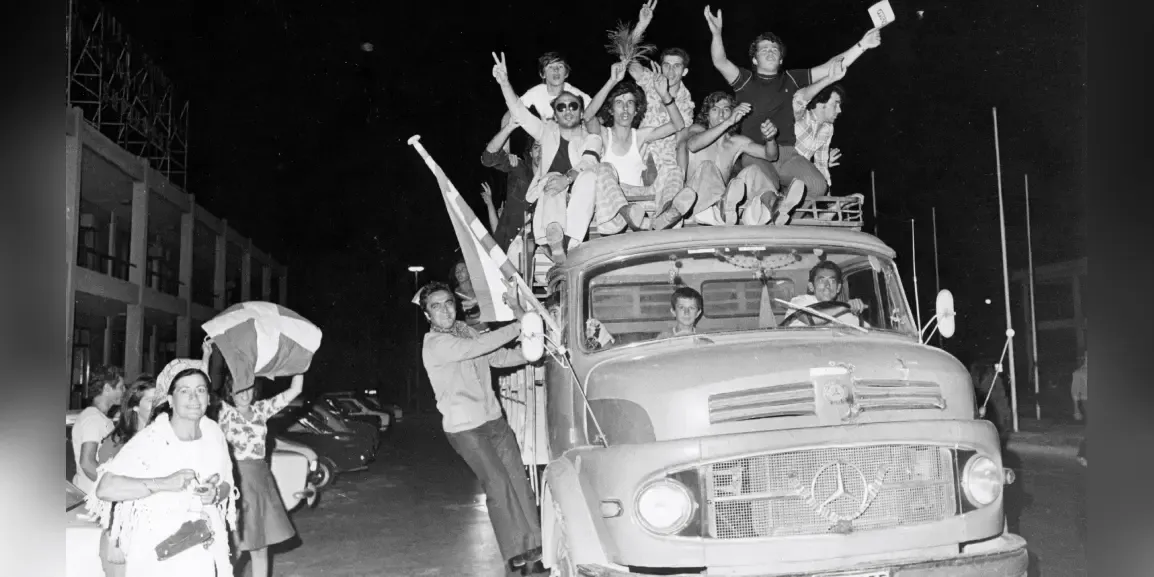
The fall of the junta, which had ruled Greece since 1967, came amid the Cyprus crisis, with Türkiye’s military intervention on the island acting as a catalyst for the regime’s final collapse.
The return of Constantine Karamanlis from Paris in the early hours of 24 July signaled the beginning of the Metapolitefsi period, which became the longest, most stable and peaceful era of parliamentary democracy in modern Greek history.
The collapse of the dictatorship
By 1973, the military regime was already facing growing internal and external pressure. Economic problems, international isolation and increasing public opposition had weakened its foundations. The Athens Polytechnic uprising in November 1973 and its violent suppression exposed the regime’s deepening crisis.
The overthrow of Georgios Papadopoulos by Brigadier Dimitrios Ioannidis failed to restore stability and instead led to the coup against Cypriot President Archbishop Makarios on 15 July 1974.
The coup provided the backdrop for Türkiye’s military operation in Cyprus on 20 July. Facing the possibility of a wider national disaster, Greece’s military leadership was forced to transfer power back to civilian politicians.
The night of 23–24 July
On 23 July, junta-appointed President General Phaedon Gizikis convened an emergency meeting involving former political leaders, including Panagiotis Kanellopoulos, Georgios Mavros, Evangelos Averoff and Spyros Markezinis, as well as military commanders.
Although an initial proposal considered forming a government under Kanellopoulos, the decision was made to invite Constantine Karamanlis, who had lived in self-imposed exile in Paris since 1963.
French President Valéry Giscard d’Estaing provided the presidential aircraft Falcon to facilitate Karamanlis’ return.
At 2:00 a.m. on 24 July, the aircraft landed at Ellinikon Airport in Athens, where thousands of citizens gathered in the streets to celebrate the end of the seven-year dictatorship.
At 4:00 a.m., Karamanlis was sworn in as prime minister before Archbishop Seraphim, forming the Government of National Unity.
Democratic legacy
The Karamanlis government immediately began the complex process of restoring democratic institutions while managing the ongoing Cyprus crisis.
Among its first steps, the government:
- Repealed laws introduced by the dictatorship
- Released political prisoners
- Announced elections
- Prepared the 1975 Constitution
24 July was later established as the official day commemorating the restoration of democracy in Greece. More than five decades later, the date remains a significant part of the country’s historical memory, symbolizing the return of political freedoms, constitutional rule and democratic institutions.
On 24 July 1974, Greece returned to democracy after seven years of military rule. The return of Constantine Karamanlis marked the beginning of the Metapolitefsi era and the restoration of parliamentary institutions.
#Greece #GreekHistory #Democracy #Metapolitefsi #ConstantineKaramanlis #History #Politics