Pierrakakis faces Van Peteghem in two-way contest for Eurogroup Presidency

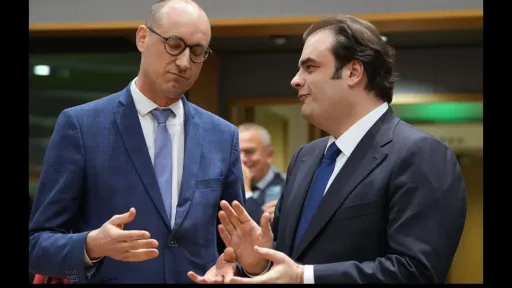
Greece’s Economy and Finance Minister Kyriakos Pierrakakis and Belgium’s Deputy Prime Minister and Budget Minister Vincent Van Peteghem have officially entered the race to become the next president of the Eurogroup, the European Council announced on Monday.
Eurozone finance ministers will elect the new chair on 11 December. The position carries a renewable two-and-a-half-year term and is decided by simple majority, requiring at least 11 votes from the 20-member bloc. If no candidate achieves this in the first round, additional ballots will be held, with candidates free to withdraw between rounds.
The post is open to any sitting eurozone finance minister and involves steering economic policy coordination across the single-currency area and preparing Euro Summit meetings.
The vote comes after the sudden resignation of Ireland’s Paschal Donohoe ten days ago to take up a senior position at the World Bank. Cyprus Finance Minister Makis Keravnos has been serving as acting president since Donohoe’s departure.
Pierrakakis set out his candidacy in a detailed motivation letter, arguing that the eurozone needs “coordinated execution” and a more unified strategic vision as it navigates escalating geopolitical and economic pressures.
Writing to his fellow finance ministers, he said traditional labels such as “North and South” or “frugal and flexible” no longer capture the reality of Europe’s shared priorities, citing defense readiness, technological sovereignty, innovation and competitiveness as common goals. He warned that rising geopolitical uncertainty, including Russia’s war in Ukraine, reinforces the need for greater eurozone cohesion and resilience.
If elected, Pierrakakis said he would pursue four core priorities: establishing a Savings and Investments Union to mobilize idle capital; strengthening and strategically shaping the Single Market; pushing forward the digital euro as part of a broader agenda for technological autonomy; and safeguarding macroeconomic stability through credible fiscal and financial rules.
He also advocated for a Eurogroup that is “focused, agile and inclusive,” working closely with ECOFIN while maintaining a distinct strategic role for the eurozone.
Reflecting on Greece’s economic crisis, Pierrakakis said the experience demonstrated both the risks of complacency and the importance of European solidarity. He argued that the eurozone must act with “unity of purpose” to ensure long-term stability, resilience and competitiveness.