Thrace regional chamber raises alarm over Egnatia Motorway toll hikes

The letter, titled “Thrace’s Position in the National and European Transport Network and the Impact of Egnatia Motorway Toll Increases,” was addressed to Members of Parliament from Meriç, Rhodope and İskeçe, the Regional Governor of Eastern Macedonia and Thrace, institutional chambers, municipalities, and business federations across the region.
33% Toll Increase Following Privatization
The Chamber recalls that the completion of the sale of Egnatia Odos S.A. by the Greek State—through the Hellenic Corporation of Assets and Participations (HCAP)—to the consortium GEK TERNA and Egis Projects in March 2024 included a contractual prerequisite: an increase in toll charges.
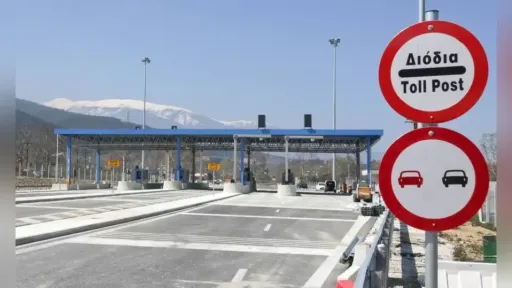
As of January 1, 2026, toll rates have risen from €0.03/km to €0.04/km (net of VAT), marking a 33.33% increase. Further hikes are projected, potentially reaching €0.051/km in the coming years, subject to inflation adjustments. At the same time, the measure allowing free passage for permanent residents within their home prefecture and neighboring prefectures has been abolished.
According to the Chamber, these developments place a disproportionate burden on the Region of Eastern Macedonia and Thrace (EMT), one of the EU’s poorest regions. The region ranks as the 7th poorest in the European Union, the second poorest in Greece, with GDP per capita at just 45% of the EU average. It also stands 225th out of 234 EU regions in the Regional Competitiveness Index (RCI).
“Any increase in the cost of essential infrastructure is not merely a financial adjustment, but a structural obstacle that widens the development gap,” the letter stresses.
Economic and Social Impact
The Chamber highlights that the region’s economic sectors are heavily dependent on road transport. Higher tolls weaken the regional development multiplier effect, as resources are redirected away from the local economy, reducing liquidity, consumption, and investment capacity.
The increase is expected to:
- Raise logistics and supply chain costs
- Compress profit margins in the transport sector
- Pass additional costs on to consumers
- Generate local inflationary pressures
Reduce disposable income, especially for private individuals who cannot deduct the 24% VAT
Moreover, higher transportation costs may restrict intra-regional labor mobility, increase structural unemployment, and accelerate human capital outflow toward other regions or abroad.
“Captive Demand” and Lack of Alternatives
The Chamber underlines that demand for the Egnatia Motorway is inelastic due to the absence of viable alternatives—a phenomenon described in microeconomic theory as “captive demand.”
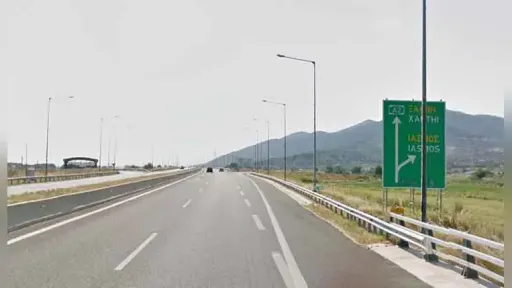
Eastern Macedonia and Thrace remains the only Greek region without a fully operational railway line for six consecutive years. Despite repeated governmental commitments, railway projects have not materialized, limiting transport alternatives. Meanwhile, older national and provincial roads lack the infrastructure standards to safely absorb increased heavy traffic.
The motorway therefore functions as a natural monopoly or essential facility, the Chamber argues. Under Article 102 of the Treaty on the Functioning of the European Union (TFEU) and Greek competition law, any price increase in such conditions requires clear justification in terms of necessity, proportionality, and service improvement.
Policy Proposals
The Regional Department of Thrace proposes:
- Linking any toll increase to independently verified improvements in safety, maintenance, and service quality through measurable KPIs and public accountability.
- Prioritizing the restoration and stable operation of railway services in Thrace.
- Transforming the subsidized maritime freight line to Piraeus into a permanent, predictable logistics tool.
- Maintaining or reinstating toll subsidies or a “transport equivalent” mechanism for permanent residents and businesses in Thrace to safeguard regional cohesion.
A Call for Reconsideration
In conclusion, the Chamber stresses that Egnatia Motorway represents the region’s only effective “bridge” to the national and European transport network. Imposing disproportionate toll increases without functional alternatives risks turning a key development infrastructure into a barrier to entrepreneurship and social cohesion.
The Chamber calls on the Greek government and relevant stakeholders to reassess the toll framework, prioritizing the lifting of transport isolation and ensuring real convergence between Eastern Macedonia and Thrace and the rest of Greece.