OECD puts blue economy in focus, highlighting development potential of Eastern Macedonia and Thrace
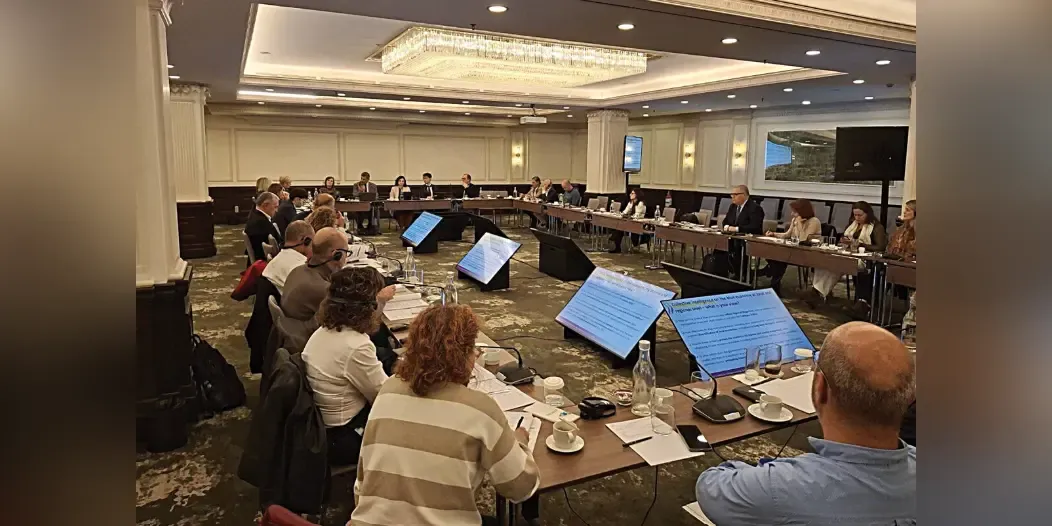
The Region of Eastern Macedonia and Thrace presented its maritime, energy, fisheries and tourism potential at an OECD meeting in Athens, as the organisation prepares a study on sustainable blue economy development in Greece.
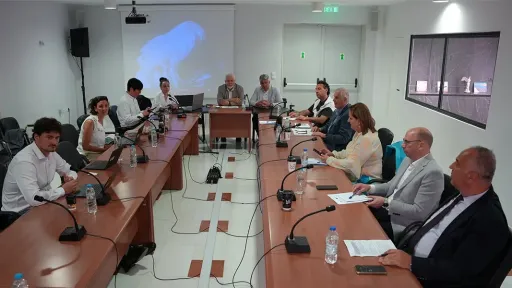
The Region of Eastern Macedonia and Thrace highlighted its development opportunities in the blue economy during a working meeting organised by the Organisation for Economic Co-operation and Development (OECD) in Athens on 24 November.
The region was represented by Theodoros Markopoulos, Deputy Regional Governor of Kavala and Deputy Regional Governor of Eastern Macedonia and Thrace, and Panagiotis Koudoumakis, head of the region's Special Management Service.
The meeting formed part of preparations for an OECD study entitled Promoting a Sustainable Blue Economy through Territorial Cohesion: The Case of Greece. The initiative aims to help Greece develop a resilient, sustainable and circular blue economy while examining the sectors and ecosystems involved within a framework of multilevel governance.
The study also seeks to support Greece in aligning its blue economy development with the European Union's cohesion policy.
PORTS, FISHERIES AND MARITIME TOURISM
During the discussions, Markopoulos outlined the strategic and geoeconomic importance of Eastern Macedonia and Thrace, highlighting its role in maritime transport, fisheries, aquaculture and coastal tourism.
He pointed to the region's port infrastructure as an important component of transport links serving Greece's island regions, as well as European and international trade routes.
Other areas identified as having significant potential included local fisheries, aquaculture, the region's lagoons, protected aquatic areas and coastal resources supporting tourism in both coastal and island destinations.
ENERGY AND INDUSTRIAL INFRASTRUCTURE
Energy and industry were also highlighted as important components of the region's blue economy.
Markopoulos referred specifically to oil extraction at the Prinos field and the Floating Storage and Regasification Unit (FSRU) facilities in Dedeağaç (Alexandroupoli), underlining their relevance to the region's energy infrastructure.
He also drew attention to the region's position along the European Union's external borders, arguing that its geographical and strategic circumstances should be taken into account when designing regional development policies.
In this context, he highlighted a proposal submitted by Eastern Macedonia and Thrace Regional Governor Christodoulos Topsidis concerning the development of regions located along the EU's eastern borders.
EU FUNDING AND REGIONAL DEVELOPMENT PRIORITIES
Koudoumakis outlined ongoing European initiatives and highlighted the role of the Smart Specialisation Strategy and Community-Led Local Development (CLLD) programmes in supporting regional development.
He also stressed the need to give greater priority to the blue economy while simplifying the existing licensing framework for related activities. He called for better coordination between EU-funded initiatives and other areas of regional policy.
The meeting also addressed the need for specific support measures for regions situated along the EU's external borders.
According to the regional representatives, the role of such regions should receive greater consideration in the forthcoming changes to the EU's Cohesion Policy under the next Multiannual Financial Framework.
The OECD study is expected to provide a framework for examining how Greece can strengthen its blue economy while promoting territorial cohesion and more balanced regional development.
Paratiritis News