HRW's catapult report on Greece
Greece
Wed, 19 Jan 2022 17:14 GMT
The annual report of the Human Rights Watch (HRW) is published - What it says about GreeceGreece hosts a large number of asylum seekers, including pushing for new arrivals back to Turkey, while not protecting their rights.Here ends the annual report of th...

The annual report of the Human Rights Watch (HRW) is published - What it says about Greece
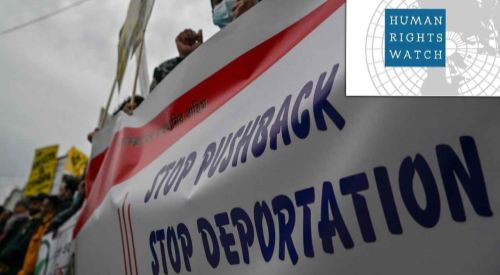
Greece hosts a large number of asylum seekers, including pushing for new arrivals back to Turkey, while not protecting their rights.
Here ends the annual report of the Human Rights Watch (Human Rights Watch) regarding Greece.
According to HRW, the children of immigrants face homelessness and lack of access to adequate health care and education, while victims of hate crimes are reluctant to refer attacks to the police.
Authorities have failed to address the growing violence against women and measures have been put in place that could increase the risks for some survivors of domestic violence.
The report also points out that restrictions on civil society groups that assist migrants and interventions in independent media have raised concerns about the rule of law in the country.
The refugee question
HRW reports that the Greek government frequently carries out abusive checks on immigrants, while referring to the plethora of complaints about the violent repatriation of refugees.
In May, Council of Europe (CoE) Commissioner for Human Rights Dunja Mijatovic urged authorities to end deportations to both land and sea borders with Turkey and to ensure independent and effective investigations.
In July, EU Home Affairs Commissioner Elva Johansson warned Greece to stop pushbacks, calling them "violations of our fundamental European values".
Greece denies the allegations and the authorities regularly fail to conduct appropriate investigations.
The media reported in September that the European Commission had asked Greece to set up an independent mechanism to monitor border violations before releasing 15.83m euros (about $ 18m) from EU funding for immigration.
In June, Greece extended its rejection decisions on the grounds that Turkey was a "safe third country" for refugees from Afghanistan, Somalia, Pakistan, and Bangladesh, threatening to leave thousands stranded, and denying them protection in the EU.
At the same time, it is not possible for them to return to Turkey as the country has not accepted returns from Greece since March 2020. These nationals represent more than 65 percent of asylum seekers in the country. Syrians have been subject to the same rules since 2016.
Racism
Hate crime statistics for 2020, released in April by the non-governmental Racist Violence Recording Network (RVNR), showed an increase in incidents of racist violence against refugees and migrants and attacks on solidarity groups.
The RVNR recorded racist incidents in the context of imposing travel restrictions due to the pandemic.
The RVRN also recorded 30 cases of verbal assault, physical violence, or sexual assault against individuals based on their sexual orientation or gender identity.
Of the 107 hate crime cases recorded by the RVRN, only 35 were reported to the police. In 46 cases, the victims said they would not take further action due to fear, lack of trust in the authorities, or bureaucratic obstacles.
Police statistics released in May on fines for Covid-19 offenses on the islands of Lesvos, Chios, and Samos showed that between March 23, 2020, and May 24, 2021, 74% of fines were imposed on foreigners, despite a small percentage of the island's population, raising concerns about the use of ethnic profile, a long-standing issue in Greece.
The lockdown in camps across the country was stricter than in the general population.
The trial of six people, including four police officers, for causing fatal bodily harm in the murder of 33-year-old activist Zak Costopoulos in 2018 continued in October after being postponed to 2020 due to Covid-19.
Women's rights
Violence against women has been the subject of intense debate over the year, after Olympian Sofia Bekatorou revealed in January that she had been sexually assaulted in 1998 by a member of the Greek Sailing Federation, sparking a national #MeToo movement.
In May, the government passed a controversial family law, despite the risk posed by the law to women and children who are victims of domestic violence. In March, the non-governmental group Diotima noted that during the pandemic there was an increase in reported incidents of domestic and other gender-based violence. At least 11 women have been murdered by their current or ex-husbands or partners in the first nine months of the year. The killings shocked the public, opening a debate on the issue of domestic violence. Women face multiple obstacles until they report incidents of domestic violence and seek help from the state.
SOURCE
Greece hosts a large number of asylum seekers, including pushing for new arrivals back to Turkey, while not protecting their rights.
Here ends the annual report of the Human Rights Watch (Human Rights Watch) regarding Greece.
According to HRW, the children of immigrants face homelessness and lack of access to adequate health care and education, while victims of hate crimes are reluctant to refer attacks to the police.
Authorities have failed to address the growing violence against women and measures have been put in place that could increase the risks for some survivors of domestic violence.
The report also points out that restrictions on civil society groups that assist migrants and interventions in independent media have raised concerns about the rule of law in the country.
The refugee question
HRW reports that the Greek government frequently carries out abusive checks on immigrants, while referring to the plethora of complaints about the violent repatriation of refugees.
In May, Council of Europe (CoE) Commissioner for Human Rights Dunja Mijatovic urged authorities to end deportations to both land and sea borders with Turkey and to ensure independent and effective investigations.
In July, EU Home Affairs Commissioner Elva Johansson warned Greece to stop pushbacks, calling them "violations of our fundamental European values".
Greece denies the allegations and the authorities regularly fail to conduct appropriate investigations.
The media reported in September that the European Commission had asked Greece to set up an independent mechanism to monitor border violations before releasing 15.83m euros (about $ 18m) from EU funding for immigration.
In June, Greece extended its rejection decisions on the grounds that Turkey was a "safe third country" for refugees from Afghanistan, Somalia, Pakistan, and Bangladesh, threatening to leave thousands stranded, and denying them protection in the EU.
At the same time, it is not possible for them to return to Turkey as the country has not accepted returns from Greece since March 2020. These nationals represent more than 65 percent of asylum seekers in the country. Syrians have been subject to the same rules since 2016.
Racism
Hate crime statistics for 2020, released in April by the non-governmental Racist Violence Recording Network (RVNR), showed an increase in incidents of racist violence against refugees and migrants and attacks on solidarity groups.
The RVNR recorded racist incidents in the context of imposing travel restrictions due to the pandemic.
The RVRN also recorded 30 cases of verbal assault, physical violence, or sexual assault against individuals based on their sexual orientation or gender identity.
Of the 107 hate crime cases recorded by the RVRN, only 35 were reported to the police. In 46 cases, the victims said they would not take further action due to fear, lack of trust in the authorities, or bureaucratic obstacles.
Police statistics released in May on fines for Covid-19 offenses on the islands of Lesvos, Chios, and Samos showed that between March 23, 2020, and May 24, 2021, 74% of fines were imposed on foreigners, despite a small percentage of the island's population, raising concerns about the use of ethnic profile, a long-standing issue in Greece.
The lockdown in camps across the country was stricter than in the general population.
The trial of six people, including four police officers, for causing fatal bodily harm in the murder of 33-year-old activist Zak Costopoulos in 2018 continued in October after being postponed to 2020 due to Covid-19.
Women's rights
Violence against women has been the subject of intense debate over the year, after Olympian Sofia Bekatorou revealed in January that she had been sexually assaulted in 1998 by a member of the Greek Sailing Federation, sparking a national #MeToo movement.
In May, the government passed a controversial family law, despite the risk posed by the law to women and children who are victims of domestic violence. In March, the non-governmental group Diotima noted that during the pandemic there was an increase in reported incidents of domestic and other gender-based violence. At least 11 women have been murdered by their current or ex-husbands or partners in the first nine months of the year. The killings shocked the public, opening a debate on the issue of domestic violence. Women face multiple obstacles until they report incidents of domestic violence and seek help from the state.
SOURCE