Turkish youth in UK face subtle, ‘everyday’ Islamophobia: Study

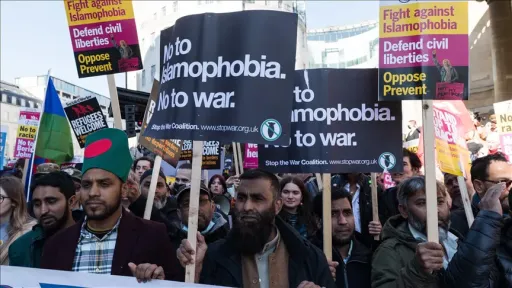
Afield study focusing on Turkish youth in the United Kingdom has found that Islamophobia extends beyond overt hostility, taking root in subtle, routine interactions that are often difficult to detect but leave lasting psychological effects.
The research, conducted by Dr. Muhammed Babacan, an assistant professor in the sociology of religion, highlights how discrimination is reproduced not only through explicit acts such as hate speech or physical attacks, but also through what he describes as “everyday Islamophobia.”
Speaking about his findings, Babacan said the phenomenon operates on both “macro” and “micro” levels. At the macro level, he pointed to political discourse and media narratives in Western societies that frame Islam in negative terms, often for political or economic purposes. These narratives, he said, help normalize prejudice and shape public attitudes.
“This situation fuels the micro level,” Babacan said. “The racist mindset, influenced by this macro level, produces racism in daily life.”
According to the study, these broader discourses translate into lived experiences in schools, workplaces, public institutions and on the street. While overt incidents of discrimination remain a concern, Babacan emphasized that many participants described more subtle forms of bias that are harder to identify and prove.
The research contributes to ongoing debates about how Islamophobia should be defined, arguing that it should be understood as a form of racism. Babacan noted that racism has evolved in the modern era, shifting away from biological or genetic markers toward cultural differences.
“In the past, racism was based on physical traits,” he said. “Today, it is shaped by culture, by clothing, religious symbols, lifestyle and perceived compatibility with Western values.”
This shift, often described as “cultural racism,” has become more prominent in the decades following large-scale migration movements after World War II. Generalizations about Muslims, Babacan said, are among the clearest examples of this trend.
The study also found that the effects of Islamophobia are not evenly distributed. Certain groups face more intense forms of discrimination, particularly those whose religious identity is more visible. Babacan highlighted the concept of intersectionality, noting that conservative Muslim women often experience compounded discrimination due to both gender and religious identity.
“The combination of multiple identities increases the severity of discrimination,” he said.
Central to the study is the concept of “everyday Islamophobia,” which Babacan described as a subtle, often hidden form of bias embedded in routine interactions. Unlike overt acts of racism, these experiences are frequently ambiguous, allowing perpetrators or institutions to offer alternative explanations.
In interviews with Turkish youth, participants described situations in which they felt singled out despite a lack of clear evidence. One example involved airport security procedures, where individuals wearing headscarves reported being disproportionately searched or questioned compared to others traveling under similar conditions.
Such incidents, Babacan said, may appear isolated, but their repetition creates a strong perception of unequal treatment.
“Because these experiences are not explicit, they are difficult to prove,” he said. “But over time, they leave a psychological impact and reinforce a sense of exclusion.”
Even seemingly innocuous questions can contribute to this dynamic. Participants reported being repeatedly asked about their origins, even if they were born and raised in the United Kingdom. In some cases, these interactions escalated into overtly prejudiced remarks once their Turkish or Muslim background was revealed.
“The question ‘Where are you from?’ may seem innocent,” Babacan said. “But how and why it is asked can turn it into a form of discrimination.”
The study found that visible markers of religious identity, such as headscarves, play a significant role in shaping how individuals are perceived and treated. These symbols often influence behavior toward individuals in subtle but consistent ways.
Another key finding is how Turkish youth respond to these experiences. Unlike some other Muslim communities, the study suggests that Turks in the United Kingdom tend to adopt identity strategies that emphasize ethnicity rather than religion.
Babacan said many participants viewed Islamophobia as a stigmatized identity associated primarily with other Muslim groups. As a result, they sought to distance themselves from that perception by highlighting ethnic differences.
“Turks living in the U.K. are inclined to construct a different identity outside of this,” he said. “They position themselves separately and emphasize difference.”
This strategy often involves what Babacan described as an emphasis on “whiteness,” invisibility and distinction. By presenting themselves as less visibly Muslim or culturally distinct from other groups, some Turkish youth attempt to avoid discrimination.
The study also introduces the concept of “hypothetical whiteness,” in which individuals perceive themselves as less likely to be targeted due to their relative invisibility within the broader social landscape.
Babacan noted that this dynamic is shaped in part by the structure of minority communities in the United Kingdom. South Asians, who represent a larger and more visible Muslim population, are more frequently the focus of public and media attention related to Islamophobia.
“The fact that South Asians are often the primary target has created a space for young Turks to say, ‘We are different,’” he said.
However, this strategy does not eliminate discrimination entirely. Instead, it reflects an adaptive response to a social environment in which bias is both pervasive and often difficult to confront directly.
The study underscores the need to examine Islamophobia beyond its most visible forms, drawing attention to the everyday interactions that shape the lived experiences of minority communities.
By highlighting these subtle dynamics, Babacan said, the research aims to broaden understanding of how discrimination operates and to encourage more comprehensive approaches to addressing it.
“Islamophobia is not only about extreme cases,” he said. “It is also about the ordinary moments that accumulate over time and shape people’s sense of belonging.”
AA