German migrant groups seek safeguards against possible AfD government

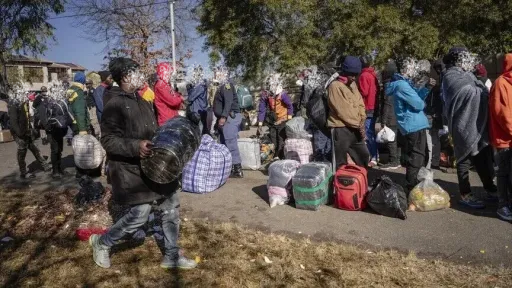
Migrant organizations in Germany have urged Chancellor Friedrich Merz and state premiers to establish legal, administrative and financial safeguards ahead of a possible government led by the Alternative for Germany (AfD) party in Saxony-Anhalt.
In an open letter published Monday, the groups warned that an AfD-led administration could affect migrants, asylum seekers, civil society organizations and minority communities through its control of key state institutions, including the police, schools and security services.
The letter was signed by the Turkish Community in Germany (TGD), the Federal Conference of Migrant Organizations (BKMO), the Umbrella Organization of Migrant Organizations in East Germany (DaMOst) and the Network of Migrant Organizations in Saxony-Anhalt (LAMSA).
The organizations said preparations were needed before a government involving the AfD takes office, arguing that no comprehensive framework currently exists to protect people who could be affected by its policies.
Three demands for legal and financial protection
The organizations outlined three main proposals to protect migrants and asylum seekers if an AfD-involved administration introduces measures they consider unconstitutional.
First, they called for a joint federal-state commission to assess potential risks to minorities and establish protective measures before a new government takes office.
The proposed body would examine ways to protect individuals, families, civic organizations and institutions from far-right violence and possible government actions that could challenge constitutional protections.
Second, the groups urged authorities to introduce exemptions from residence restrictions that generally require asylum seekers to remain in their assigned federal state for a specified period.
They argued that people facing threats of racist violence should be allowed to relocate to safer areas, including outside Saxony-Anhalt.
Third, they proposed a federal protection fund for threatened nonprofit organizations, counseling centers and community groups. The fund would cover security measures, protective advice, emergency planning and temporary safeguards.
Under the proposal, organizations would be able to apply directly to a federal office without requiring approval from state authorities.
AfD wins strong electoral support in Saxony-Anhalt
The demands follow the AfD's strong performance in Saxony-Anhalt's Sept. 6 election, in which the party won 43.8% of the vote and secured 39 of the state parliament's 83 seats, three short of an absolute majority.
The party's lead candidate, Ulrich Siegmund, advocated accelerated deportations of migrants required to leave Germany, mandatory work for asylum seekers and converting reception centers into deportation detention facilities during the campaign.
The AfD is holding talks on forming a government. The smaller left-wing populist BSW party has signaled openness to cooperation on some issues, while other parties have ruled out a coalition with the AfD.
A vote to elect the state premier is expected in December.
Debate over far-right influence extends nationwide
The dispute comes amid growing support for the AfD at the national level. Recent surveys cited in the report put the party at around 29% to 30%, ahead of Merz's conservative CDU/CSU alliance.
Germany's domestic intelligence authorities have monitored the AfD and individual party members over suspected anti-democratic activities. In several states, regional branches have been classified by authorities as confirmed right-wing extremist organizations.
The intelligence assessments have cited concerns about elements of the party promoting an ethnic understanding of national identity that authorities consider incompatible with Germany's democratic constitutional order.
The migrant organizations say their proposals are intended to ensure that constitutional protections, personal safety and access to support services remain in place regardless of which parties form state governments.
Source:AA