Belgium’s justice system strained by rise in drug-related violence

Despite the increase in violence linked to drug trafficking, the judicial system continues to suffer from chronic underfunding and long-standing structural deficiencies, according to the report. Experts and officials say these weaknesses are fueling a widening perception of impunity.
Justice Minister Annelies Verlinden has called for an additional €1 billion in funding to reinforce the system, proposing that half of the amount be directed to daily operations and the remainder to infrastructure investment. Her proposals include tougher penalties for major drug traffickers, mandatory drug testing in prisons, and measures requiring wealthy detainees to contribute to the cost of their incarceration.
Interior Minister Bernard Quintin has meanwhile drawn criticism after suggesting that the army could be deployed in major cities to help curb escalating drug-related violence.
Organized crime has also posed direct threats to political leaders. During the previous legislative term, a justice minister was forced into hiding after receiving death threats linked to criminal networks.
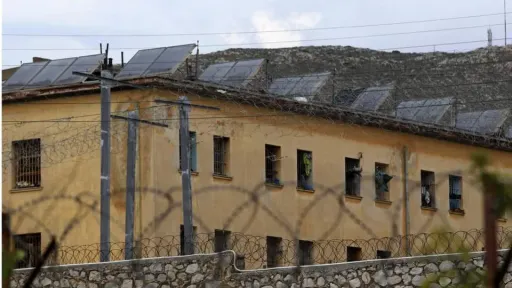
Beyond security concerns, prison overcrowding remains a critical issue. More than 2,500 convicted offenders are currently under electronic monitoring or waiting for a prison cell. Figures shared by prison staff unions with Belga show that 499 inmates are sleeping on the floor in 19 prisons, with the problem particularly acute in Flanders.
Analysts note that while Belgium’s public spending on law enforcement is broadly comparable to that of neighboring countries, the performance of its courts and prisons lags behind. Calls for structural reform and improved management have persisted for years, but successive justice ministers have failed to deliver lasting solutions.
Public confidence in the justice system is also declining. According to the fifth Justice Barometer, only about half of the population expresses trust in Belgium’s justice system. Confidence is lowest among working-class citizens, while a clear majority is recorded only among the upper middle class.
Concerns are shared within the judiciary itself. A magistrate investigating organized crime in Antwerp recently warned that Belgium risks becoming a “narco-state,” characterized by illegal economies, corruption and violence.