Srebrenica Memorial Center decries 149 genocide denial cases, warns of rising revisionism

The Srebrenica Memorial Center has documented 149 cases of genocide denial in Bosnia and Herzegovina in its last 12-month monitoring period, up more than 50% from the 99 cases seen in the previous period, according to its annual Genocide Denial Report presented on Thursday.
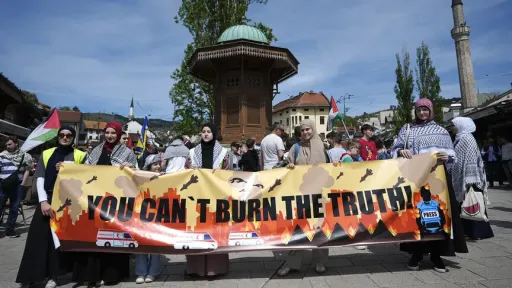
The report said genocide denial remains widespread despite amendments to Bosnia and Herzegovina’s Criminal Code adopted in 2021 criminalizing genocide denial and the glorification of convicted war criminals. It warned that denial continues through political rhetoric, media reporting, public institutions, and social media, while the lack of a consistent judicial response has contributed to a climate of impunity.
According to the report, 94 cases from May 2025 to this May were classified as direct denial of the 1995 genocide in the besieged city of Srebrenica, 23 involved relativization or justification of the crime, 21 consisted of public support for convicted war criminals without explicitly mentioning genocide, nine acknowledged the crimes while rejecting their legal classification as genocide, and two were categorized as triumphalism, or celebration of the genocide.
The authors also warned that social media has become an increasingly important platform for spreading denial narratives, with many posts being deleted before investigators can identify their authors.
Archive of public rhetoric
Emir Suljagic, director of the Srebrenica Memorial Center, said the institution has systematically monitored genocide denial for six years to create a permanent archive documenting how political and public figures address the Srebrenica genocide.
“Whatever political winds blow today, they will pass. But decades from now there will remain a record of who said what about Srebrenica 30 years after the genocide,” Suljagic said.
He argued that denial of the genocide – which killed over 8,300 people – is aimed at shaping the future rather than revisiting the past.
“Genocide denial is always about rewriting history and revising established historical facts,” he said.
Suljagic also alleged a direct link between lobbying efforts by Milorad Dodik, the president of Bosnia and Herzegovina’s Republika Srpska, and international campaigns denying the genocide, saying the crime was being turned into “political capital” marketed to far-right circles in the West.
Monitoring team coordinator Edin Ikanovic said the report reflects a worrying upward trend, from 99 in the previous monitoring period to 149 in the one just completed.
“Direct denial, relativization and glorification of perpetrators remain the dominant forms,” he said.
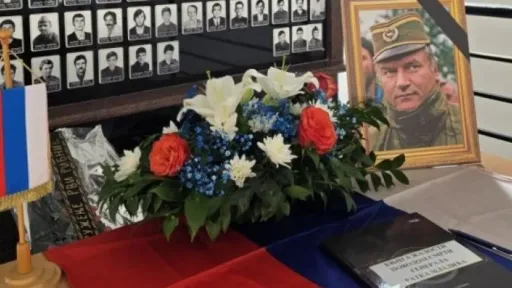
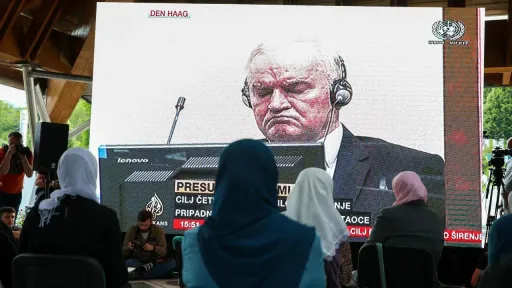
He added that public support for convicted war criminals Radovan Karadzic and Ratko Mladic had risen.
According to the report, Dodik again topped the list of individuals most frequently denying the genocide, while Bosnia’s Serb news agency SRNA and public broadcaster RTRS were identified as key platforms for spreading denial narratives.
Dehumanization of Bosniaks
Tarik Mocevic, the report’s editor, said the increase in recorded cases shows that criminalizing genocide denial has not produced the expected deterrent effect.
He highlighted what the report describes as an organized campaign of dehumanization against ethnic Bosniaks, arguing that it extends beyond isolated incidents and forms part of a broader political strategy.
“Dehumanization is recognized in genocide studies as one of the stages preceding the gravest crimes. That is why documenting these developments remains critically important,” Mocevic said.
He also criticized Bosnia’s judiciary, saying court rulings have been inconsistent and insufficient to address the scale of genocide denial.
Lobbying campaign
Political analyst Jasmin Mujanovic, one of the report’s authors, presented findings on lobbying activities linked to Republika Srpska officials in the United States.
He said a coordinated lobbying campaign intensified after most US sanctions against Dodik were lifted late last year.
According to Mujanovic, the campaign seeks international support for Republika Srpska’s political objectives while portraying Bosniaks and Muslims as security threats in an effort to relativize and normalize the Srebrenica genocide.
The report concludes that the Srebrenica Memorial Center will continue documenting genocide denial, the glorification of convicted war criminals, and anti-Bosniak rhetoric to build a permanent archive for researchers, judicial institutions, and the public.
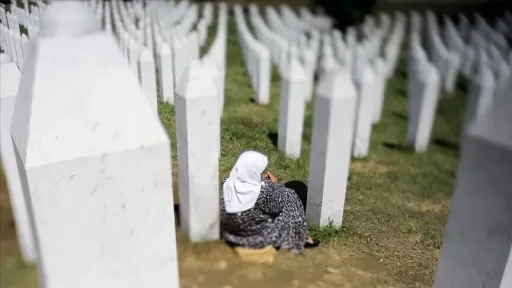
In July 1995, Bosnian Serb forces overran the UN-declared safe area of Srebrenica and systematically killed 8,372 Bosniak men and boys in what has been recognized as genocide by international courts, including the International Court of Justice and the International Criminal Tribunal for the former Yugoslavia.
More than 6,780 victims have been buried at the Srebrenica-Potocari Memorial Center, while hundreds of others were buried elsewhere at the request of their families. New victims continue to be identified through DNA analysis and laid to rest during annual commemorations.
AA