Serbia heads for early election amid protests and EU tensions

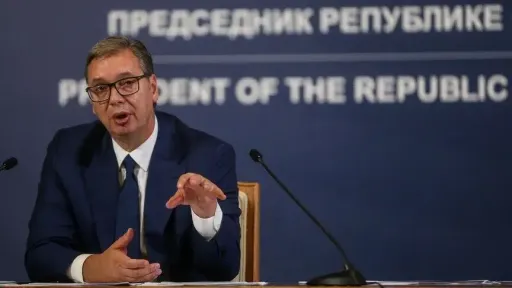
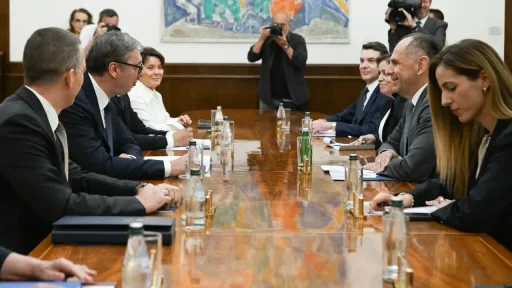
Serbia is heading toward an early parliamentary election after the government proposed dissolving parliament, giving President Aleksandar Vucic an opportunity to reassert his political control amid months of mass protests and growing tensions with the European Union.
Prime Minister Djuro Macut announced the proposal in Belgrade on Monday, saying an election was the best way to ease political tensions and allow voters to decide the country’s direction.
The parliamentary vote was not due until December next year. Vucic has said the early election will take place on either Oct. 18 or Oct. 25, with the formal date expected to be announced in the coming days.
The election is expected to test Vucic’s hold over Serbian politics after more than a decade as the country’s dominant political figure, serving as either president or prime minister for 12 years.
His Serbian Progressive Party nominated him on Saturday to run for prime minister, raising speculation that he could seek to return to the post after moving from the presidency.
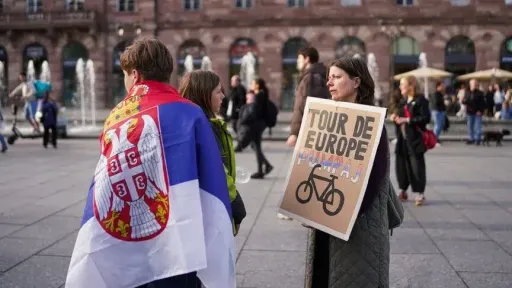
The early election has also been a longstanding demand of a student-led protest movement that has organized mass demonstrations and blockades over corruption and government accountability.
The protests intensified after 16 people were killed when a concrete canopy collapsed at a railway station in 2024.
Opposition groups and protesters accuse Vucic and his allies of corruption, links to organized crime, political violence and restrictions on media freedom. Vucic and his allies deny the allegations.
Macut said Serbia had faced prolonged protests, institutional pressure, divisions and disruption to education.
“A responsible government never ignores such demands,” he said, arguing that allowing voters to decide could help reduce tensions.
EU path under pressure
The political uncertainty comes as Serbia’s stalled bid to join the European Union faces renewed scrutiny.
Serbia has been an EU candidate since 2012 and began accession negotiations in 2014, but progress has slowed amid concerns over democratic standards, media freedom and its foreign policy.
Vucic has sought to maintain close relations with both Russia and China while pursuing EU membership.
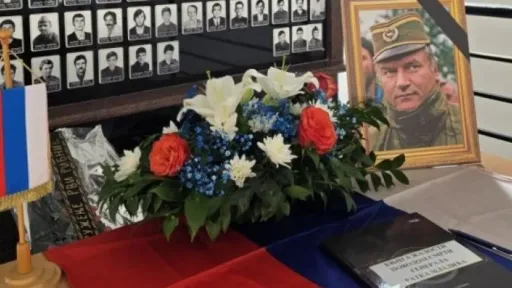
The issue has been further complicated by controversy surrounding the public honoring of Ratko Mladic, the former Bosnian Serb army commander who died in The Hague on Aug. 27 while serving a life sentence for genocide, war crimes and crimes against humanity.
Mladic was convicted over crimes committed during the 1992-1995 Bosnian War, including his role in the 1995 Srebrenica massacre, in which more than 8,000 Bosniak men and boys were killed.
EU condemns Mladic tributes
The EU on Monday condemned what it described as the glorification of Mladic.
An EU spokesperson said honoring convicted war criminals, denying genocide and promoting historical revisionism were incompatible with European values and had no place in the bloc or in countries seeking membership.
The statement followed Mladic’s burial in Belgrade, where he was received with a guard of honor after his body was brought back from the Netherlands.
EU enlargement chief Marta Kos canceled a planned visit to Serbia following the controversy.
Vucic had offered to organize Mladic’s burial in Serbia.
Football fans honor war criminal
The controversy also spilled into Serbian football.
Before Sunday’s 180th Eternal Derby between Crvena Zvezda and Partizan in Belgrade, supporters observed a minute of silence for Mladic.
Crvena Zvezda fans displayed a large banner featuring the former commander and supporters of both clubs chanted his name.
The stadium announcer reportedly ended the tribute by saying, “May eternal glory be his.”
Crvena Zvezda won the match 2-1.
The tribute came only days after UEFA fined the club €90,000 over chants and displays honoring Mladic during its Europa League playoff match against Viktoria Plzen in the Czech Republic on Aug. 27.
UEFA also banned Crvena Zvezda from selling tickets to its supporters for its next European away match, citing racist or discriminatory behavior and messages considered inappropriate for a sporting event.
The latest incidents are not the first time the club’s supporters have honored Mladic. UEFA previously sanctioned Crvena Zvezda after similar displays during a 2017 Europa League match.
Election could reshape Serbia
The early vote will now bring the country’s political divisions to a head.
Vucic and his allies are seeking to preserve their dominance, while the opposition and student protesters are pushing for political change after months of demonstrations.
Under Serbia’s constitution, between 45 and 60 days must be allowed for campaigning once the election is called.
The result will also have implications for Serbia’s relationship with the EU, particularly as Brussels presses Belgrade over democratic reforms, regional relations and attitudes toward the legacy of the Balkan wars.
For Vucic, the election represents both a risk and an opportunity: a strong result could reinforce his control, while a weaker performance could strengthen opponents who have spent months challenging his government in the streets.
Source:AA