Documentary on final inmates of Belene concentration camp screened in Edirne
A documentary exploring the persecution of Bulgaria's Turkish minority under the country's former communist regime was screened in Edirne, Türkiye, shedding light on the forced assimilation policies implemented between 1984 and 1989 and the experiences of those imprisoned in the Belene concentration camp.
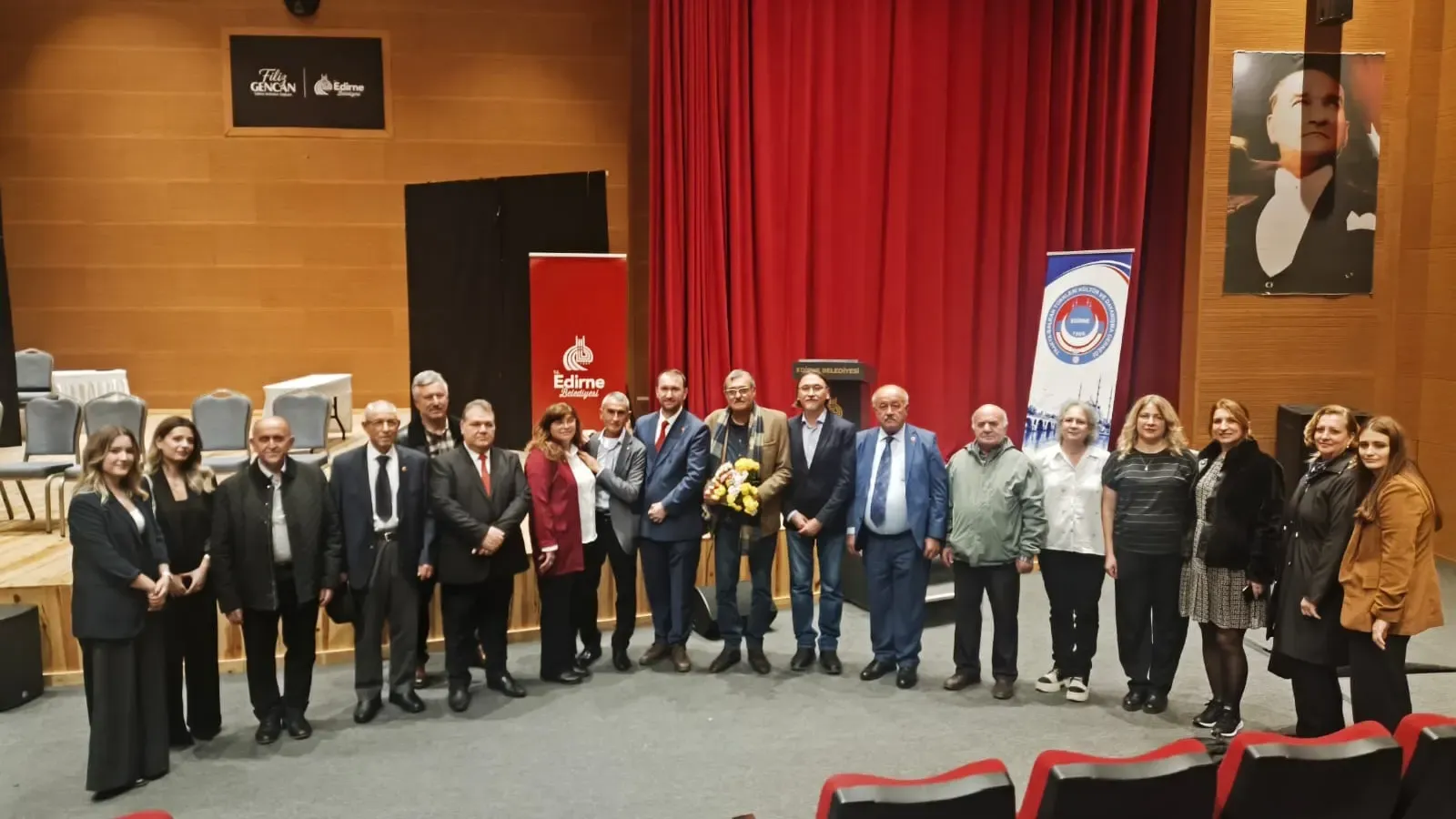
Titled "The Last Prisoners of Belene Concentration Camp", the documentary was presented at the Atatürk Cultural Centre as part of a screening and discussion event organised in cooperation with the Thrace Balkan Turks Culture and Solidarity Association and the Association for Justice, Rights, Culture and Solidarity in the Balkans (BAHAD). The event was supported by Edirne Municipality and various Balkan associations.
The production was directed by Dimitar Kotsev-Shosho, written by Hristo Hristov and produced by Professor Lyudmil Hristov. It was produced by New Bulgarian University.
TESTIMONIES OF 30 FORMER PRISONERS
The documentary features testimonies from 30 former inmates and their families, who were imprisoned in Belene without court orders after opposing the forced name-changing and assimilation policies imposed by Bulgaria's communist regime between 1984 and 1989.
Through personal accounts, the film documents the suffering experienced by victims, their struggle to preserve their human dignity and the lasting impact of state-sponsored persecution on Bulgarian society.
BAHAD President Safiye Yurdakul said the documentary illustrated the inhumane treatment inflicted on people across all generations, from infants to elderly individuals.
She noted that members of different ethnic backgrounds had been sent to the camp and subjected to constant psychological pressure and the fear of death.
Despite these conditions, Yurdakul stressed, the victims had refused to surrender and continued their struggle.
She also emphasised the importance of holding those responsible accountable to prevent similar abuses from happening again. Expressing hope that Bulgaria would make further progress in democracy and the rule of law, she thanked everyone involved in organising the event.
CAMPS REMAIN A SYMBOL OF COMMUNIST REPRESSION
Speaking at the screening, Bulgaria's Consul General in Edirne, Radoslava Kafedzhiyska, described the camps as enduring symbols of communist repression.
She said tens of thousands of Bulgarian citizens had been imprisoned in such camps without court proceedings, trials or convictions. Those detained included intellectuals as well as people from different social backgrounds, regardless of their ethnic or religious identities.
Kafedzhiyska thanked the documentary's producers and contributors, expressing hope that the film would remind audiences of the importance of solidarity and democracy.
FORMER INMATES SHARE THEIR EXPERIENCES
A discussion followed the screening, featuring Bulgarian Turks who had suffered persecution for opposing the assimilation campaign.
Former Belene inmates İsmet Balkanlı, Fahri Yaşaroğlu, Şükrü Korkmaz, Recep Recepoğlu, Sefer Oral, Sultan Çetin, Mehmet Vatansever, Seyit Ali Akgün and Hatice İslam shared their experiences in the camp and recounted their journeys to Türkiye.
The event was attended by Edirne Deputy Mayor Gökçe Onur Öktem, association representatives, academics, members of the documentary production team, Bulgarian Turks living in Edirne, guests from Bulgaria and other residents.