Gaza development set back 77 years after two years of war

More than two years of conflict have erased decades of human development in the Gaza Strip, pushing living conditions back an estimated 77 years, according to a joint assessment by the United Nations, World Bank and European Union.
The final Rapid Damage and Needs Assessment (RDNA) found that Gaza's Human Development Index (HDI) had fallen to 0.339, its lowest recorded level since measurements began.
The report examines destruction and economic losses between October 7, 2023, and the cease-fire agreement of October 9, 2025, drawing on satellite imagery, verified field information and established assessment methods.
It estimates physical damage at $35.2 billion, with an additional $22.7 billion in economic and social losses, bringing the total impact to $57.9 billion.
The three institutions estimate that Gaza will require approximately $71.4 billion over the next decade to recover and rebuild. An estimated $26.3 billion will be needed during the first 18 months to restore essential services, repair critical infrastructure and restart economic activity.
Housing and infrastructure devastated
Housing has suffered the greatest physical damage, accounting for approximately $18 billion, or 51% of the total. Reconstruction of the sector alone is expected to cost around $16.2 billion.
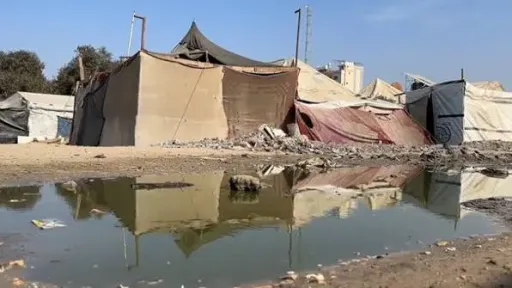
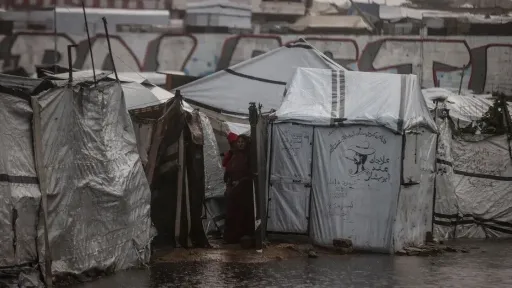
More than 371,888 housing units have been destroyed or damaged, leaving over 1.2 million people without homes.
Commerce and industry have sustained an estimated $6.35 billion in damage, while transport infrastructure has suffered losses of $3.2 billion and water and sanitation facilities $1.7 billion.
The destruction has also severely affected health care and education. More than half of Gaza's hospitals are nonfunctional, while nearly all schools have been damaged or destroyed.
The territory's economy has contracted by approximately 84%, leaving businesses closed, livelihoods destroyed and families struggling to meet basic needs.
Removing the enormous quantities of rubble will present another major challenge. More than 68 million metric tonnes of debris must be cleared and managed, at an estimated cost exceeding $1.7 billion.
Agriculture and food systems will also require substantial investment, with approximately $7.5 billion needed during the first 18 months to address food insecurity and restore productive capacity.
Displacement and humanitarian crisis deepen
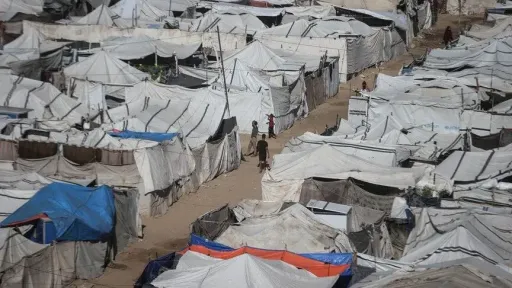
The humanitarian consequences have been devastating, with approximately 1.9 million people, representing most of Gaza's population, displaced during the conflict. Many have been forced to move repeatedly as fighting and destruction rendered their homes uninhabitable.
Women, children and people with disabilities have faced particularly severe consequences.
More than 40% of pregnant and breastfeeding women are severely malnourished, while approximately two-thirds suffer from anaemia, according to the assessment.
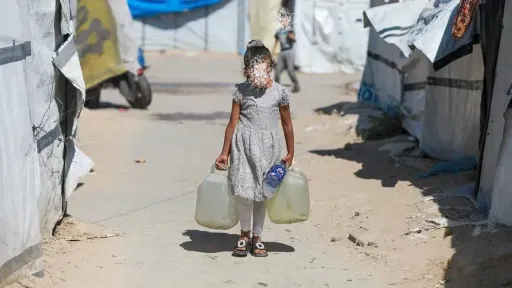
Virtually all children are estimated to require mental health and psychosocial support following prolonged exposure to violence, displacement and the loss of family members and homes.
Education has also been severely disrupted. Approximately 728,000 school-aged children and young people have been out of formal education for more than two years. At least 792 teachers and other school personnel have been killed, while formal education for children with disabilities has been almost entirely suspended.
The conflict has also left at least 41,844 people with life-changing disabilities requiring long-term rehabilitation. Approximately one-quarter are children, while conservative estimates put the number of amputations between 5,000 and 6,500.
The collapse of health care, water supplies, sanitation and waste management has further increased the population's vulnerability to disease outbreaks.
Recovery requires more than rebuilding infrastructure

The assessment describes the 77-year development setback as the cumulative result of deteriorating living standards, unemployment, food insecurity and the collapse of social inclusion and essential services.
A previous assessment by the UN Development Programme and its partners in 2024 had estimated that Gaza's human development had been pushed back approximately 69 years. The latest report revised that figure after incorporating the wider consequences of the conflict through October 2025.
The institutions stressed that reconstruction must be Palestinian-led and inclusive, with women and young people playing meaningful roles in determining recovery priorities.
They also warned that rebuilding physical infrastructure alone would not guarantee sustainable recovery. Gaza and the West Bank must remain politically, economically and territorially connected under a single legitimate, sovereign and democratic Palestinian government.
A sustained cease-fire, adequate security arrangements, unrestricted humanitarian access and the restoration of essential services were identified as critical conditions for reconstruction.
The report also called for facilitating the movement of people, goods and construction materials, alongside transparent governance, a functioning financial system and the resolution of housing and property ownership disputes.
UN calls for international support
UN Deputy Secretary-General Amina Mohammed highlighted the findings ahead of the International Day of Solidarity with the Palestinian People on November 29.
She stressed that recovery must address not only the destruction of buildings and infrastructure but also the loss of communities and social ties.
Mohammed condemned the October 7, 2023 attacks, rejected the collective punishment of Palestinians and called for unhindered humanitarian assistance and continued support for the UN Relief and Works Agency for Palestine Refugees.
She also reaffirmed the UN's support for a two-state solution, with Israel and an independent, sovereign Palestinian state living side by side along the pre-1967 lines.
The assessment provides a technical basis for future recovery and reconstruction planning, although its estimates remain subject to further verification as additional information becomes available.
Source: Daily Sabah-Photo:AA