Mustafa Trampa raises Western Thrace minority issues at COP31 in Antalya
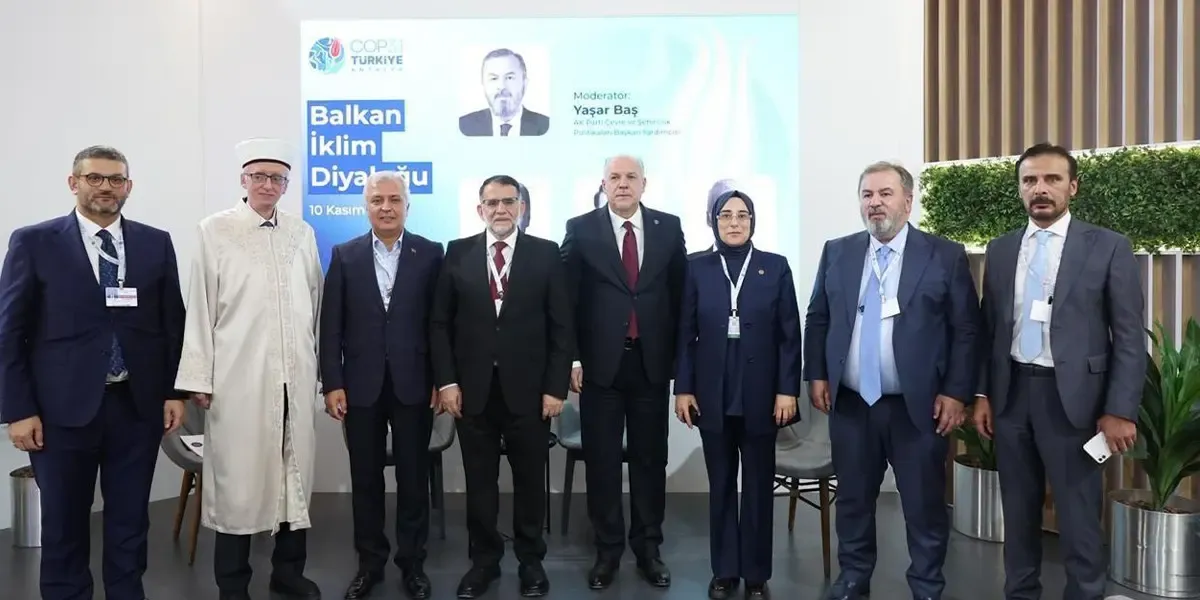
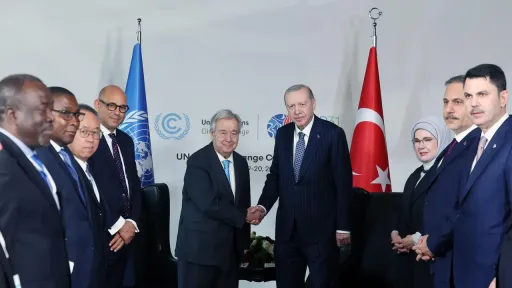
Mustafa Trampa, President of the Advisory Board of the Turkish Minority of Western Thrace and Mufti of İskeçe (Xanthi), attended the UN Climate Change Conference (COP31) in Antalya, Türkiye, where he highlighted the economic, social and cultural challenges facing the Turkish minority on an international platform.
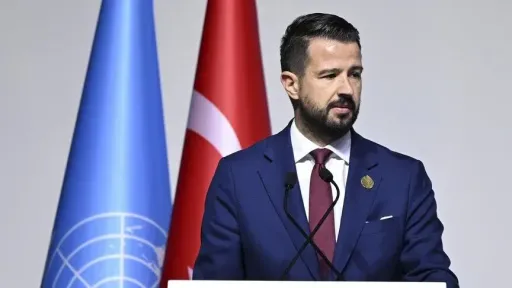
At the invitation of the organisers, Trampa participated in the Balkan Climate Dialogue session held on November 10 as part of COP31, which runs from November 9 to 20 in Antalya. <Cite refs={["turn900910search9","turn900910search0"]}/>
Speaking under the title "Economic and Socio-Cultural Challenges Facing the Turkish Minority of Western Thrace", Trampa argued that climate policies should not be considered solely in environmental terms, but should also address economic development, social resilience and the preservation of cultural heritage.
THREE KEY CHALLENGES FACING WESTERN THRACE
Trampa identified three major challenges facing Western Thrace: the underutilisation of natural resources, the decline of agriculture and livestock farming, and the loss of historical and cultural heritage.
He noted that the region possesses considerable natural resources, including thermal springs, fertile agricultural land, water resources and geographical advantages that could support the local economy.
However, he argued that these opportunities had not been sufficiently developed through investment and public support. He stressed that natural resources should not only be protected but also used in ways that improve the well-being of local communities.
DECLINE IN AGRICULTURE AND LIVESTOCK FARMING FUELS MIGRATION
Trampa highlighted the significant decline of traditional tobacco cultivation, pointing to rising production costs, insufficient incomes and problems with agricultural support as factors undermining the regional economy.
He also drew attention to difficulties in the livestock sector, particularly the economic consequences for farmers of compulsory animal culling measures introduced in response to animal diseases.
According to Trampa, the weakening of traditional economic activities has contributed to increased labour migration from Western Thrace to other European countries.
He warned that this trend has consequences beyond the economy, affecting families and social structures. In particular, he highlighted the impact on children and family life when fathers are forced to spend long periods away from home for work.
LOSS OF HISTORICAL HERITAGE THREATENS COLLECTIVE MEMORY
Trampa also addressed the preservation of Western Thrace's historical and cultural heritage, highlighting mosques, religious lodges, cemeteries, fountains and other historical structures dating back to the Ottoman period.
He said that many historical buildings that once existed in Western Thrace had not survived, arguing that their disappearance should not be viewed merely as an architectural loss.
According to Trampa, these sites represent important elements of the Turkish Minority's historical presence and collective memory. He stressed that preserving cultural heritage is essential to ensuring that minority communities can maintain their identities and pass their historical legacy on to future generations.
"A REGION'S TRUE RESILIENCE LIES IN KEEPING ITS PEOPLE ON THEIR LAND"
Concluding his speech, Trampa emphasised that the underutilisation of natural resources, the decline of traditional livelihoods and the loss of cultural heritage are interconnected challenges.
He argued that the resilience of cities and communities should not be measured solely by their ability to withstand environmental threats, but also by their capacity to sustain local economic life, preserve social ties and protect cultural identity.
"A city's true resilience lies in its ability to protect its land, keep its people living on their own land and pass on the identity inherited from its past to future generations," Trampa said.
The Balkan Climate Dialogue brought together participants to discuss regional cooperation, sustainable development and the social implications of climate policies.
Trampa's participation provided an opportunity to bring the economic, social and cultural concerns of the Turkish Minority of Western Thrace to the attention of an international audience.