Minority’s will ignored once again: Appointment of Mufti to Dimetoka deemed unacceptable

Greece has once again drawn strong criticism from the Western Thrace Turkish Minority after proceeding with the appointment of a Mufti to Didymoteicho (Dimetoka), a move described as a blatant violation of the minority’s rights and democratic will.
One of the most longstanding and sensitive issues facing the Western Thrace Turkish Minority—the Mufti question—is not only unresolved but, according to minority representatives, has been further aggravated. The recent appointment of a Mufti in Dimetoka has clearly demonstrated, they argue, that the will, democratic choice, and legitimate representatives of the minority have once again been disregarded.
Following a process carried out without consulting the minority and without due regard for international law, an individual named Emin Şerif was appointed as Mufti of Dimetoka and sworn into office in Athens. This appointment has been unequivocally rejected by the Western Thrace Turkish Minority, whose representatives stress that the decision lacks legitimacy and fails to reflect the expectations and demands of the community.
Advisory Board: “An Imposed and Trust-Eroding Approach”
In a statement, the Western Thrace Turkish Minority Advisory Board said that the state has failed to take sincere and inclusive steps toward resolving the Mufti issue. The method followed in Dimetoka was described as impositional and damaging to trust, particularly given the religious and social sensitivity of the Mufti institution. Shaping such an office while ignoring the minority’s will was declared unacceptable.
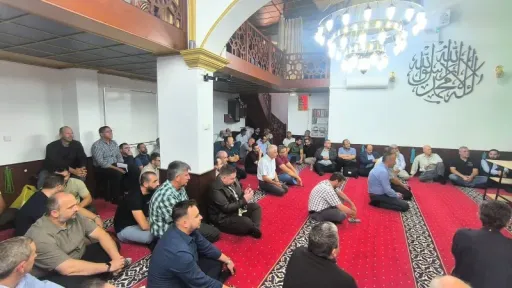
The Advisory Board also drew attention to a recent mosque inauguration ceremony in Dimetoka, during which the appointed Mufti reportedly recited prayers in Greek. This act was cited as a concrete example of how detached the appointment is from the religious and cultural sensitivities of the minority.
Growing Concerns for Gümülcine and İskeçe
Statements and media reports suggesting that the same appointment model may soon be applied in Komotini (Gümülcine) and Xanthi (İskeçe) have caused serious concern within the minority. The Advisory Board warned that such an approach risks further eroding the already fragile trust between the minority and the state.
Calling once again on Greece, the Advisory Board urged the government to address the Mufti issue through genuine, sincere, and constructive dialogue, to respect the Muftis freely elected by the minority, and to pursue a solution in line with democratic norms.
Condemning both the appointment in Dimetoka and the continued refusal to recognize the minority’s elected Muftis, the Advisory Board stated that this step is unacceptable from the perspective of democracy and human rights, and announced its position respectfully to the public.
Full Statement of the Western Thrace Turkish Minority Advisory Board
The Advisory Board reiterated that the Mufti issue—one of the most fundamental problems of the Western Thrace Turkish Minority—has not been resolved in line with the community’s demands and expectations. On the contrary, recent developments have deepened the problem and once again demonstrated the disregard for the minority’s will, choices, and genuine representatives.
The statement emphasized that unilateral actions taken without consulting the minority do not serve social peace or democratic principles, condemned the appointment and swearing-in of Emin Şerif as Mufti of Dimetoka, and reiterated that such practices lack legitimacy and undermine democracy and human rights.