First Muslim diaspora forum of OIC member states begins in Ankara
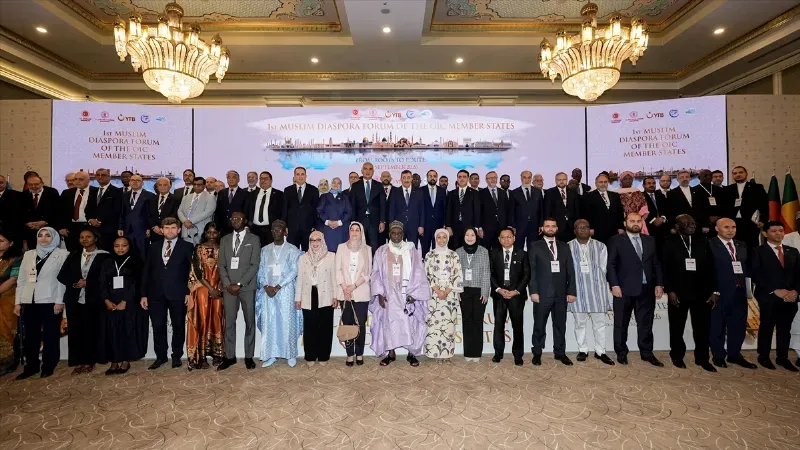
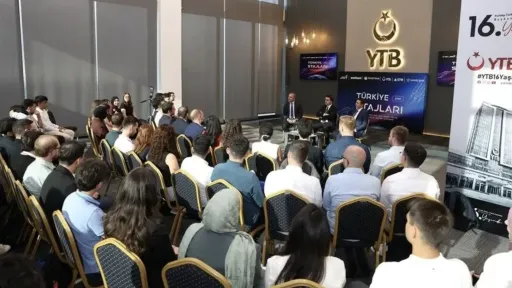
The "1st Muslim Diaspora Forum of the Organisation of Islamic Cooperation (OIC) Member States" began in Ankara on Wednesday, bringing together senior officials and representatives from Türkiye, OIC institutions and several member states to discuss the challenges, opportunities and future of Muslim diaspora communities.
The forum is being organized jointly by the Presidency for Turks Abroad and Related Communities (YTB), the Ministry of Foreign Affairs of Türkiye and the Statistical, Economic and Social Research and Training Centre for Islamic Countries (SESRIC), a subsidiary institution of the OIC.
The opening session began with a recitation from the Quran and a short film on Muslim diasporas. Vice President Cevdet Yılmaz, Minister of Culture and Tourism Mehmet Nuri Ersoy, YTB President Abdulhadi Turus, Deputy Foreign Minister Ambassador Musa Kulaklıkaya, OIC Assistant Secretary-General for Palestine and Jerusalem Affairs Ambassador Dr. Dawas Dawas, SESRIC Director General Zehra Zümrüt Selçuk, Pakistan's Federal Minister for Overseas Pakistanis and Human Resource Development Chaudhry Salik Hussain, and Azerbaijan State Committee on Diaspora Chairman Fuad Muradov addressed the forum.
Different histories, shared challenges
YTB President Turus said Muslim diasporas have developed through different historical and social processes, emphasizing that their experiences vary according to the regions where they live, migration histories, generational experiences, challenges, opportunities and expectations for the future.
Turus said institutions, services and policy models developed by different countries have likewise been shaped by their respective circumstances. He stressed the need for dialogue, experience-sharing and joint consideration of common challenges.
He noted that the issues facing Muslim diasporas are constantly changing and gaining new dimensions. Islamophobia, discrimination, xenophobia and rights violations remain significant concerns, while preserving identity and belonging among younger generations, access to education, social and political representation, strengthening civil society, challenges arising from the digital world and access to public services are becoming increasingly important.
"Our conscience, brotherhood and responsibility are shared"
Referring to the situation in Gaza, Turus described developments there as one of the most serious tests facing the shared conscience of Muslim communities.
"Our borders may be different, but our conscience, brotherhood and responsibility are shared," he said, stressing the importance of turning solidarity during times of crisis into permanent cooperation and a capacity for joint action.
Turus also highlighted the large pool of Muslim talent around the world, including academics, entrepreneurs, artists, cultural figures, civil society representatives and public officials. He said Muslim diasporas should be viewed not only in terms of the problems they face but also as a major source of human, intellectual, economic and social potential.
SESRIC Director General Zehra Zümrüt Selçuk similarly emphasized the need for a strong diaspora capable of transforming its experience into a shared value for its communities and wider societies.
Selçuk said millions of Muslims living across different parts of the world maintain their identities, cultures and links with their countries of origin while also contributing to the economic life of their host countries.
She argued that diaspora issues cannot be addressed solely through migration and integration policies, pointing to challenges including what she described as the genocide in Gaza, Islamophobia, discrimination, hate speech and prejudice.
"Diaspora communities must become active policy stakeholders"
Selçuk said supporting future generations in maintaining ties with their roots while becoming equal members of the societies in which they live is a shared responsibility.
"We are here today to assess the great potential carried by Muslim diasporas in all its dimensions," she said, adding that diaspora communities should be regarded as active stakeholders in policymaking processes.
OIC Assistant Secretary-General Dawas emphasized the organization's role as a bridge between communities, noting that Muslim communities contribute to the development of the societies in which they live while bringing their languages, cultures and experiences into interaction with other communities.
Dawas stressed the importance of strengthening relations and cooperation between citizens of different countries and diaspora communities.
Focus on Palestine and international cooperation
Dawas described the forum as particularly important for increasing coordination among relevant institutions. He said the OIC maintains a common position in favor of a just solution to the Palestinian issue and an end to what he described as Israeli aggression.
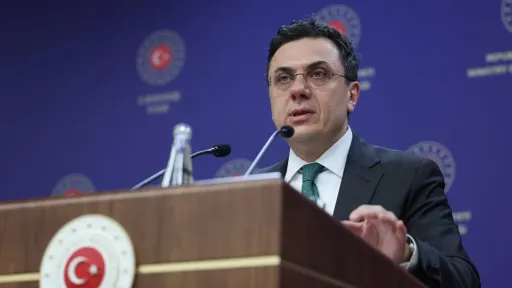
Deputy Foreign Minister Musa Kulaklıkaya said he hoped the forum would lay the groundwork for a permanent joint platform to further strengthen cooperation among OIC member states in the field of diaspora affairs.
Kulaklıkaya said diaspora communities should be regarded as an integral part of the social fabric of their host countries. He noted that the diasporas of OIC member states are estimated to number more than 60 million people and have established influential networks around the world, particularly in Europe and North America.
He described diasporas as important social and economic opportunities for both countries of origin and host countries.
Warning against manipulation of diaspora communities
Kulaklıkaya also warned against attempts to manipulate or alienate diaspora communities, whether by host countries or countries of origin.
"Any attempt to manipulate or alienate diasporas harms all sides, particularly diaspora members themselves," he said, while emphasizing the need to combat discrimination based on religion and ethnicity, xenophobia and Islamophobia.
He further highlighted the role played by diaspora and Muslim organizations in raising public awareness in various countries about the situation in the occupied Palestinian territories.
Kulaklıkaya called for stronger cooperation among diaspora organizations and continued support for the Palestinian diaspora, arguing that joint efforts could contribute to defending the Palestinian cause and reinforcing respect for international law.
Diasporas as bridges between societies
Azerbaijan State Committee on Diaspora Chairman Fuad Muradov said diasporas have increasingly become bridges between societies, contributing to social, economic, scientific and cultural life.
Muradov emphasized the importance of maintaining lasting ties with diaspora organizations as a foundation of modern diaspora policy. He also highlighted work with younger generations to preserve cultural traditions and strengthen their sense of belonging.
He said Muslim diaspora communities should cooperate in addressing shared challenges and stressed the importance of preserving national and religious identities while ensuring that younger generations maintain their roots and sustain their cultures.
Muradov said the dialogue launched in Ankara could lead to concrete initiatives, joint projects and deeper institutional cooperation over time.
Pakistan's Federal Minister Chaudhry Salik Hussain said Pakistan's approach is based on ensuring that Muslim communities are not divided or treated as different from others.
Hussain emphasized the importance of meaningful interaction between diaspora communities and wider societies, arguing that strong roots can strengthen social interaction and cooperation around shared values.
He also called for joint action to address irregular migration and said Muslim diaspora communities should play an active role in supporting Palestinians, ranging from humanitarian assistance to advocacy.