Council of Europe CINGOs report flags civil society constraints in Greece
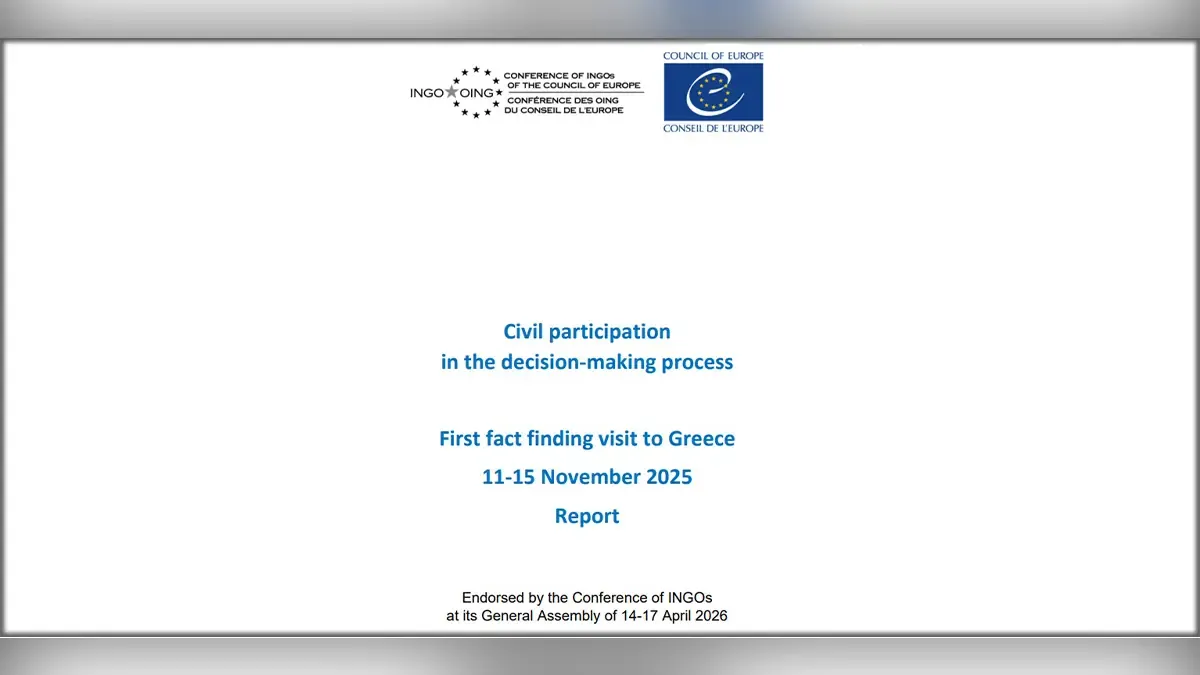
The Conference of International Non-Governmental Organizations (CINGOs) of the Council of Europe has published a new report on Greece, highlighting concerns over the operating environment for civil society and the implementation of key human rights rulings.
The Conference of INGOs—which brings together more than 300 international NGOs—released the findings following a country visit conducted between November 11–15, 2025.
Legal Framework Exists, But Implementation Lags
According to the report, Greece has an established legal framework governing civil society organizations (CSOs), but significant challenges persist in practice. Registration and certification procedures are described as complex, lengthy, and costly.
The report also notes that some organizations—particularly those working on human rights, migration, and minority issues—have faced reputational attacks from political actors.
Minority Rights and Association Freedoms in Focus
During a visit to Gümülcine, the CINGOs delegation met with representatives of minority associations linked to the Bekir Usta and Others case group. The report emphasizes that rulings by the European Court of Human Rights related to this group have remained unimplemented for years.
The court has previously stated that expressing ethnic identity does not constitute a threat to a democratic society. However, the report highlights that Greek authorities continue to interpret minority status primarily through the framework of the Lausanne Treaty, recognizing only a “religious minority.” This approach has led to restrictions on the use of the term “Turkish” in association names.
Politicization and Security Framing
CINGOs further observes that minority issues in Greece are at times framed within broader geopolitical considerations, including relations with Türkiye and dynamics in the Eastern Mediterranean. This, the report suggests, contributes to a narrowing civic space and delays in addressing minority rights concerns.
Federation of Western Thrace Turks in Europe President Halit Habipoğlu welcomed the report’s findings, stressing their significance.
He stated that the Bekir Usta case group has been “politicized” and argued that Greece has shown reluctance to implement the relevant ECHR rulings for nearly two decades. Habipoğlu also criticized proposed amendments to the Civil Code as a delaying tactic, adding that the federation will continue raising the issue with stakeholders in Strasbourg.
Call for Reforms
The report ultimately calls for reforms to improve the legal and operational environment for civil society in Greece, including simplifying administrative procedures and ensuring full compliance with international human rights obligations.